

What safety and environmental standards should a powder coating setup comply with to ensure regulatory compliance and minimise environmental impact?
A powder coating setup should comply with UK requirements for worker safety, hazardous-substance control, fire and explosion prevention, waste handling and emissions management. In practice, this means applying COSHH and DSEAR controls, maintaining effective extraction and ventilation, managing powder and curing-oven risks, and checking whether environmental permitting or local authority requirements apply to the installation.
A compliant powder coating setup needs documented controls covering people, equipment, materials, waste and environmental releases. UK operators should identify the legislation that applies to the specific installation, assess risks before commissioning, and retain evidence that controls are maintained. Compliance is not established by purchasing an oven, booth or gun with suitable specifications alone; the complete process and workplace must be assessed as one system.
Start with a documented compliance assessment
Before installation, define the materials used, the size and weight of components, the coating process, curing temperatures, operating pressures, electrical systems, storage arrangements and expected waste streams. The assessment should cover routine production, cleaning, maintenance, fault conditions and foreseeable misuse. It should also identify who is responsible for inspections, training, waste documentation and communication with regulators.
Keep the layout, risk assessments, operating instructions, inspection records, maintenance schedules and training records together. Review them when equipment, powder formulations, production volumes or building arrangements change. A setup bought second-hand or relocated to another premises should be reassessed rather than assumed to retain the compliance position of its previous installation.
Check the duties applying to work equipment
The Provision and Use of Work Equipment Regulations require equipment to be suitable, maintained and used by people with appropriate information and training. In practice, this includes checking guarding, interlocks, emergency stops, controls, access points and safe isolation arrangements for booths, ovens, conveyors and recovery systems. Electrical installations and portable equipment also need suitable inspection and maintenance under the Electricity at Work Regulations.
Where components or equipment are lifted, the relevant lifting-equipment requirements apply. Lifting accessories, hoists and other lifting equipment need appropriate examination, identification and safe working procedures. Equipment documentation should include instructions, conformity information, inspection requirements and details of any limitations. Do not remove guards or bypass interlocks to increase throughput without reassessing the risk and obtaining competent technical approval.
Control powder exposure and provide suitable personal protection
Powder should be handled in a way that prevents unnecessary dust release. Closed or controlled transfer, tidy storage and suitable cleaning methods are preferable to sweeping or using compressed air, which can disperse settled material. Workers need instruction on the particular powder formulation, its safety data sheet, correct handling, spill response and the limitations of any respiratory protective equipment.
Personal protective equipment should be selected from the risk assessment rather than treated as the primary control. Depending on the task, this may include protective clothing, gloves, eye protection, hearing protection and respiratory protection. Tight-fitting respirators require appropriate face-fit testing, while all PPE needs inspection, cleaning, storage and replacement arrangements.
Safety data sheets should be available for powders, cleaning agents and other substances used on site. Review the information when a supplier changes the formulation. UK REACH and GB Classification, Labelling and Packaging requirements affect how substances and mixtures are supplied, labelled and communicated; the operator should follow the current supplier information and obtain specialist advice where a formulation has more complex classification or regulatory requirements.
Assess environmental permitting and planning requirements
Powder coating may fall within local authority environmental permitting controls depending on the activity, coating materials, process scale and applicable thresholds. The operator should confirm the position with the relevant local authority before commissioning, particularly where the installation includes preparation, coating, curing, recovery or other associated activities. Planning permission, building control approval, fire precautions and landlord or estate restrictions may also affect the installation, but these are separate checks from an environmental permit.
Where a permit applies, comply with its conditions rather than relying only on general good practice. Conditions may address operating techniques, emission points, monitoring, maintenance, nuisance prevention, record keeping and reporting. Maintain an auditable record of inspections, faults, corrective actions, filter or recovery-system servicing and any required monitoring. If the process changes, ask the regulator whether the permit or operating description needs to be varied.
Environmental controls should consider more than visible dust. Assess noise from fans, compressors and conveyors; odour or nuisance from preparation and curing; contaminated wash water or trade effluent; surface-water protection; and the risk of powder or cleaning chemicals entering drains or soil. Store chemicals and waste securely, label containers clearly and use spill-control arrangements appropriate to the substances present.
Manage powder, filters and other waste correctly
Apply the waste hierarchy by preventing avoidable waste first, reusing suitable material where technically and legally appropriate, and segregating recyclable streams. Overspray, contaminated filters, empty containers, spent abrasives, masking materials, used wipes and maintenance residues should not automatically be treated as ordinary general waste. Determine the correct waste classification from the material and contamination involved.
Use authorised waste contractors and retain the required transfer or consignment documentation. Waste records should show what was removed, its classification, quantity where required, destination and the parties involved. Powder recovered from a system should only be returned to production where the coating specification, contamination risk and supplier guidance permit it. Mixing different powders can affect finish quality and may create an unsuitable waste stream.
Build compliance into day-to-day operation
Operators should complete pre-use checks on guards, controls, hoses, booth condition, recovery equipment, oven safety systems and housekeeping. Planned maintenance should cover fans, filters, ducts, electrical components, temperature controls, conveyors and interlocks. Defects should be recorded, assessed and rectified by competent personnel, with unsafe equipment taken out of service where necessary.
Provide documented procedures for start-up, shutdown, cleaning, powder changes, spills, equipment failure, isolation and emergency response. Train employees and contractors on the risks specific to their tasks, and test whether they can follow the procedures in practice. Reportable injuries, dangerous occurrences and certain occupational incidents may require reporting under RIDDOR, so responsibilities and escalation routes should be clear.
For a business assessing a complete setup for sale, request the installation drawings, equipment manuals, conformity documentation, inspection history, maintenance records and details of any previous permits. Confirm that the equipment can be installed safely in the proposed building and that its capacity, controls and environmental safeguards match the intended process. Independent advice from a competent health-and-safety professional, environmental consultant or qualified engineer is appropriate where the installation is large, modified or subject to permitting uncertainty.
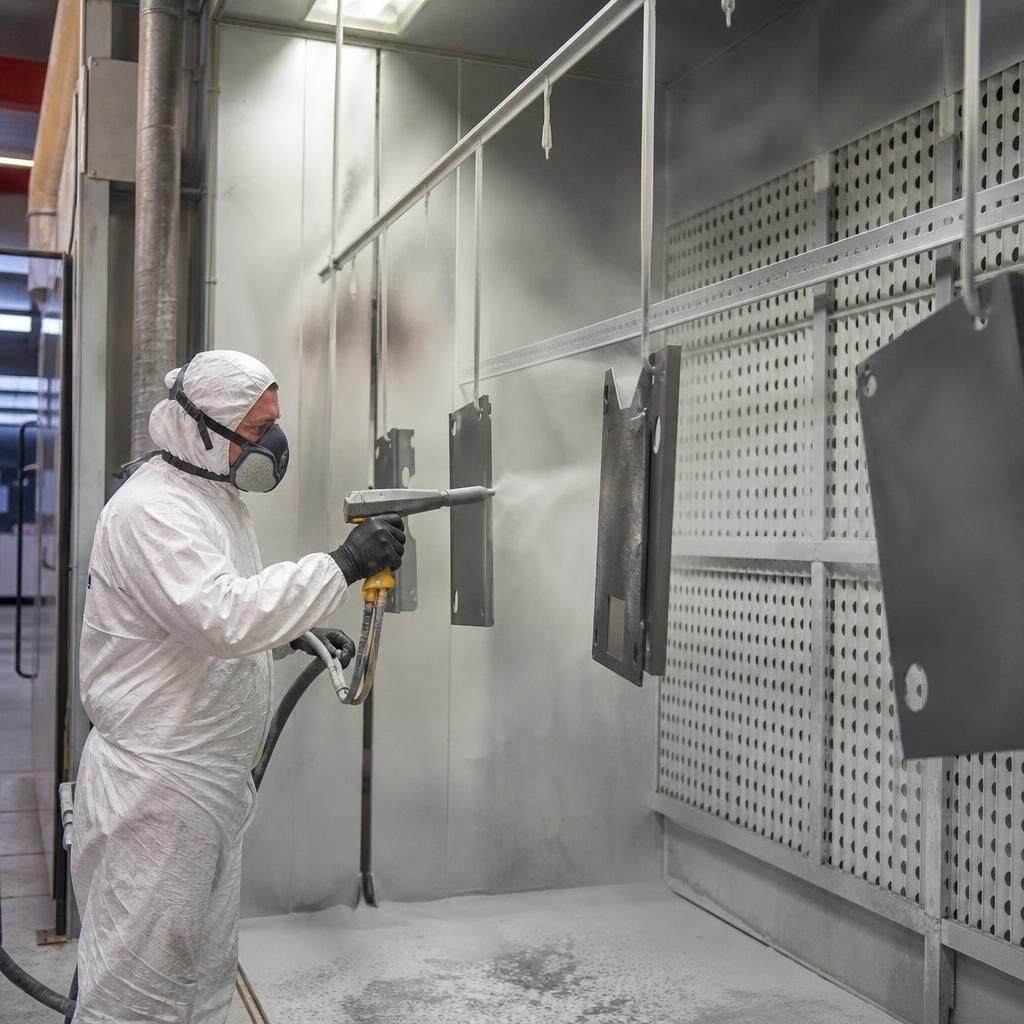
Fire and explosion controls are a distinct part of powder coating compliance because airborne powder can form a combustible dust atmosphere under certain conditions. A DSEAR assessment should identify where dust clouds may arise, where settled powder could accumulate and which ignition sources must be controlled.
- Control powder deposits through effective booth extraction, suitable filters and disciplined housekeeping.
- Prevent ignition from unsuitable electrical equipment, hot surfaces, static discharge, flames and maintenance activities.
- Provide effective earthing and bonding for the booth, gun, workpieces, recovery equipment and powder containers where required by the risk assessment.
- Use interlocks so spraying cannot continue if extraction, airflow or other essential safety conditions fail.
- Keep curing ovens, burners and electrical heating systems separated from powder-handling risks, with controls for abnormal temperatures and fuel or electrical faults.
The assessment should define inspection frequencies, cleaning methods, emergency isolation arrangements and any hazardous-area requirements. These controls need to remain effective after changes to powder type, booth configuration, extraction capacity or oven operation; a setup that was suitable in one arrangement may require reassessment when relocated or modified.
Discuss Your Powder Coating Compliance Requirements
If you are assessing a powder coating setup for sale, discuss the proposed installation, process materials and site requirements with the Powder Coatings team. They can help identify the technical and compliance information to review before commissioning.