

What sustainability advantages does Perfect-It Powder Coating provide compared to traditional coating methods?
Perfect-It Powder Coating supports more sustainable manufacturing through lower coating waste, fewer emissions and durable finishes that can extend the service life of metal components. Compared with traditional coating methods, its controlled application process can help Midlands manufacturers use materials more efficiently while reducing the need for frequent recoating.
Perfect-It Powder Coating can offer sustainability advantages over traditional liquid coating by applying a dry powder finish without the solvent carriers used in many wet-paint systems. This changes the environmental profile of the process: fewer solvent-based materials need to be handled, stored and disposed of, while the finished component can provide a robust surface without relying on repeated maintenance coatings.
A significant benefit is the reduction in liquid coating waste. Powder that does not adhere during application can, where the equipment and colour system allow, be collected for controlled recovery rather than becoming contaminated liquid overspray. This needs to be managed carefully, because recovered powder is not suitable for unrestricted reuse in every application. Correct segregation, housekeeping and process control are therefore important to achieving the intended environmental benefit.
Powder coating can also reduce the need to manage solvent-related waste streams. Traditional coating work may involve liquid paint residues, solvent cleaning materials, contaminated containers and equipment-washing fluids. A dry powder process avoids the solvent carrier itself, although preparation, booth cleaning and other site controls are still required. The most sustainable result comes from using the right preparation and application procedure for the metal component rather than treating powder coating as a waste-free process.
Lifecycle considerations are equally important. A coating that remains intact under the component’s operating conditions can help reduce the frequency of stripping, repainting, replacement parts and associated transport or preparation. The environmental value depends on the specification: coating thickness, pretreatment, curing requirements, exposure conditions and the required performance of the part should all be assessed before production. Applying more material than necessary is not sustainable, even if the coating system itself has environmental advantages.
Powder coating can support a cleaner production environment because it does not depend on evaporating a solvent carrier to leave the film behind. This can simplify control of solvent vapours compared with solvent-borne wet paint, subject to the particular powder formulation and the site’s extraction and safety arrangements. It does not remove the need for suitable ventilation, filtration, personal protective equipment or responsible waste handling.
There are also practical ways to improve the sustainability of an industrial powder-coating specification:
- Choose a coating system that matches the component’s actual service conditions, avoiding unnecessary performance or material use.
- Group compatible batch work where practical to reduce powder changes, cleaning activity and setup material.
- Provide accurate drawings, masking details and coating requirements so that unwanted coated areas and avoidable rework are minimised.
- Consider the component’s full service life, including corrosion exposure, handling, cleaning and future maintenance.
- Discuss end-of-life treatment where relevant, since the substrate, pretreatment and coating may affect how a metal part is recovered or recycled.
The principal qualification is energy use. Powder coatings normally require a controlled curing stage, so the overall environmental assessment should consider oven efficiency, loading, cure temperature and the distance components travel through the supply chain. A lower-solvent process is not automatically the lowest-impact option in every situation. For an informed comparison, the coating method should be assessed across material handling, application, curing, maintenance and end-of-life requirements rather than by looking at application emissions alone.
For B2B manufacturers and fabricators, Perfect-It Powder Coating is therefore best considered as one part of a controlled sustainability strategy. The strongest result comes from selecting a suitable powder system, applying it accurately, managing unused material responsibly and specifying a finish that supports the component’s required working life.
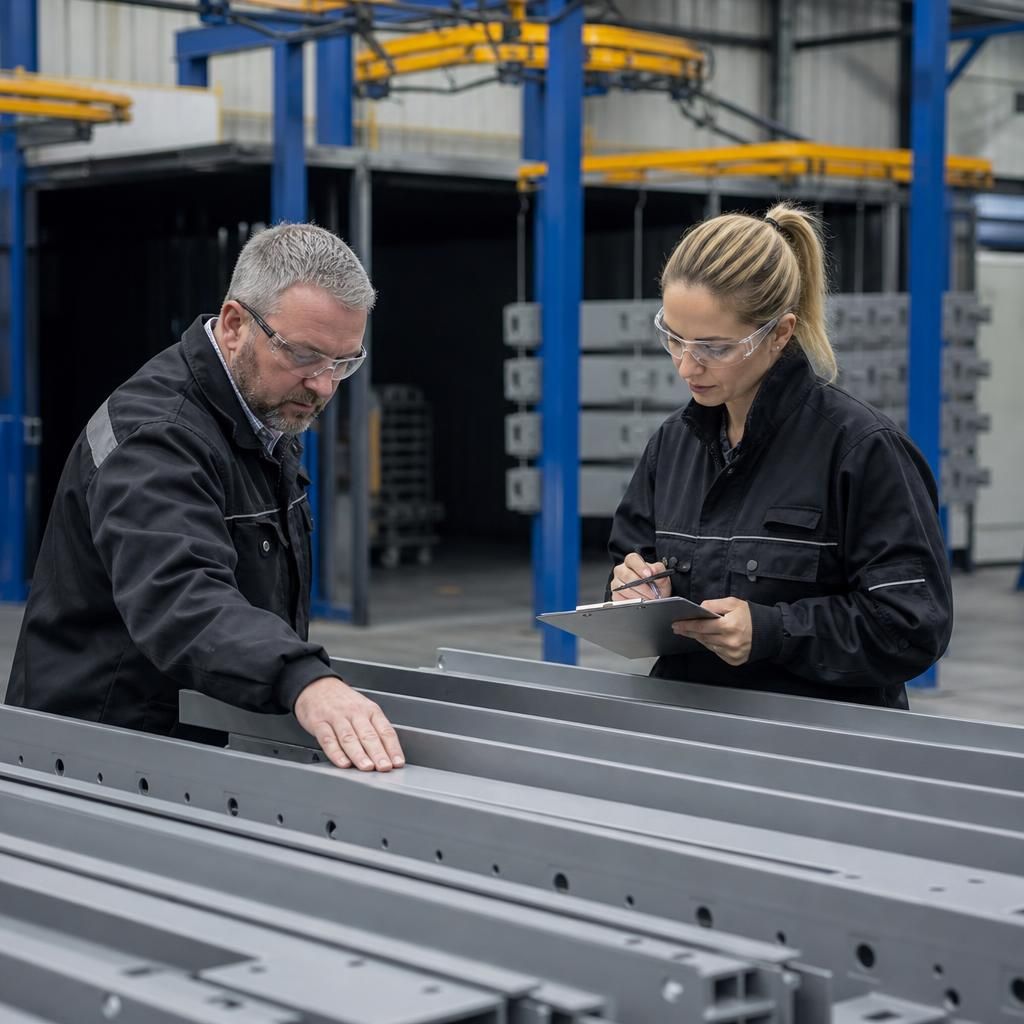
Process validation can prevent avoidable material loss. Correct powder selection, film thickness and curing conditions are important because an under-cured or poorly specified finish may fail inspection or require rework. Checking these factors against the component’s substrate, geometry and service conditions helps reduce rejected parts, repeat preparation and unnecessary use of coating material.
For manufacturers and fabricators, this makes sustainability partly a quality-control issue. Clear drawings, agreed finish requirements and consistent inspection criteria help ensure that components are coated correctly first time, while records of the specification provide a practical basis for reviewing material use and process efficiency across future batches.
Discuss Your Sustainable Powder Coating Requirements
Discuss your component specifications, service conditions and sustainability priorities with Perfect-It Powder Coating to identify a suitable powder-coating approach. Providing drawings, batch details and finish requirements will help establish an efficient, appropriately specified process.