

What are the potential issues if the degreasing step is skipped before powder coating metal components?
Skipping degreasing can leave oil, grease and other contaminants on the metal, causing poor powder adhesion, uneven coverage and premature coating failure. It may also lead to defects such as blistering, pinholing and corrosion beneath the finish, increasing the risk of rework or rejection.
Skipping degreasing before powder coating can compromise the entire finish because oils, grease, drawing compounds, polishing residue and handling marks remain between the metal and the coating system. The consequences may not be limited to visible defects: contamination can affect curing, create problems in service and make the finished component unsuitable for its intended use.
Surface contamination can migrate during curing. The oven heat can soften, spread or vaporise residues left on the component. This may produce craters, fisheyes, surface marks or small voids in the film. Vapour released from joints, recesses and folded sections can also disturb the coating as it gels, leaving defects that are difficult to correct without stripping and recoating the part.
Coating thickness and finish consistency may become difficult to control. Contaminated areas do not behave in the same way as clean metal during powder application and curing. Some sections may appear glossier, duller or more textured than the surrounding surface. This is particularly problematic on visible panels, fabricated assemblies and components requiring a consistent appearance across a batch.
The problem can affect functional surfaces as well as cosmetic ones. Powder coating may be applied to components that must fit together, move against another part, make an electrical contact or maintain a defined clearance. Residue-related defects, localised build-up or coating disturbance around contaminated areas can interfere with assembly and performance. Masked faces, threads, mating surfaces and close-fitting apertures therefore need particular attention during preparation.
Unremoved contaminants can also affect the coating line itself. Oils and other residues released in the curing oven may deposit on racks, hooks, fixtures or nearby components. This can introduce contamination into subsequent work and make the source of recurring defects harder to identify. If several components from a batch show different symptoms, the issue may be linked to varying levels of fabrication or handling residue rather than to the powder application alone.
Skipping degreasing makes inspection and fault diagnosis more complicated. A defect may only become apparent after assembly, transport or exposure to moisture, by which point it is harder to establish whether the cause was the substrate, preparation, application or curing stage. Repeated inspection, sorting and corrective work can then add cost and disrupt production planning, especially where coated parts are being supplied as part of a larger manufactured assembly.
The risk is higher where components have been exposed to:
- Cutting fluids, machining oils or stamping compounds
- Grease from fabrication equipment or handling
- Polishing compounds and abrasive residues
- Protective oils applied during storage or transport
- Finger marks and other contamination introduced after fabrication
Degreasing should be treated as a controlled preparation stage rather than a quick visual clean. The process needs to suit the metal, the type of residue and the rest of the pretreatment system. After cleaning, the component should be rinsed where required, dried thoroughly and protected from further handling contamination before powder is applied. Complex fabrications may also need inspection of seams, recesses, holes and enclosed sections, where residues can remain hidden.
Where the condition of incoming components is uncertain, a coating specialist can assess the likely contaminants and establish whether additional cleaning or preparation is required before processing. This is especially important for batch work, because consistent degreasing helps reduce variation between components and provides a more reliable basis for powder application and curing.
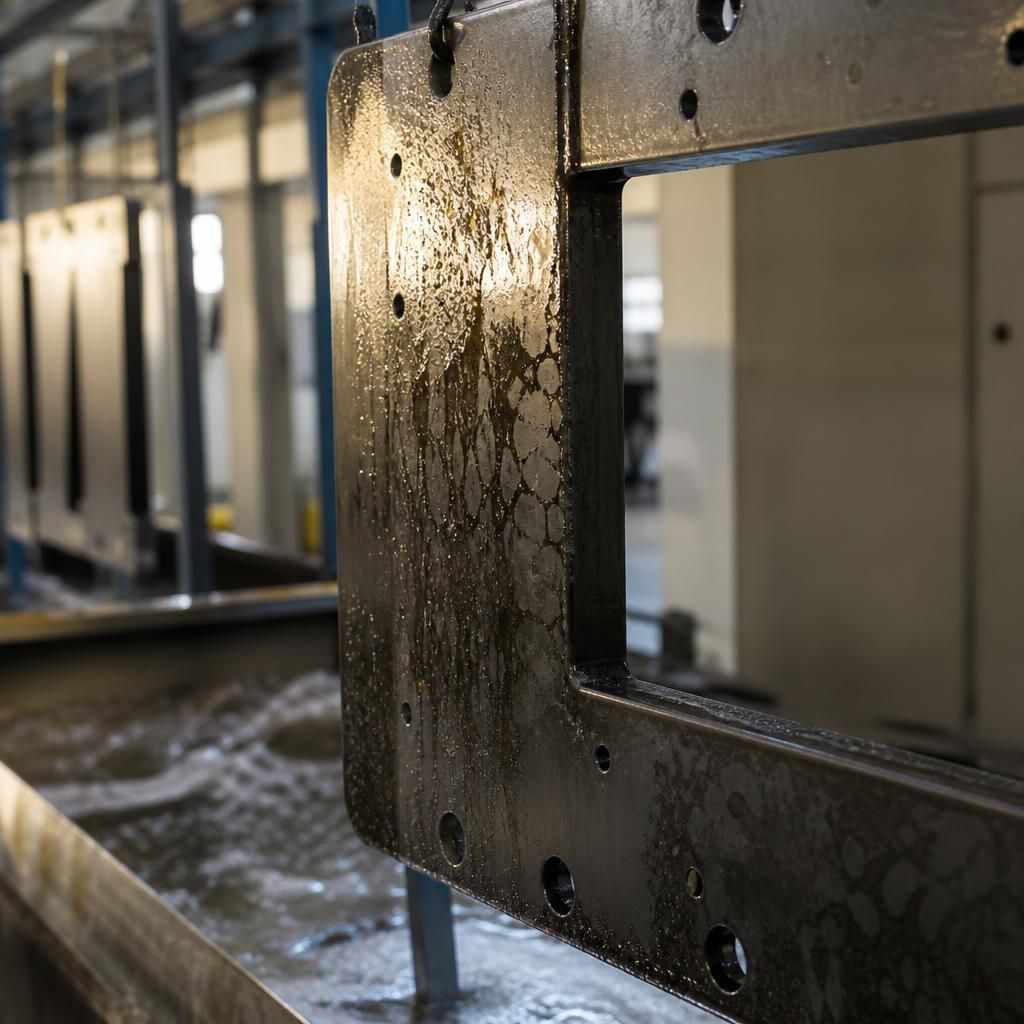
Skipping degreasing can also prevent later chemical pretreatment from working consistently. Where a conversion coating or similar pretreatment is specified, oil and grease can shield areas of the metal from the treatment solution. This may leave an unevenly prepared surface beneath the powder coating, even when the component appears visually clean.
The result is a weakened coating system rather than just an isolated surface blemish. The affected areas may not provide the same foundation for the powder coating as properly treated metal, making process checks and final quality assessment less reliable. Degreasing is therefore necessary before subsequent pretreatment stages, not merely a cosmetic cleaning step.
Discuss Degreasing Requirements for Your Metal Components
Discuss the condition and intended use of your metal components with Powder-coatings.co.uk to identify suitable degreasing and preparation requirements before coating. Collection and delivery options are available for businesses across the Midlands and surrounding areas.