

What specific safety and environmental considerations should be addressed when applying chromate powder coating pretreatment?
Applying chromate powder coating pretreatment requires controlled handling of hazardous chromate chemicals, suitable ventilation, COSHH-based risk assessment and appropriate PPE to prevent exposure. Environmental controls should include secure chemical storage, containment of spills, segregation and compliant disposal of contaminated rinse water, sludge and other hazardous waste under relevant UK requirements.
Chromate powder coating pretreatment must be managed as a controlled chemical process, not simply as a surface-cleaning stage. The main considerations are identifying the chromium chemistry in use, controlling worker exposure, preventing releases to drains and soil, and demonstrating that the process and its waste streams comply with applicable UK requirements.
Confirm the type of chromate chemistry
Safety planning should begin by establishing whether the product contains hexavalent chromium, trivalent chromium or another conversion-coating formulation. These chemistries have different hazard profiles, handling requirements and regulatory implications. The current safety data sheet should be checked for the product classification, exposure controls, incompatible materials, first-aid measures and disposal instructions. The product specification should also identify whether the formulation is subject to restrictions or authorisation requirements under UK REACH.
Where a less hazardous technically suitable chemistry can achieve the required corrosion and adhesion performance, substitution should be considered through a documented assessment. Substitution is not automatic: the alternative must be evaluated for the substrate, coating system, service environment, performance requirements and resulting waste characteristics.
Assess the complete work process
A COSHH assessment should cover every task, including chemical transfer, bath preparation, replenishment, loading and unloading, maintenance, filter changes, line cleaning and removal of residues. It should consider exposure through inhalation, skin contact, eye contact and accidental ingestion caused by contaminated hands or surfaces.
Operators should receive task-specific instruction rather than relying only on general chemical awareness. Training should explain container labels, safety data sheets, process alarms, hygiene rules, emergency arrangements and the correct response to abnormal conditions. Access to the treatment area should be restricted to trained personnel, with clear separation between clean and contaminated areas.
Health surveillance may be appropriate where the risk assessment identifies a residual risk to health, particularly when exposure could occur despite the controls in place. Records of training, inspections, incidents, maintenance and any required monitoring should be retained so that the effectiveness of the control system can be reviewed.
Control the process itself
Process parameters should be kept within the chemical supplier’s specified limits. Concentration, pH, temperature, contact time and rinse quality can affect both the coating result and the quantity of hazardous residue generated. Automated dosing, closed transfer arrangements and interlocked equipment can reduce manual intervention and help prevent over-treatment.
Equipment should be inspected for corrosion, leaks, damaged seals and overflowing tanks. Bunding and secondary containment should be checked as part of planned maintenance, while alarms and extraction systems should be tested at suitable intervals. Any change to the chemical, tank arrangement, production volume or operating method should trigger a review of the risk assessment.
Emergency planning should address splashes, uncontrolled releases, power failure, ventilation failure and contact between incompatible chemicals. Suitable emergency equipment, clearly marked isolation points and written response procedures should be available without requiring workers to improvise. Incidents and near misses should be investigated, particularly where they indicate a weakness in containment or process control.
Manage water and air emissions
Rinse stages can carry dissolved chromium, acidity, alkalinity and other treatment chemicals into subsequent tanks and waste streams. Rinse-water management should therefore include segregation where necessary, controlled treatment and documented checks before discharge or transfer. Discharge to a foul sewer normally requires agreement with the relevant water company, and discharge to surface water or land may require separate regulatory approval. A drain should never be treated as a default disposal route.
Where treatment generates airborne mist or vapour, the extraction arrangement should be designed for the equipment and checked by suitable examination and testing. Any release to the external environment may also need to be considered under the Environmental Permitting regime, depending on the installation and local regulatory requirements.
Classify and trace waste correctly
Spent baths, filters, tank residues, contaminated absorbents, protective materials and treatment sludge should be assessed individually rather than grouped together automatically. Waste classification can depend on the chromium oxidation state, concentration and other substances present. Hazardous waste should be kept in compatible, closed and labelled containers, with containers protected from damage and monitored for leaks.
Waste movements should use authorised carriers and appropriately permitted receiving facilities. Consignment documentation and waste records should be retained, including details of the waste description, classification and destination. Waste minimisation can be improved by extending bath life where technically appropriate, controlling drag-out between stages and separating clean recyclable materials from chromium-contaminated waste.
For a B2B coating project, the customer and applicator should agree in advance who is responsible for chemical approval, waste classification, sampling, collection and regulatory records. This is particularly important where components arrive with oils, plating residues, sealants or other substances that may change the hazards of the treatment waste.
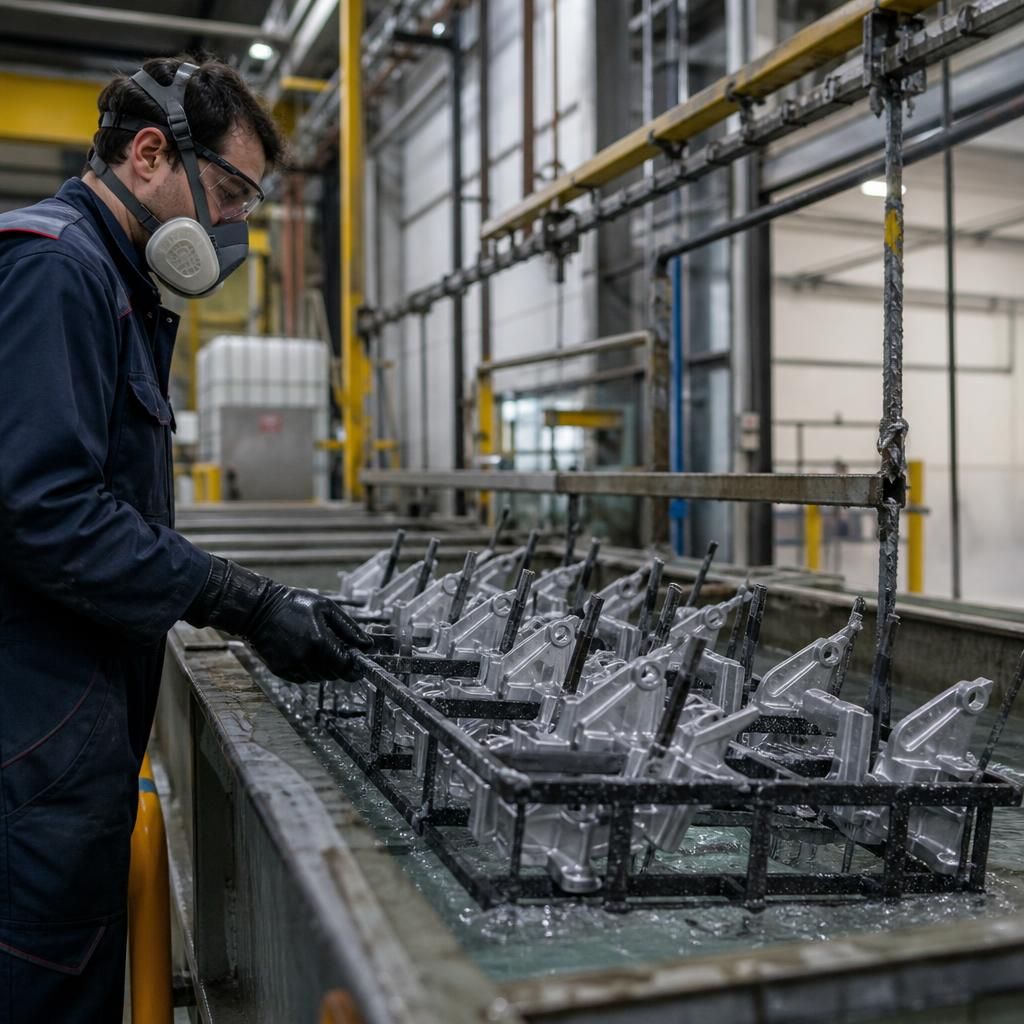
Safety controls must continue after the chromate pretreatment bath, because residues can remain on component surfaces, racks and handling equipment. Components should be rinsed and dried according to the approved process before they are released to subsequent coating stages, packed or returned to the customer.
- Use dedicated, clearly identified racks, tools and handling equipment where contamination could transfer to untreated parts.
- Prevent treated components from contacting clean work surfaces until the required post-treatment checks are complete.
- Inspect for staining, pooling or visible residue that could indicate inadequate rinsing, poor drainage or process drift.
- Keep treated parts protected during storage and transport, using packaging that will not spread residues to vehicles, work areas or customer facilities.
- Record the relevant process and release checks so any later concern can be traced to the treatment batch and handling stage.
This final-control stage reduces secondary exposure and helps prevent chromate contamination from being carried beyond the designated treatment area.
Discuss Your Chromate Pretreatment Safety Requirements
Discuss your chromate pretreatment requirements with the team, including the substrate, coating specification, process chemistry and waste-management responsibilities. This allows the proposed treatment route and required safety controls to be considered before work begins.