

What role do environmental factors play in selecting the appropriate powder coating pretreatment chemicals?
Environmental factors determine which powder coating pretreatment chemicals are suitable by influencing corrosion risk, coating durability, waste handling and regulatory requirements. Consider the metal substrate, expected exposure to moisture or chemicals, process water quality and the environmental profile of the treatment before selecting a chemical system.
Environmental factors influence pretreatment chemical selection by defining the conditions a system must withstand and the controls needed to manage its use, rinsing and disposal. The appropriate choice therefore considers both the service environment of the finished component and the environmental impact of the pretreatment process itself, rather than assessing chemical performance in isolation.
Assess the component’s exposure conditions. Parts intended for sheltered indoor use may require a different pretreatment approach from those installed outdoors, near the coast or in an industrial atmosphere. Ultraviolet exposure, salt-laden air, airborne pollutants, condensation and repeated temperature changes can all affect the required level of surface preparation. Components exposed to road spray, de-icing materials or persistent humidity may need a system selected for more demanding conditions than visually similar parts used in a dry internal environment.
Temperature cycling deserves particular attention. Metal expands and contracts as temperatures change, while trapped moisture can freeze or evaporate. If the pretreatment does not provide a suitably stable foundation for the powder coating, these cycles can contribute to defects at weak points, cut edges, joints or areas with incomplete coverage. The chemical supplier’s technical information and representative testing should be used to confirm suitability for the intended exposure rather than relying only on the appearance of a treated test panel.
Consider the environmental controls at the coating facility. A chemical system affects more than the component: it may alter rinse-water requirements, bath maintenance, sludge production, wastewater treatment and the classification of residues. Before selection, establish how spent baths, rinse water, filters, sludge and contaminated packaging will be controlled. The relevant requirements can depend on the site’s discharge arrangements and the substances present in the effluent, so the treatment should be reviewed alongside the facility’s environmental procedures.
Water use is another practical consideration. Multi-stage pretreatment may provide process advantages, but each additional rinse can increase water consumption and the volume of effluent requiring management. Counter-current rinsing, controlled dosing and suitable bath monitoring can reduce unnecessary carry-over, although these measures must be compatible with the chosen chemistry and the required finish. A system that appears simple at the point of application may create greater environmental demands if it requires frequent replacement or produces difficult-to-treat residues.
Compare the chemical profile, not just the treatment result. When reviewing alternatives, examine the safety data sheet, technical data sheet and any available environmental documentation. Relevant points may include:
- hazard classifications and restrictions applying to the concentrates, working solutions and residues;
- the metals or other substances likely to enter the effluent;
- recommended operating temperature and the energy needed to maintain the process;
- bath life, replenishment requirements and expected sludge formation;
- the treatment and disposal route for spent solution and rinse water; and
- storage, spill-control and transport requirements for the chemical concentrate.
A lower-hazard or chromium-free alternative is not automatically suitable for every application. Its environmental profile must be considered together with substrate compatibility, pretreatment coverage, powder-coating requirements and the conditions in which the component will operate. Replacing one chemistry can also change pH control, rinse demand, wastewater treatment or process temperature, so the whole system should be compared rather than one ingredient in isolation.
Account for local and end-use conditions. A coating system used on architectural metalwork, agricultural equipment, automotive components or fabricated parts may encounter different combinations of sunlight, moisture, salts, oils and cleaning agents. The selection should reflect the actual location and maintenance regime. For example, a component that is regularly washed with an aggressive cleaning solution may require a different chemical assessment from one exposed mainly to dry indoor air, even where the base metal is the same.
Use a documented selection and validation process. Start by recording the substrate, contamination, intended exposure, process-water characteristics, available wastewater controls and the required finish. Shortlist systems whose operating and disposal requirements fit those conditions, then confirm the choice through controlled trials. Evaluation should include pretreatment coverage, powder adhesion, appearance, edge performance and relevant environmental exposure testing. Where the service conditions are severe or the specification is important, testing representative parts is more informative than relying solely on a general product description.
Environmental selection is therefore a balance between service-life requirements and the footprint of the pretreatment operation. The preferred chemical is the one that can be operated, monitored and disposed of responsibly at the facility while providing a suitably prepared surface for the specified powder coating and exposure conditions.
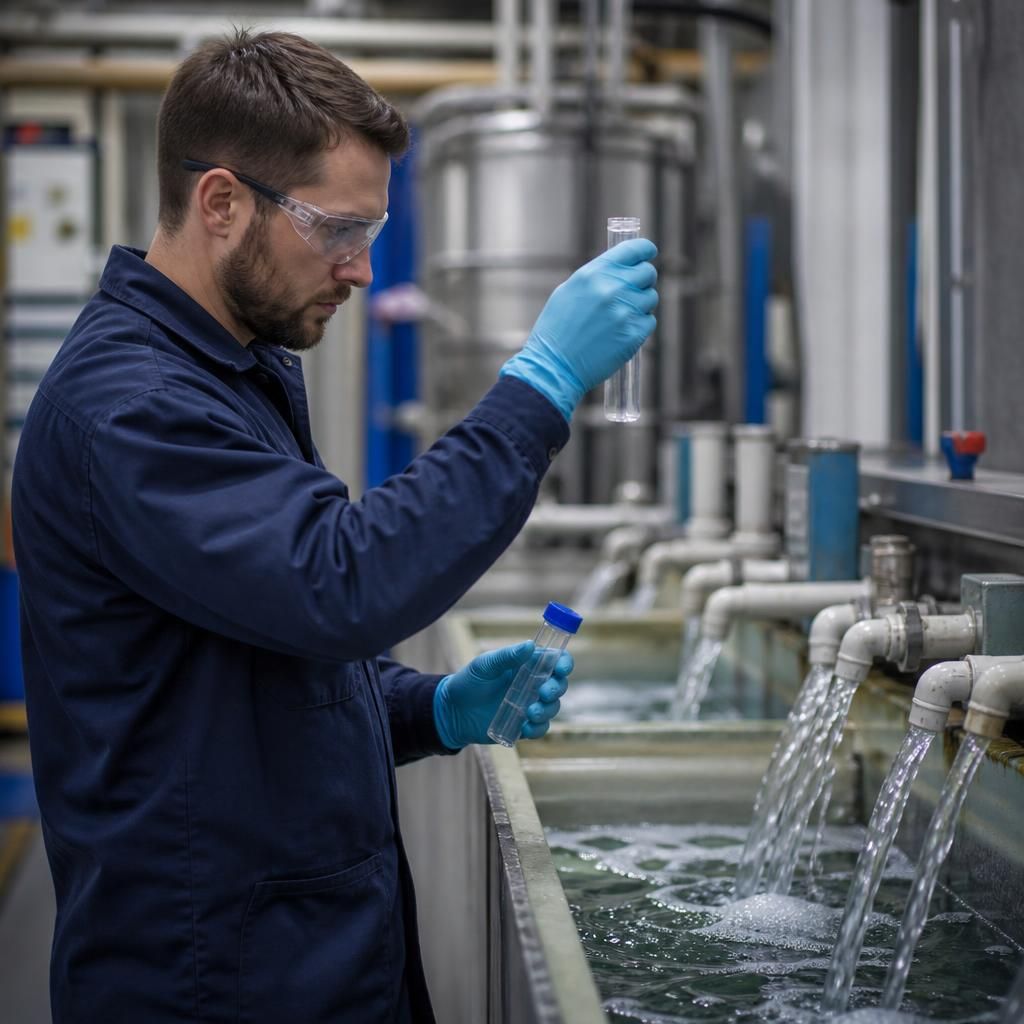
Process-water quality is an environmental factor that can directly affect pretreatment consistency. Hardness minerals, dissolved salts, suspended solids and variations in conductivity may interfere with rinsing, leave deposits on the metal or alter the working chemistry. These effects can reduce the consistency of the surface presented to the powder coating, even when the treatment stages themselves are correctly specified.
Water should therefore be assessed alongside the pretreatment chemical rather than treated as a separate utility issue. Review incoming-water test results, monitor changes during production and confirm whether filtration or treated water is needed for particular rinse stages. The selected chemical system should remain stable under the site’s actual water conditions and have practical controls for maintaining repeatable results.
Review Your Pretreatment Chemical Requirements
Discuss your substrate, operating environment and current pretreatment requirements with our powder coating specialists. We can help you identify the information needed to compare suitable chemical systems and prepare metal components for a durable finish.