

What steps are involved in ensuring that the surface preparation and coating application deliver the longest lifespan for metal components?
Longest coating life depends on thorough degreasing and abrasive surface preparation, followed by inspection to confirm a clean, correctly profiled surface. The specified powder must then be applied at a consistent film thickness and fully cured under controlled conditions, with edges, joints and recesses checked for complete coverage.
The longest service life is achieved through a controlled sequence: define the component’s operating conditions, select a compatible coating system, prepare and handle the part correctly, apply the powder under stable conditions, cure it to the specified requirement, and verify the finished coating before dispatch. Each stage affects the next, so a technically suitable powder can still fail prematurely if the metal, application method or post-coating handling is unsuitable.
1. Establish the coating specification
Before work begins, the coater should understand where the component will be used and what it will encounter. Relevant considerations include internal or external exposure, moisture, chemicals, abrasion, impact, heat, ultraviolet light and contact with other materials. The required appearance should also be agreed, including colour, gloss, texture and acceptable cosmetic variation.
This information determines whether a standard architectural or industrial powder is appropriate, or whether a specialist system is needed. Components exposed to demanding conditions may require additional corrosion protection, a different resin chemistry, or a multi-coat system. The specification should also identify areas that must remain uncoated, such as threaded holes, bearing seats, electrical contact points and close-fitting interfaces.
2. Assess the component before processing
Parts should be checked for features that could affect coating performance. Weld spatter, sharp projections, burrs, trapped moisture, inaccessible cavities and incompatible repair materials can create weak points. Fabrication defects may need correcting before coating, because powder coating is not intended to repair structural faults or conceal poor joint design.
Component geometry is equally important. Deep recesses, enclosed sections and narrow gaps can affect powder penetration and heat transfer. Drainage and vent holes may be needed in hollow fabrications to prevent retained solution, air or moisture from causing defects during processing. Reviewing these details before production reduces the risk of rework and helps ensure that the coating system is practical for the part.
3. Select suitable masking and racking arrangements
Parts should be supported in a way that allows them to be handled safely and coated consistently. Contact points used for hanging or earthing may leave small uncoated areas, so their position should be agreed in locations that do not compromise service performance. Where possible, racking should avoid marking visible faces and should support the component without distortion.
Masking protects areas that must remain free from powder. Plugs, caps, tapes and purpose-made masks need to tolerate the application and curing conditions without leaving residue or changing dimension. Masking is particularly important for threads, machined bores, mating faces and inspection points, where excess coating could affect assembly or operation.
4. Control the powder and application conditions
The powder should be compatible with the agreed substrate and end-use requirements, and it should be stored and handled in accordance with the supplier’s technical information. Colour changes, contamination and inconsistent reclaim practices can affect the finish, so material control is important where appearance or batch consistency matters.
During application, the operator should control gun settings, earthing, spray distance and the movement of the component or equipment. These factors influence transfer efficiency and the uniformity of the deposited coating. Particular attention is needed around corners, folds and changes in section, where electrical effects can cause uneven deposition. The aim is a consistent, continuous finish rather than simply adding more powder to compensate for difficult areas.
5. Manage the curing cycle accurately
Curing must be based on the metal part reaching the required temperature for the specified time, rather than relying only on the oven’s displayed air temperature. Component mass, thickness, shape and loading pattern all affect heat penetration. Under-curing can leave the coating with inadequate hardness or adhesion, while excessive heat exposure may affect colour, gloss or the substrate.
Parts should therefore be loaded consistently and processed using a controlled cycle appropriate to the selected powder. Where a project is critical, cure verification can include recording oven conditions and checking the finished coating using suitable tests. This provides evidence that the process has been followed rather than assuming that every part received identical heat exposure.
6. Inspect the completed finish
Final inspection should cover more than appearance. The component can be checked for missed areas, pinholes, runs, inclusions, impact marks, colour variation and damage around contact points. Depending on the specification, checks may also include coating thickness, adhesion, hardness and resistance to the relevant service conditions.
Any non-conformance should be assessed before the part is released. Local repair may be suitable for minor damage in an agreed location, while stripping and recoating may be necessary where adhesion, continuity or corrosion protection has been compromised. Records of the material, process and inspection findings can help maintain consistency across repeat batches.
7. Protect the coating after processing
A sound coating can be damaged by careless packing, stacking or transport. Components should be allowed to cool sufficiently before close packing, separated where surfaces could rub, and supported so that weight is not concentrated on vulnerable edges or projections. Clean gloves or suitable handling methods help prevent marking the finish before installation.
Long-term performance also depends on the component’s use and maintenance. Prompt removal of deposits, avoiding unsuitable cleaning chemicals and repairing mechanical damage before corrosion develops can extend the useful life of the coating. For manufacturers, fabricators, construction firms and automotive businesses across the Midlands, agreeing these preparation, application, inspection and handling requirements with the coating provider is an effective way to make the finished system match the component’s actual working conditions.
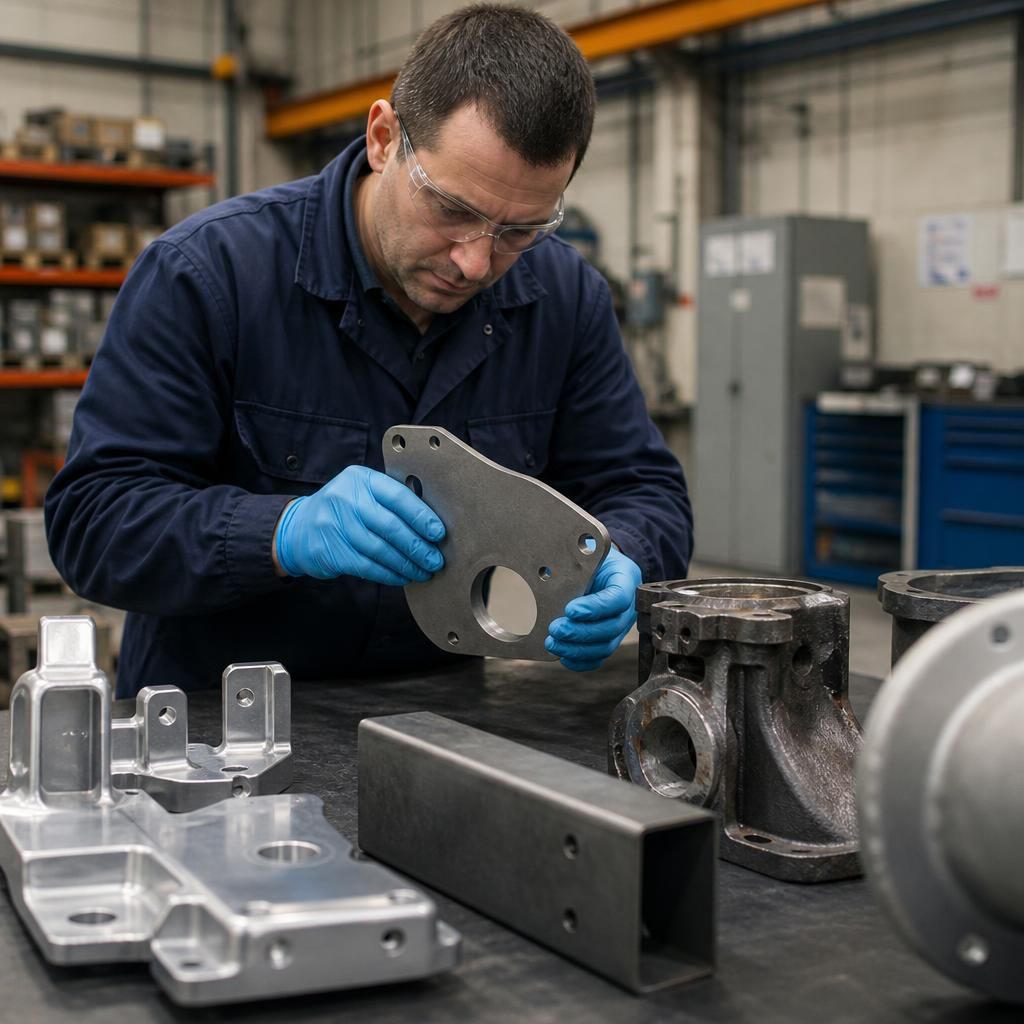
Surface preparation must be matched to the metal substrate, because steel, galvanised steel, aluminium and cast components present different adhesion and corrosion risks. A preparation method that is suitable for mild steel may damage a zinc coating, leave aluminium vulnerable to corrosion or fail to control gases released from a porous casting.
For galvanised or zinc-coated parts, preparation should remove oil, dirt and corrosion products without unnecessarily stripping the protective zinc layer. Aluminium may require careful cleaning and a suitable conversion treatment to manage its naturally formed oxide layer. Castings can contain pores or residues that release gas during heating, creating pinholes or blistering; these components may need additional preparation and process evaluation before coating.
- Identify the base metal and any existing protective layer before choosing abrasive and chemical treatments.
- Check for oils, salts, corrosion products, foundry residue and contaminants that could interfere with adhesion.
- Use a compatible pre-treatment system rather than assuming that one preparation method suits every component.
- Review unusual substrates or mixed-metal assemblies before production, since differences in thermal expansion and surface chemistry can affect the finished coating.
This substrate-specific approach reduces avoidable adhesion defects and helps the coating system provide consistent protection throughout the component’s working life.