

What are the environmental impacts and sustainability considerations when choosing shot blasting media for powder coating processes?
Choosing shot blasting media affects the powder coating process’s resource use, waste generation, dust emissions and energy consumption. More sustainable selection considers whether the media is durable and reusable, how it can be recovered or disposed of after contamination, and the transport required to supply it.
The environmental impact of shot blasting media depends on its full life cycle: how the raw material is produced, how it interacts with the component, what contaminants it collects and how it is managed afterwards. A sustainable choice therefore balances technical performance with material composition, potential pollution, part preservation and responsible end-of-life handling.
Consider the composition and origin of the media. Different abrasives carry different environmental profiles. Metallic media may contain recycled material and can be suitable for repeated processing, while mineral, glass or synthetic media may have different extraction, manufacturing and disposal implications. The relevant comparison is not simply whether a material is described as recyclable. Ask for information about recycled content, manufacturing processes, composition and any substances that could affect its classification after use.
Potentially harmful constituents require particular attention. Some media, coatings or surface contaminants can introduce metals, oils or other substances into the spent abrasive. The media itself may be relatively benign when new but become controlled or hazardous waste after blasting. Safety data sheets and supplier technical information should identify composition, handling requirements and relevant disposal considerations. Waste should be assessed according to what it contains, rather than treated as ordinary abrasive material by default.
Protecting the component is also a sustainability issue. An abrasive that is too aggressive can remove excessive base material, alter dimensions or create an unsuitable surface profile. That may lead to rejected parts, additional processing or premature replacement of the component. Conversely, media that is too mild or poorly matched to the substrate may leave contamination behind and compromise coating adhesion. Selecting the correct grade and shape helps produce a surface that supports a sound powder coating application, reducing avoidable rework and extending the useful life of the finished item.
Surface profile should be specified rather than estimated. The required profile varies with the metal, the existing condition of the surface, the powder coating system and the intended service environment. Trial blasting and profile checks can establish whether the chosen media is achieving adequate preparation without unnecessarily attacking the substrate. This is more sustainable than selecting the harshest abrasive as a general-purpose solution.
Contamination management affects the environmental outcome. Media used on painted, oily, galvanised or otherwise treated components can carry residues into later batches. Segregating media by application, preventing cross-contamination and maintaining suitable recovery equipment can help preserve usable material and prevent unsuitable abrasive from being returned to the process. Where different media types are used, clear labelling and controlled storage make it easier to keep waste streams separate and identify appropriate routes for each one.
Disposal decisions should be made before a media is introduced into production. Establish whether the spent material can be accepted for recycling, recovery or reuse, and what evidence the waste contractor requires. Do not assume that a potentially recoverable abrasive can be returned to a supplier or placed in a general recycling stream. The presence of removed coatings, corrosion products or process chemicals may change the permitted route. Records of waste classification and transfer documentation support both legal compliance and credible environmental reporting.
Packaging is another, smaller part of the life-cycle assessment. Bulk delivery, reusable containers and recyclable packaging can reduce secondary material use where they fit the quantity and handling arrangements. However, packaging should not determine the media choice if the abrasive produces an unsuitable surface or creates a more difficult waste stream. Technical suitability remains the starting point, followed by a comparison of the environmental consequences of viable options.
A practical selection review can include:
- the abrasive’s composition, recycled content and available life-cycle information;
- the likely contaminants from the components and previous coatings;
- the required surface profile and the risk of damaging the substrate;
- whether the media can be kept separate from incompatible waste streams;
- the documented route for spent material, including any testing or classification requirements;
- packaging arrangements and the consistency of supply; and
- process records covering surface quality, rework, contamination and waste handling.
Environmental claims should be supported by comparable evidence. A supplier’s statement that a product is eco-friendly is less useful than documented information about composition, recycled content, expected service behaviour and end-of-life options. Comparing alternatives against the same technical specification prevents a lower-impact claim from being based only on one stage of the product’s life cycle.
For powder coating preparation, the most defensible approach is to select media that meets the required cleaning and profiling standard with controlled effects on the part, then manage the resulting material through a documented waste and recovery process. That links environmental performance to measurable production controls rather than treating sustainability as a separate consideration from coating quality.
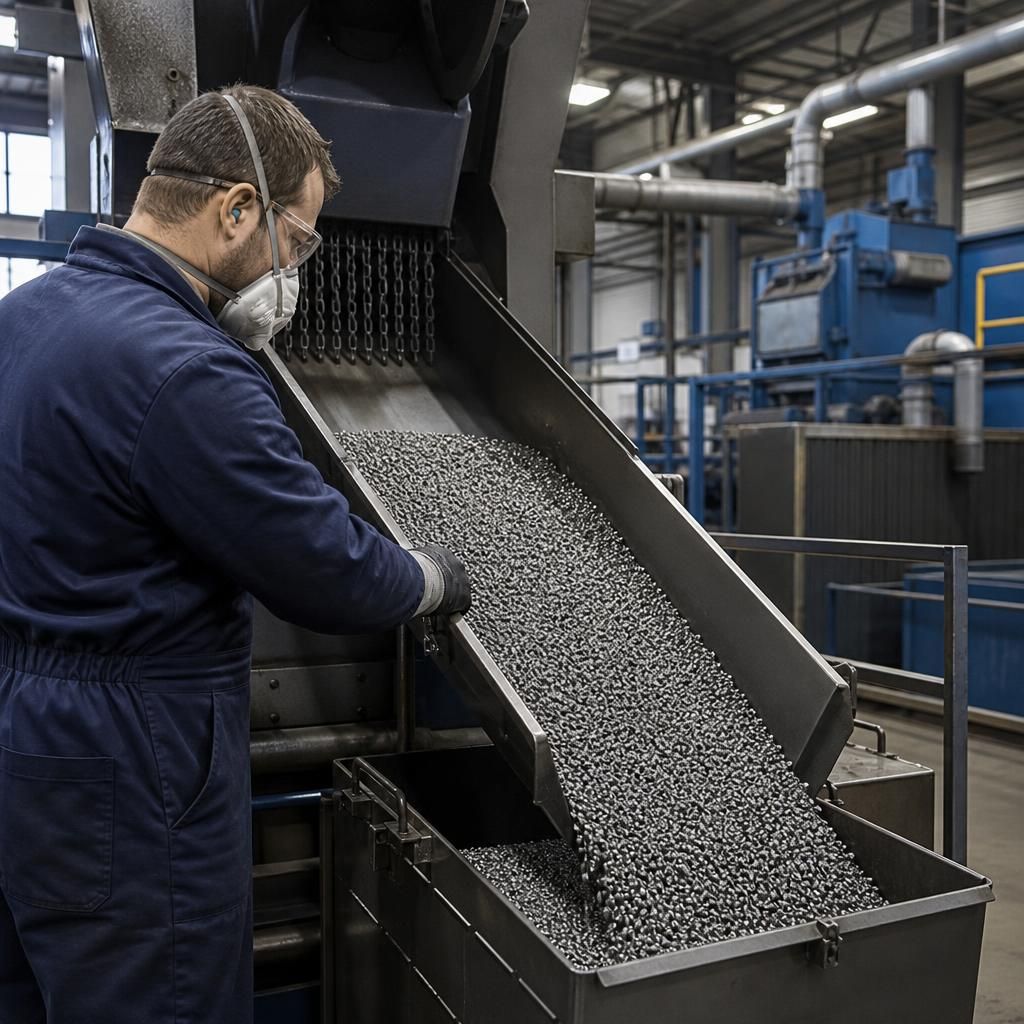
Shot blasting media can influence the energy required to prepare a component because its size, shape, density and condition affect blasting pressure, recovery equipment and dust extraction. Media that achieves the required surface preparation at a controlled operating setting may reduce unnecessary compressed-air demand and limit the load placed on reclaim and filtration systems.
This should be assessed through the complete process rather than by judging the abrasive alone. Compare media options at the same cleaning and surface-profile requirement, recording operating pressure, blasting time, extraction demand and the amount of usable media recovered. Equipment condition also matters: worn nozzles, blocked filters or inefficient separators can increase energy use regardless of the media selected.
Discuss Sustainable Shot Blasting Media Options
For help comparing shot blasting media against your component requirements and waste-handling arrangements, discuss your powder coating preparation needs with our team. We can help identify the technical and sustainability factors to review before selecting a media.