

What role do chemical treatments play in enhancing the corrosion resistance of steel prepared for powder coating?
Chemical treatments improve the corrosion resistance of steel before powder coating by removing remaining contaminants and forming a controlled conversion layer on the surface. This layer helps the powder coating adhere securely and reduces the risk of corrosion developing beneath the finish.
Chemical treatments enhance the corrosion resistance of steel prepared for powder coating by modifying the metal surface before the powder is applied. They can produce a stable conversion coating, reduce the steel’s tendency to react with moisture and oxygen, and create a more suitable interface between the substrate and the cured powder film. Their role is complementary: they do not replace sound steel preparation, correct coating application or adequate curing.
The main protective mechanism is conversion. A conversion treatment reacts with the outermost layer of steel and changes it into a thin, less reactive surface compound. Unlike a simple deposited film, this layer is chemically associated with the metal. It helps interrupt the electrochemical reactions that drive rusting and provides a more consistent foundation for the powder coating. If the finished coating is later damaged, this treated interface can reduce the rate at which corrosion develops around the exposed area, although it cannot make a deep scratch corrosion-proof.
Different treatments perform different functions.
- Alkaline cleaners condition the steel by breaking down oils, greases and processing residues that could interfere with subsequent treatment. Their effectiveness depends on concentration, temperature, contact time and thorough rinsing.
- Acid treatments may be used to remove oxide, scale or certain corrosion products. They must be carefully controlled because excessive etching, retained acid or incomplete rinsing can create a new source of coating defects and corrosion.
- Phosphate treatments form a crystalline conversion layer that can improve the stability of the steel-to-coating interface. Iron phosphate is commonly associated with general preparation, while zinc phosphate can provide a more substantial conversion layer where the specification and process are suitable.
- Chrome-free conversion systems, including certain zirconium- or titanium-based processes, are used where a thin, low-residue treatment is preferred. Their performance depends particularly on precise process control and the compatibility of the powder system.
- Silane-based treatments can promote chemical interaction at the interface and are used in some modern preparation systems. They are not interchangeable with every phosphate or metal-treatment process, so the complete pretreatment specification must be considered.
Surface coverage is important. A chemical treatment must reach the whole area intended for coating, including edges, recesses, weld zones, apertures and folded sections. Inconsistent spray contact, poor drainage or trapped solution can leave untreated patches. These local weaknesses may become the starting points for blistering, filiform corrosion or rust spread beneath the coating when the component is exposed to humidity, salts or industrial contaminants.
Rinsing and drying directly affect the result. Residual cleaner, acid, salts or treatment chemicals can interfere with powder application and curing. Water quality, rinse stages and drainage arrangements therefore matter as much as the active treatment itself. Steel should be dried properly before powder is applied; moisture trapped in joints, seams or porous weld areas can later contribute to blistering or corrosion-related coating failure.
Process control determines whether the treatment is beneficial. Operators normally control variables such as bath or solution strength, temperature, contact time, spray pressure, surface condition and rinse quality. Excessive treatment can over-etch the steel or leave an unsuitable residue, while insufficient treatment may produce an incomplete conversion layer. A controlled process is preferable to selecting the most aggressive chemical available.
The steel grade and previous condition also influence the choice. Bare mild steel, heavily scaled steel, galvanised steel and steel containing weld oxides do not respond identically. Galvanised or zinc-coated surfaces require a pretreatment designed for zinc rather than one intended only for bare steel. Welds may have heat tint, spatter or embedded residues that need attention before the chemical stage. Where oil, scale or corrosion is substantial, mechanical preparation may be needed before chemical treatment can work consistently.
Chemical pretreatment should also be matched to the powder coating, exposure conditions and required finish. Components used indoors may have different demands from steel exposed to rain, condensation, de-icing salts or industrial pollutants. A treatment that is suitable for one substrate and environment may not be appropriate for another. The full system should therefore be assessed as a sequence: steel condition, preparation method, chemical pretreatment, rinsing, drying, powder application and cure.
In practical terms, chemical treatment improves corrosion resistance by reducing the reactivity of the steel surface and strengthening the interface on which the powder coating depends. Its contribution is greatest when the treatment is uniform, chemically compatible and properly controlled, and when the finished powder film is continuous, correctly cured and appropriate for the component’s service environment.
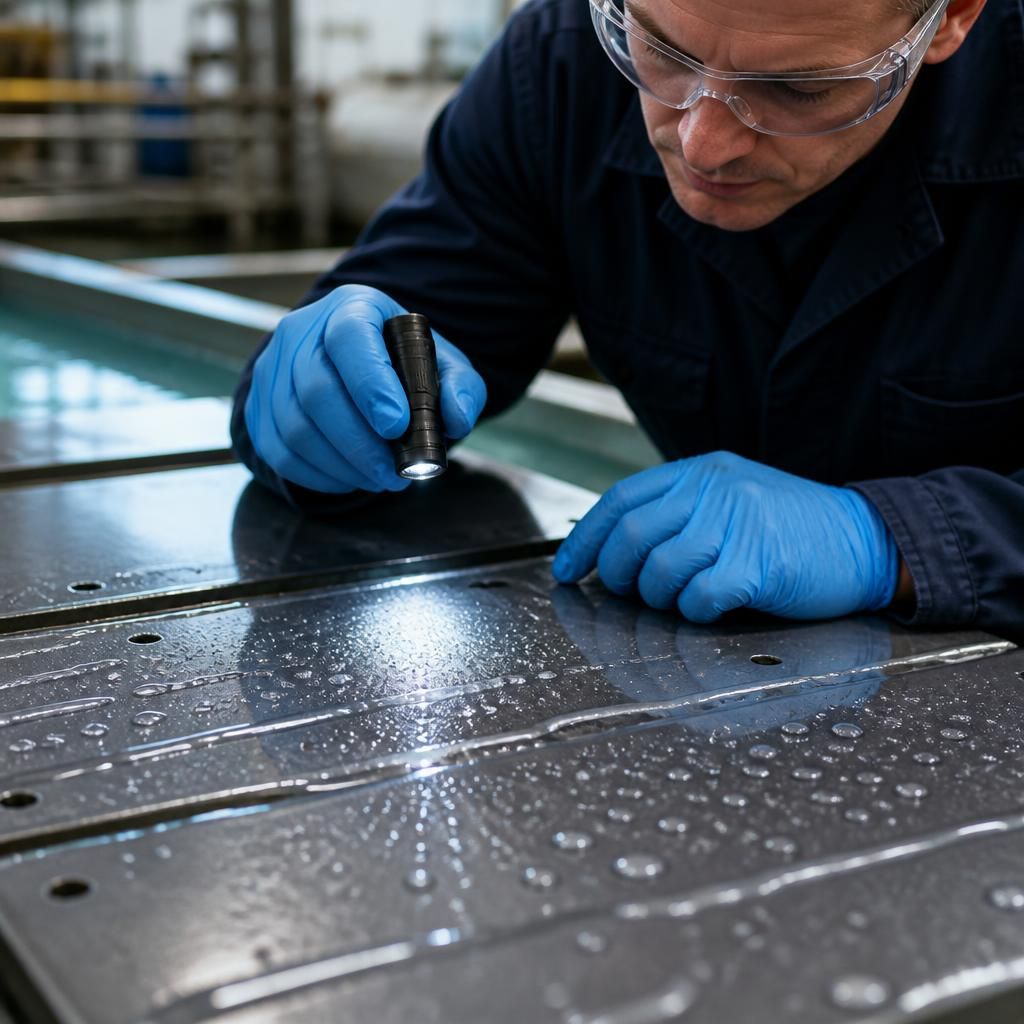
The effectiveness of chemical pretreatment should be verified before powder coating rather than assumed from the treatment stage alone. A properly prepared surface is normally checked for uniform appearance, complete coverage and signs of contamination. A water-break test can help identify residual oil: water should form an even sheet across a clean surface rather than separating into isolated beads. This test is an indication, not a substitute for the agreed process specification.
Where the coating system is critical, process records and test panels can provide further evidence that the conversion treatment is being applied consistently. Any patchy appearance, unexpected residue or failed surface check should be investigated before powder application. Correcting the pretreatment at this stage is preferable to discovering that a localised weakness has affected adhesion or corrosion performance after curing.
Discuss Chemical Pretreatment for Corrosion-Resistant Powder Coating
Discuss your steel substrate, service environment and required coating performance with a powder coating specialist to identify a suitable chemical pretreatment specification. Providing component details and any existing preparation requirements will help establish the appropriate process before coating begins.