

What specific techniques are employed during the powder coating primer process to ensure optimal adhesion for a variety of industrial applications?
Optimal adhesion is achieved through thorough degreasing and abrasive or shot blasting to remove contaminants and create a suitable key, followed by careful control of surface cleanliness and substrate condition. The primer is then selected for the specific metal and topcoat, applied at a consistent film thickness, and cured within the coating system’s specified temperature range to form a strong bond.
Powder coating primer adhesion depends on controlling the complete application sequence, not simply applying more primer. The main techniques are electrostatic powder application, controlled gun movement, correct grounding, careful management of difficult geometries, suitable intercoat timing and verification through coating and adhesion checks. Together, these measures help the primer form a continuous bond with the metal and provide a stable foundation for the subsequent topcoat.
Electrostatic application techniques
In electrostatic powder coating, the spray gun imparts an electrical charge to the primer particles while the workpiece is electrically grounded. The charged powder is attracted to the component, allowing an even deposit with limited overspray. The operator must balance voltage, current, powder flow and air volume for the component’s size, shape and material. Excessive charge can cause back-ionisation, in which trapped air disrupts the coating and creates pinholes or an uneven surface. Settings that are too low may reduce transfer to the part and produce inconsistent coverage.
Gun distance and movement are also important. Keeping the gun at a consistent distance and moving it at a controlled speed helps prevent heavy bands, thin patches and abrupt overlaps. Complex components may require a planned spray sequence so that recesses, corners and exposed faces receive adequate primer without excessive build-up on easily coated areas.
Managing corners, recesses and Faraday areas
Deep channels, internal corners, folded sections and enclosed profiles can create Faraday-cage effects. The electrical field tends to concentrate on outer edges, while powder is reluctant to enter recessed areas. A common technique is to reduce the electrostatic effect when approaching these regions, use a suitable spray angle and apply the powder to the recess before coating the more accessible surfaces. This helps avoid an outer layer that is excessively thick while the sheltered area remains under-coated.
Edges need particular attention because powder can pull away from sharp transitions during curing or leave insufficient protection at the point of greatest exposure. Where the component design permits, controlled gun passes and suitable edge coverage help create a continuous primer layer. Masking may be used to keep powder away from threads, mating faces, precision bores and electrical contact points, preventing later assembly problems without compromising the surrounding coating.
Grounding and component presentation
A reliable ground path is essential for electrostatic transfer. Racks, hooks and contact points must make clean electrical contact with the component, and their position should be chosen so that they do not create large uncoated shadows. Contact points may need to be moved or planned into non-critical areas when the component design allows it. Poor grounding can lead to weak attraction, irregular deposition and greater powder loss.
Components should also be presented consistently to the spray equipment. Rotating or repositioning large parts in a controlled manner allows the operator to maintain a suitable gun angle and distance. For batch production, repeatable hanging arrangements and defined spray paths reduce variation between individual parts, particularly where the product includes multiple profiles or welded assemblies.
Controlling the primer-to-topcoat interface
Adhesion is affected by how the primer surface is handled before the topcoat is applied. The primer must be sufficiently formed to resist disturbance, but the next layer must also be applied within the coating system’s permitted overcoat conditions. Excessive delay, handling damage or contamination between stages can weaken the interface even when the primer itself is sound.
Operators therefore protect primed components from unnecessary contact and inspect the surface before topcoating. Any visible defects, uncovered areas or powder disturbance should be assessed and corrected in accordance with the coating system requirements. Primer and topcoat powders also need to be chemically compatible; otherwise, the layers may show poor intercoat bonding, bubbling or other finish defects during the final cure.
Application checks for industrial batches
- Confirm that the spray equipment is clean and configured for the powder being used.
- Check the ground path and the condition of hooks, racks and contact points.
- Use a repeatable spray pattern suited to the component’s geometry.
- Inspect edges, recesses, weld areas and other locations that are difficult to coat evenly.
- Check the primer layer for visible defects before applying the topcoat.
- Record relevant process observations so that variations can be traced across a batch.
Where a component design, metal type or coating specification presents unusual adhesion risks, a trial panel or representative sample can be used to confirm the application approach before full production. Adhesion testing may then include a cross-hatch assessment, pull-off testing or another method specified for the project. These tests do not replace process control, but they help establish whether the primer and topcoat have formed the required bond.
For manufacturers and fabricators, the most dependable approach is to define the spray sequence, grounding arrangement, equipment settings, intercoat handling and inspection points for each component family. A specialist powder coater can review these factors alongside the component design and intended service conditions when developing a primer process for industrial work across the Midlands.
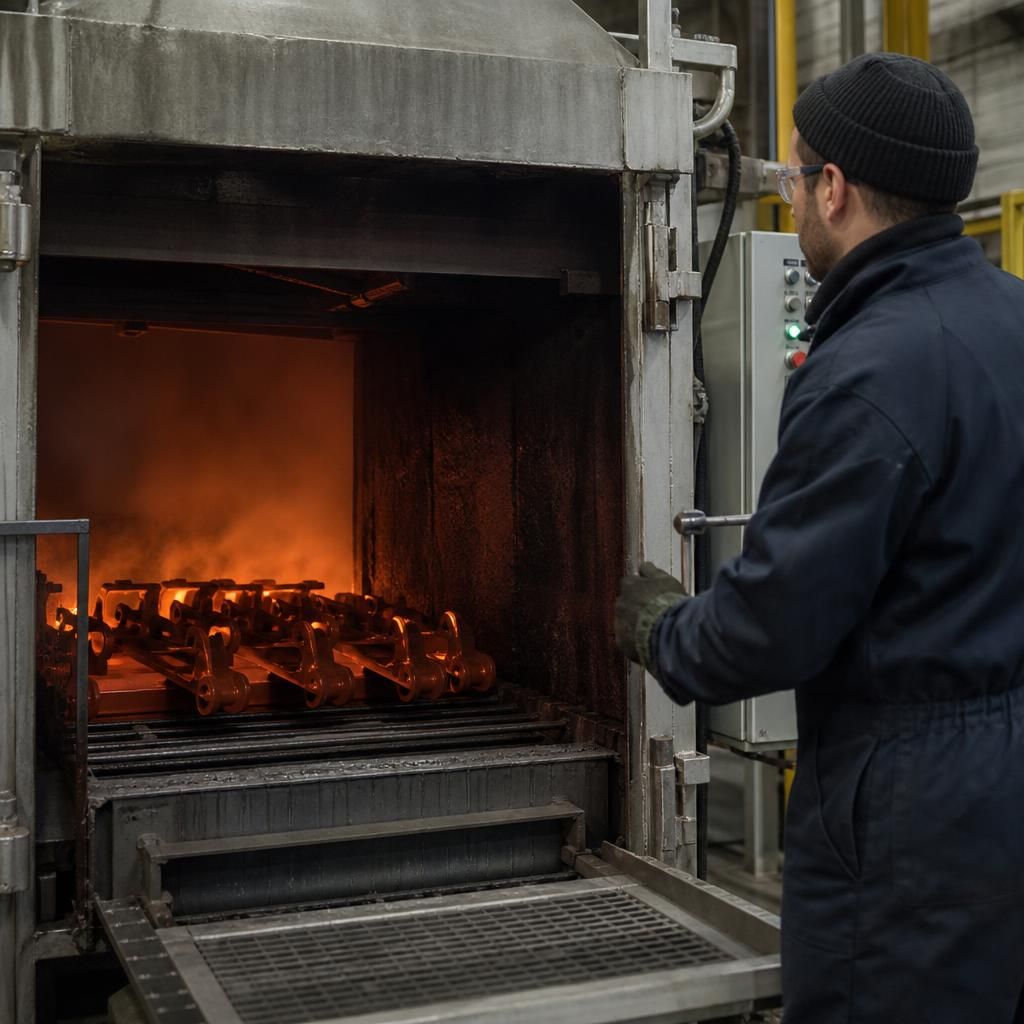
For porous castings, welded fabrications and components containing trapped moisture or air, outgassing control is an important adhesion technique. The part may require controlled preheating or a suitable degassing stage before primer application, allowing contaminants within the substrate or weld areas to escape rather than forming bubbles and voids beneath the coating during curing.
Preheating must be specified carefully because the substrate temperature affects how powder melts and flows. Operators should confirm that the component is at the correct temperature for the primer system, apply the powder uniformly, and avoid overheating, which can cause premature melting, uneven coverage or excessive film build. This approach is particularly useful where the component’s material, construction or previous processing makes trapped gas a foreseeable risk.