

How does stainless steel electrostatic coating contribute to reducing maintenance and lifecycle costs in industrial applications?
Stainless steel electrostatic coating helps reduce maintenance and lifecycle costs by creating a durable, even protective finish that limits corrosion, surface damage and contamination. By extending the serviceable life of components and reducing the need for frequent cleaning, repairs or recoating, it can lower the total cost of ownership when correctly specified and applied.
Stainless steel electrostatic coating reduces lifecycle cost mainly by improving cost predictability across manufacture, installation and subsequent use. The financial benefit is not limited to the coating charge itself: it also includes fewer handling operations, less disruption during maintenance, more consistent component quality and a lower risk of premature finish failure when the specification and application process are suitable.
Lifecycle cost includes more than the initial coating price. For an industrial stainless steel component, the relevant assessment may include:
- surface preparation and coating application;
- masking, racking and handling;
- transport, installation and commissioning;
- routine cleaning and inspection;
- replacement parts, remedial work and recoating;
- production losses or access costs associated with removing the component; and
- final refurbishment or disposal.
Electrostatic application can contribute to a lower total cost of ownership because the powder is attracted to the electrically grounded stainless steel component. This supports controlled deposition and can reduce unnecessary overspray compared with less targeted application methods. Powder that does not bond to the component may also be collected for controlled reuse, depending on the system and powder type. The practical result is better use of coating material and less waste to manage, although recovery arrangements must be confirmed for the particular process.
Consistent film formation also has a financial effect. A coating that is applied to the specified thickness and cured correctly is less likely to require immediate correction for thin areas, runs, contamination or other application defects. Fewer rejected or reworked parts reduce labour, additional material use and production delays. For batch work, repeatable racking, earthing and application settings are particularly important because variation between components can create inspection and rectification costs even when the individual coating price appears low.
There can also be savings in component handling. Powder coating is applied as a dry film before curing, so the process does not rely on solvent evaporation between application stages. Once the coating has completed its specified cure, the component can proceed through the production route without carrying wet coating into storage or assembly areas. This may simplify internal logistics and reduce the risk of damage caused by handling a partially dried surface. The exact benefit depends on the coating system, component geometry and the factory process into which coating is integrated.
Reduced maintenance expenditure comes from making routine care more manageable, rather than removing the need for care altogether. A correctly selected finish can provide a surface that is easier to inspect and clean within the operating environment. Where dirt, process residue or handling marks can be removed using approved cleaning methods, maintenance teams may spend less time on intensive remedial work. Cleaning products and procedures still need to be compatible with both the powder finish and the stainless steel substrate; aggressive chemicals, abrasive tools or unsuitable disinfectants can shorten coating life and create avoidable costs.
Coated components may also help control the cost of planned maintenance. If the finish remains serviceable during scheduled inspections, replacement can be based on condition and planned engineering requirements rather than being triggered by localised surface deterioration. This is particularly relevant where access requires isolating equipment, removing guarding or arranging lifting equipment. Avoiding unnecessary removal can protect production capacity and reduce the indirect costs associated with maintenance work.
Specification is central to achieving a lifecycle benefit. The powder material, coating thickness, surface preparation, cure schedule and required appearance should be selected for the actual service conditions. Relevant factors include:
- exposure to moisture, salts, chemicals or industrial contaminants;
- operating temperature and temperature cycling;
- abrasion, impact and repeated handling;
- cleaning frequency and cleaning-agent compatibility;
- component size, shape and access to recessed areas; and
- the electrical and mechanical requirements of the finished part.
A lower-priced coating that is unsuitable for the environment may create a higher whole-life cost through early repair or replacement. Conversely, specifying more performance than the application needs can increase the initial outlay without a corresponding benefit. A lifecycle assessment should therefore compare the expected service conditions with the required coating performance, not simply compare prices per component.
Stainless steel also requires appropriate preparation before coating. Oils, fabrication residues, oxide contamination and other surface conditions can interfere with adhesion. If preparation is inadequate, the apparent saving from a cheaper or quicker process may be lost through delamination, local repair or complete reprocessing. Correct preparation is therefore a cost-control measure as well as a quality requirement. Edges, welds, threaded areas, apertures and concealed faces deserve particular attention because they can affect both application efficiency and later inspection.
Design decisions influence cost in the same way. Components that can be securely racked and electrically earthed are generally easier to coat consistently than parts with difficult contact points or inaccessible surfaces. Specifying masking zones, drainage arrangements and suitable hanging points at the design stage can reduce manual preparation and prevent coating from interfering with assembly. For repeat production, small changes to component design or racking can produce a continuing process benefit across the batch life of the product.
For a meaningful comparison, industrial buyers should request a coating specification that records the required preparation, powder system, finish, target thickness, curing requirements, inspection criteria and any areas that must remain uncoated. These details make supplier quotations more comparable and help prevent hidden costs caused by differing assumptions. They also provide a reference for future batches, maintenance decisions and investigations if a finish does not perform as expected.
In practice, stainless steel electrostatic coating is most likely to reduce lifecycle cost when it is treated as part of the component’s engineering specification rather than as a final cosmetic operation. Powder-coating specialists serving manufacturers, fabricators, construction firms and automotive businesses can assess the component, batch requirements and collection or delivery arrangements before production. The resulting cost case should consider material use, preparation, application, inspection, handling and future maintenance together, with the selected finish matched to the service environment.
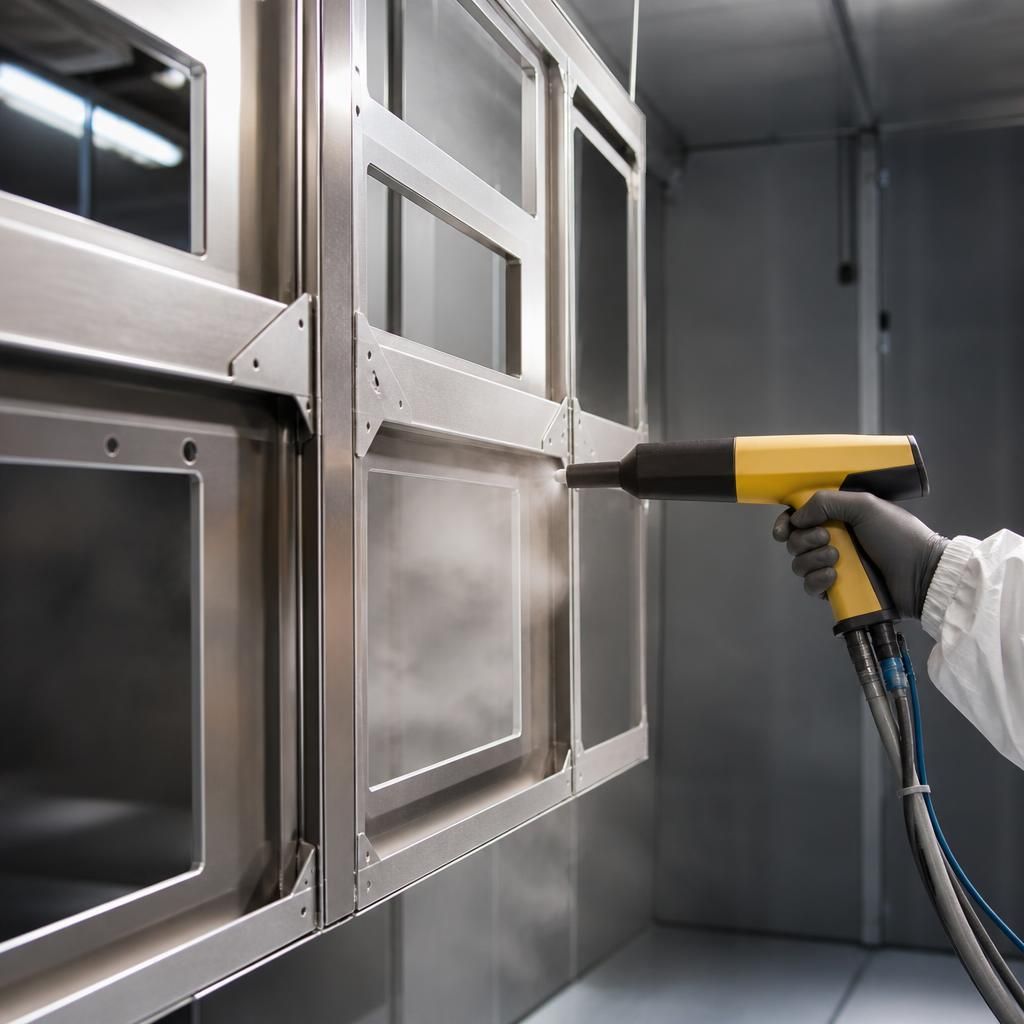
For visible stainless steel components, lifecycle cost also includes appearance-related refurbishment. A suitable electrostatic coating can help maintain a consistent colour and surface finish, reducing the likelihood that staining, marking or uneven visual deterioration leads to cosmetic rework or premature replacement. This is relevant to architectural metalwork, equipment housings, vehicle components and fabricated parts that must retain an acceptable appearance throughout service.
The cost benefit depends on selecting a finish that remains compatible with the component’s cleaning regime and operating environment. Where appearance is part of the acceptance criteria, defining the required finish at the outset helps distinguish genuine functional deterioration from minor cosmetic change and supports more proportionate maintenance decisions.
Discuss your stainless steel electrostatic coating requirements
Discuss your stainless steel electrostatic coating requirements with the team, including the component design, service environment, finish specification and expected quantities. This helps establish a coating approach suited to the application and the practical requirements of production.