

What are the key considerations for maintaining powder coating on galvanised steel to ensure longevity and performance?
Maintaining powder coating on galvanised steel requires regular inspection, prompt repair of chips or scratches, and cleaning with suitable non-abrasive methods. Consider the service environment, drainage and contact with chemicals, as these factors can affect coating integrity and the protection of the underlying steel.
Maintaining powder coating on galvanised steel is primarily about preserving the coating’s adhesion, surface integrity and role as part of a corrosion-protection system. Effective maintenance therefore extends beyond appearance: it should account for the coating specification, mechanical exposure, joint details, installation activity and any early signs that the coating or galvanised layer is no longer performing as intended.
Keep the original coating specification. Maintenance should be based on the powder type, colour, gloss level, film thickness requirements and intended exposure classification recorded for the project. This information helps identify suitable cleaning materials, repair products and recoating methods. Using an incompatible touch-up coating can create differences in adhesion, colour, flexibility or weathering performance, particularly where repaired areas meet the original powder coating.
Assess changes in appearance correctly. Fading, loss of gloss or light chalking may indicate normal weathering rather than immediate loss of protection. Blistering, flaking, delamination, edge lifting, bubbling or staining require closer assessment because they can indicate poor adhesion, moisture ingress, contamination or corrosion developing beneath the coating. The cause should be established before any local repair is carried out; otherwise, the visible defect may return around the repaired area.
Protect the coating from mechanical damage. Powder coating can be damaged by impact, abrasion, dragging components across one another or using unsuitable tools during installation and maintenance work. Protective pads, suitable lifting methods and careful handling are particularly important for fabricated parts with exposed corners, narrow sections and contact points. Where the component is subject to repeated rubbing or impact, the coating specification should be reviewed to confirm that it is appropriate for that duty.
Pay attention to edges, joints and fittings. Corners, folded edges, drilled holes, cut-outs, weld zones, lap joints and fastener interfaces can behave differently from broad, accessible faces. Water or debris trapped at a joint can undermine the protective system, while movement between components can wear through the coating. Sealants, gaskets and fixings used alongside the coated steel should be compatible with the coating and the surrounding galvanised surface. Any alteration made after coating, such as drilling or cutting, needs suitable treatment so that it does not create an unprotected route for corrosion.
Use controlled repair methods. Small areas of damage should be prepared carefully to remove loose material and any corrosion without unnecessarily enlarging the affected area. The repair product must be suitable for use over the existing powder coating and galvanised steel, and application should follow the product manufacturer’s preparation and curing instructions. A local repair will not provide a reliable result if the surrounding coating has poor adhesion or if corrosion remains beneath the visible defect.
Where deterioration is widespread, local touch-up work is unlikely to be sufficient. The component may require removal of the failed coating, treatment of the substrate and application of a compatible new coating system. This is more involved than cosmetic restoration, so the condition of both the powder layer and the galvanised coating should be evaluated before specifying the remedial work.
Control later site work. Welding, grinding, drilling, cutting and the installation of brackets can introduce heat, sparks, swarf and bare areas after the original coating process. These activities should be planned to minimise contamination and damage, with affected areas assessed and reinstated using a compatible protective system. Temporary protection is also useful when coated components are stored, transported or installed alongside unfinished steelwork.
Maintain useful records. A maintenance record should note the coating specification, installation date, exposure conditions, observed defects, repair materials and any changes made to the component. Photographs and consistent descriptions can help distinguish gradual weathering from localised failure. This information supports more accurate decisions about whether a defect needs observation, local repair or full recoating.
For industrial components, the most reliable approach is a planned maintenance regime based on the actual duty of the galvanised steel, the coating system used and the consequences of failure. Where adhesion loss, corrosion staining or repeated mechanical damage is present, a coating specialist can assess the failure mechanism and identify a repair or recoating system that is compatible with the existing substrate.
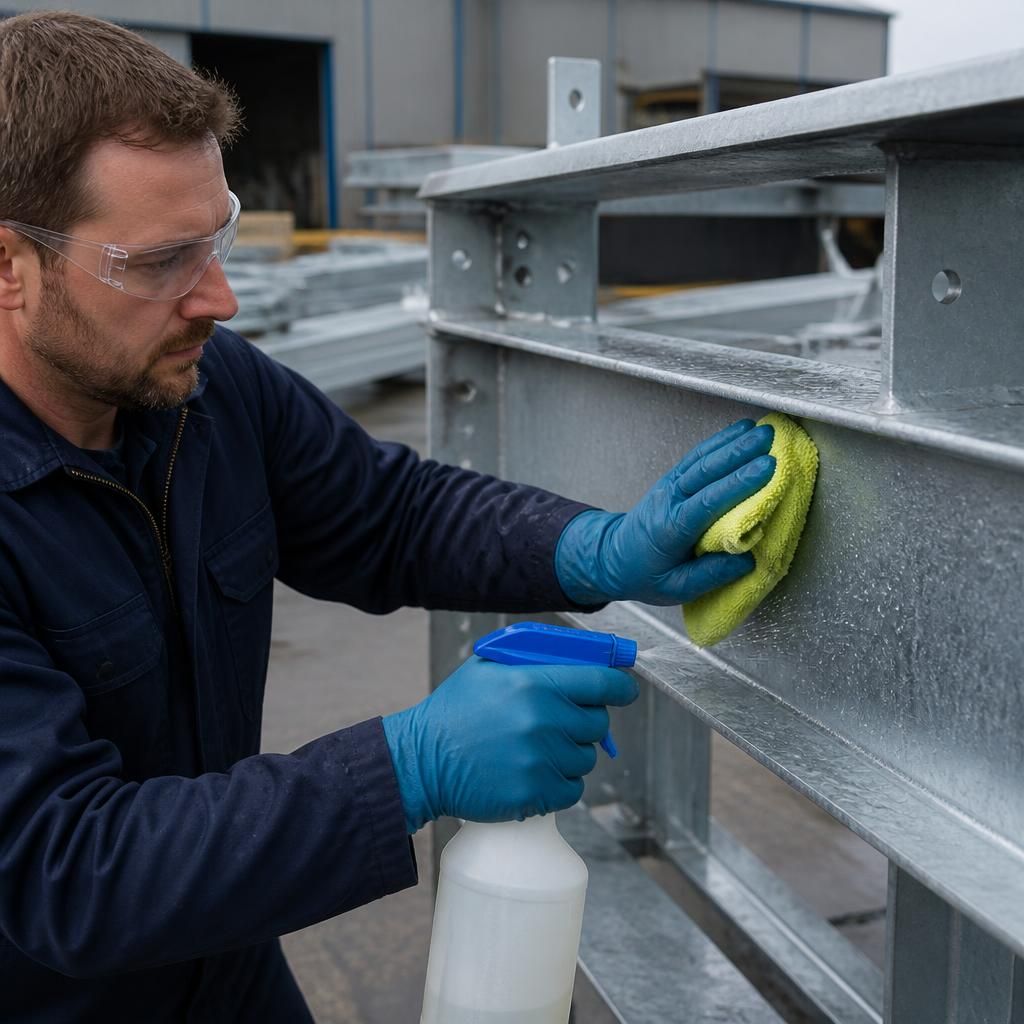
Routine cleaning is a key part of maintaining powder coating on galvanised steel because deposited dirt, salts and industrial pollutants can retain moisture against the surface and increase the risk of coating deterioration. Cleaning should remove contamination without scratching, softening or chemically attacking the powder coating.
- Use clean water with a mild, pH-neutral detergent and a soft cloth, sponge or non-abrasive brush.
- Rinse thoroughly so detergent and loosened contaminants are not left on the surface.
- Give particular attention to horizontal surfaces, recesses and drainage points where deposits can collect.
- Avoid abrasive pads, aggressive solvents, strongly alkaline or acidic cleaners and harsh scraping tools unless their compatibility has been confirmed.
- Do not direct high-pressure water at damaged edges, joints or areas where the coating is lifting, as this can force moisture beneath the finish.
After cleaning, inspect the surface while it is free from deposits. This makes it easier to distinguish ordinary soiling from fading, staining, blistering or other changes that may require technical assessment.