

What are the environmental and safety considerations of using different anti-corrosion coating materials on steel?
Different anti-corrosion coating materials affect the environment and workplace through their solvent or VOC content, hazardous substances, energy use during curing, waste generation and potential emissions. Powder coatings generally produce minimal VOC emissions, but their powders require controlled handling to prevent inhalation and combustible-dust risks, while liquid and zinc-rich systems require careful management of solvents, fumes, skin contact, ventilation and disposal.
Environmental and safety considerations for anti-corrosion coatings extend across the full coating life cycle: manufacture, surface preparation, application, curing, service, maintenance and eventual removal. The appropriate material depends on the steel grade, exposure conditions, required service life, application method and the controls available at the coating facility.
Powder coatings are often considered where low solvent emissions and a durable finish are important. Their environmental profile still depends on the formulation, curing temperature, film thickness, overspray management and electricity used by the curing equipment. Powder overspray can sometimes be recovered in a controlled process, but mixed or contaminated powder may not be suitable for reuse. Unused material and contaminated filters must be handled according to the product safety data sheet rather than treated as general waste.
Powder application also requires specific workplace controls. Operators should use suitable respiratory, eye and skin protection, maintain effective extraction and keep application equipment properly earthed. Good housekeeping is essential because accumulated powder can create both inhalation and combustible-dust hazards. The risk is affected by the powder formulation, concentration, ventilation and equipment design, so a COSHH assessment and, where applicable, assessment of explosive-atmosphere risks should be completed.
Liquid coatings cover a broad group, including solvent-borne, water-borne, high-solids and two-pack systems. Solvent-borne products may contain organic solvents that require controlled storage, ventilation and ignition-source management. Their application can also produce vapour and spray mist, making the design and use of a spray booth, local exhaust ventilation and appropriate respiratory protection important. Skin contact should be prevented because repeated exposure to resins, solvents, catalysts or curing agents can cause irritation or sensitisation.
Water-borne coatings generally reduce the quantity of organic solvent used, but they are not automatically risk-free. They can contain co-solvents, preservatives, pigments and other substances requiring control. Moisture, drying conditions and wastewater management also need consideration. Washings, uncured residues and contaminated containers should not be discharged to drains unless the relevant authority and product instructions specifically permit it.
Zinc-rich coatings use metallic zinc to provide barrier protection and, when correctly specified, sacrificial or galvanic protection to exposed steel. Their environmental and safety profile is influenced by zinc content, binder chemistry, application method and the way residues are collected. Zinc-containing waste, spent abrasive and removed coating should be classified before disposal, particularly where the coating has become contaminated during service. Thermal processes involving zinc can generate metal fumes, so suitable extraction and respiratory controls are needed.
Two-pack and specialist systems may introduce additional hazards from curing agents, reactive resins or isocyanate-containing components. The risks cannot be judged from the base resin alone. The safety data sheet should be checked for sensitisation, skin absorption, inhalation, mixing ratios, pot life and disposal requirements. Closed transfer or measured mixing systems can reduce splashes and vapour release, while operators need training in spill response and decontamination.
Surface preparation is part of the environmental assessment. Abrasive blasting can generate dust, noise and large quantities of spent abrasive containing removed rust, mill scale, old paint and other contaminants. Chemical cleaning and conversion treatments can create acidic or alkaline residues. Preparation methods should therefore be selected with containment, extraction, wastewater control, waste classification and worker exposure in mind. Existing coatings should be tested or assessed before disturbance where there is any possibility of hazardous legacy substances.
Curing and drying affect energy use. Powder systems normally require an oven, while some liquid coatings cure at ambient temperature and others need heat or a controlled two-stage cure. A lower curing temperature does not by itself establish a lower overall environmental impact: durability, rework, transport, extraction, waste and the energy source all contribute. Incorrect curing can also leave a coating under-cured, reducing performance and creating additional waste through repair or reapplication.
Durability is an environmental consideration in its own right. A coating that remains intact in the specified environment can reduce the need for stripping, recoating, replacement parts and associated preparation work. This benefit depends on correct steel preparation, film thickness, edge coverage, drainage, joint design and coating selection. No coating should be treated as universally suitable: an indoor decorative formulation may not withstand immersion, aggressive chemicals, coastal exposure or high temperatures.
During service, inspection should focus on damage, corrosion at edges and joints, under-film corrosion, blistering, cracking and areas where water or contaminants can collect. Promptly repairing local damage can avoid extensive removal and reduce the quantity of waste generated during future maintenance. Repairs must be compatible with the original coating and the exposure conditions.
Waste and end-of-life treatment should be considered before the coating is selected. Waste streams can include unused product, overspray, filters, masking materials, contaminated packaging, spent abrasive, rinse water and stripped coating. These materials may require separate storage, classification and collection by an appropriately authorised waste contractor. When coated steel is cut, heated or recycled, the coating can produce fumes or residues; the downstream process should be informed about the coating type where necessary.
For a sound comparison, request the current safety data sheet and technical data sheet for each proposed system, then assess:
- hazardous substances, exposure routes and required controls;
- solvent, water and energy requirements during application and curing;
- surface-preparation method and the likely waste stream;
- fire, explosion, storage and transport risks;
- expected performance in the actual corrosivity and temperature conditions;
- repair, recoating and end-of-life requirements; and
- legal obligations for worker protection, waste handling and environmental release.
The safest and most environmentally responsible choice is therefore not simply the coating with the lowest solvent content. It is the system that provides the required corrosion resistance while allowing the preparation, application, curing, maintenance and disposal stages to be controlled properly. A documented risk assessment, product-specific instructions and competent application are essential for making that comparison reliably.
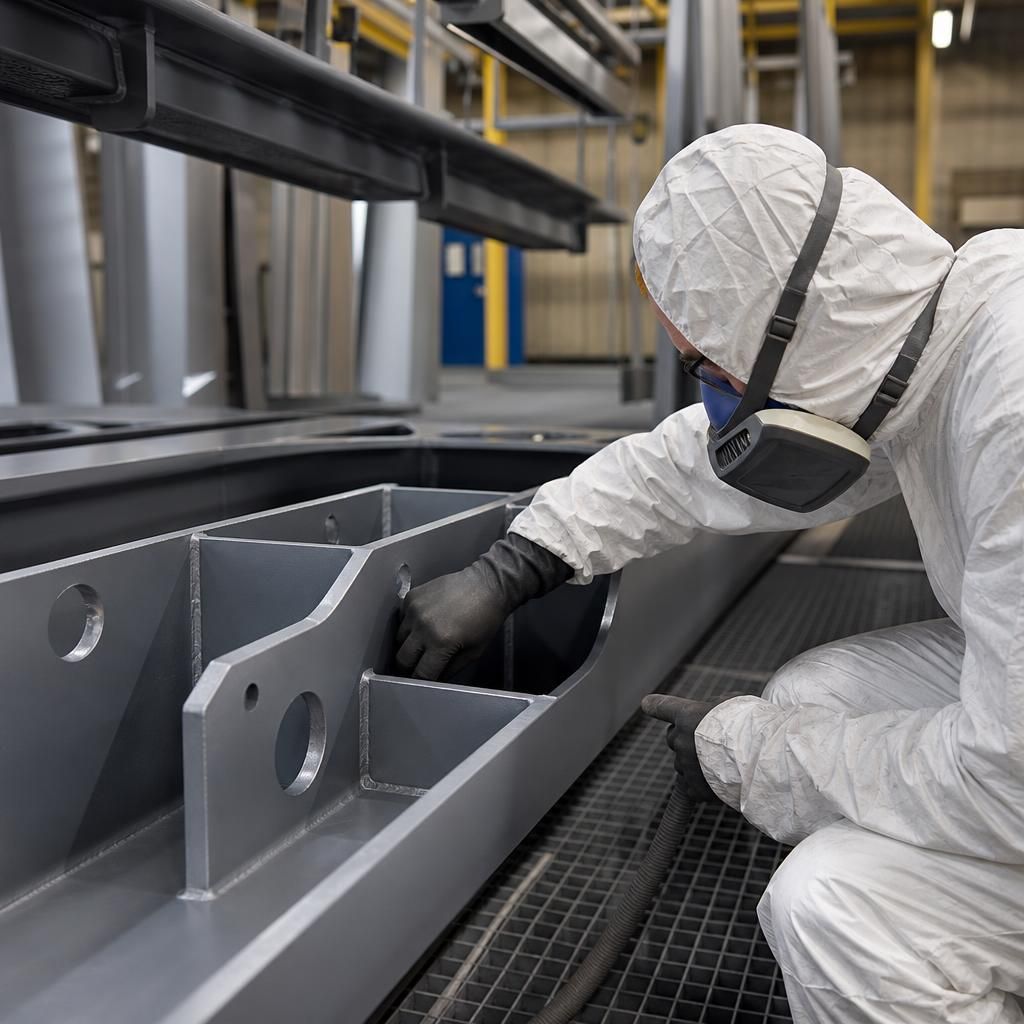
Component design can change the safety and environmental implications of an anti-corrosion coating. Hollow sections, deep recesses, narrow gaps and overlapping joints may retain cleaning chemicals, rinse water, abrasive or uncured coating, making effective drainage, ventilation and access important during preparation and curing.
Before selecting a coating material, check whether the steelwork can be safely processed without excessive masking, rework or trapped residues. Providing suitable drain and vent openings, allowing access for inspection, and identifying areas that require controlled masking can improve coating consistency while reducing contaminated waste and unnecessary repeat treatment.
Discuss Your Anti-Corrosion Coating Requirements
Discuss your steel components, service environment and proposed coating system with our team to identify practical environmental and safety considerations before work begins. We can help assess the information needed for a suitable anti-corrosion coating specification.