

What maintenance is required for high gloss silver powder coated aluminium to prolong its lifespan?
High gloss silver powder-coated aluminium should be cleaned regularly with clean water and a mild, non-abrasive detergent, using a soft cloth or sponge to remove dirt without dulling the surface. Inspect the coating for chips, scratches or exposed aluminium, avoid harsh chemicals and abrasive tools, and arrange prompt repair of any damage to help prevent corrosion and further deterioration.
Prolonging the lifespan of high gloss silver powder-coated aluminium requires more than preserving its appearance. The coating should be protected from prolonged moisture, incompatible materials, excessive friction and site conditions that can undermine the bond between the finish and the aluminium. Maintenance should therefore include care of the surrounding installation, suitable handling and periodic review of areas exposed to harsher conditions.
Control moisture around the installation
- Keep drainage paths, weep holes and ventilation gaps clear so water cannot remain against coated surfaces or collect inside profiles.
- Check joints, overlaps and concealed interfaces for trapped moisture, particularly where aluminium sections meet other materials.
- Ensure damaged or deteriorated sealant is replaced with a product compatible with powder-coated aluminium. Incompatible sealants can stain the finish or interfere with adhesion at adjoining surfaces.
- Prevent soil, leaves and other debris from remaining in contact with the coating, as retained moisture and contaminants can create localised deterioration.
Reduce mechanical wear
High gloss surfaces show scuffing and changes in sheen more readily than textured finishes. Avoid dragging tools, components or packaging across the aluminium, and use protective separators during storage, transport or assembly. Where panels, doors or moving parts contact one another, check alignment and hardware adjustment so that repeated rubbing does not wear through the coating.
Do not attach temporary labels, tapes or protective films for longer than necessary. Adhesive residues can become difficult to remove, while poorly selected tapes may leave marks or affect the surface. If temporary protection is required, its suitability for powder-coated aluminium should be confirmed before use and the material should be removed in accordance with the coating or installation guidance.
Manage contact with other metals and building materials
Aluminium can be affected by galvanic corrosion when it remains wet while in contact with certain dissimilar metals. Isolating washers, sleeves or compatible jointing materials may be needed where coated aluminium meets steel, copper or other conductive materials. Fasteners should be suitable for the environment, and metal swarf produced during drilling or cutting should not be left on the finished surface, as it can rust and cause staining.
Mortar, cement, plaster, bitumen and other construction residues should be prevented from drying on the coating. These substances can be chemically aggressive or difficult to remove without damaging the gloss. During building work, use a protection method approved for powder-coated surfaces and take care that protective coverings do not trap water or abrasive grit against the aluminium.
Account for the exposure environment
Maintenance needs are greater where the aluminium is exposed to salt-laden air, industrial pollutants, traffic deposits, chemical vapours or airborne grit. Locations near roads, manufacturing processes or the coast should be assessed according to the actual contaminants present, rather than treated in the same way as a clean indoor environment. Any site-specific maintenance regime should follow the coating supplier’s technical guidance and the requirements of the installation.
High temperatures, strong sunlight and repeated temperature changes can also place stress on seals, joints and adjacent materials, even where the powder coating itself remains intact. Pay particular attention to interfaces, movement joints and areas shaded from drying, because deterioration may begin in the surrounding construction rather than across the visible face of the coating.
Use a planned maintenance record
For commercial and industrial installations, record the location of coated components, the surrounding exposure conditions and any products used during maintenance. Note changes in gloss, staining, sealant condition, joint movement and hardware operation. This makes it easier to identify whether a problem is caused by contamination, mechanical contact, moisture retention or a wider installation issue.
If the finish becomes locally damaged or the aluminium is exposed, the correct remedial method depends on the extent, location and cause of the defect. Small cosmetic repairs may be possible with a compatible repair system, whereas extensive deterioration, poor adhesion or corrosion may require preparation and recoating by a specialist. A repair should address the source of the damage as well as the visible mark; otherwise moisture or continued abrasion can cause the defect to return.
Before applying any repair product, coating, sealant or treatment, confirm that it is compatible with the existing powder coating and that the resulting colour and gloss level are acceptable. High gloss silver finishes can be difficult to blend invisibly after local repair, so substantial remedial work may be better assessed as a complete component or section rather than treated with repeated spot applications.
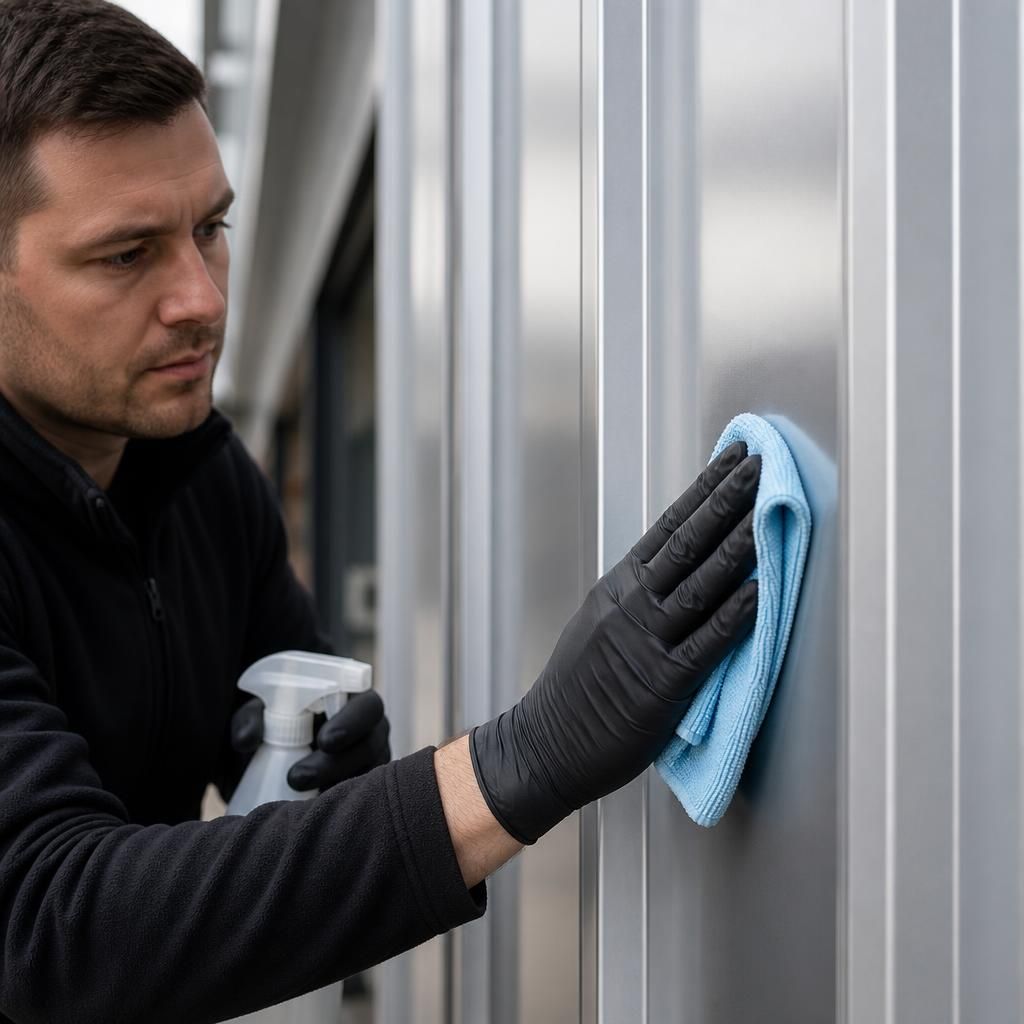
Cleaning products should be assessed for their effect on the high gloss silver finish before they are used across the installation. Apply any unfamiliar detergent or treatment to a small, inconspicuous area first, then check for changes in gloss, colour, streaking or surface tackiness after rinsing and drying. A product that appears harmless on one metal finish may leave a visible mark on powder-coated aluminium.
Cleaning should also avoid forcing water into joints, seals or drainage points. Do not direct high-pressure water or steam at close range to coating edges, interfaces or moving components unless the method has been approved for the installation. Remove residue fully and allow water-trapping areas to dry, particularly around fasteners, overlaps and enclosed profiles. This helps distinguish a coating problem from moisture or cleaner residue retained by the surrounding construction.
Discuss Maintenance for High Gloss Silver Powder-Coated Aluminium
If high gloss silver powder-coated aluminium is showing wear, staining or exposed metal, discuss the component’s condition with Powder-coatings.co.uk before selecting a repair or recoating approach. The team can advise on a suitable powder coating solution for the component and its intended environment.