

What are the long-term benefits of choosing nylon coatings for high-wear applications in industrial settings?
Nylon coatings provide a durable, low-friction barrier that helps metal components withstand repeated contact, abrasion and impact in high-wear industrial environments. Over the long term, this can extend component service life, protect against corrosion and reduce maintenance and replacement requirements.
Nylon coatings offer long-term value in high-wear industrial settings by maintaining a protective, functional surface over repeated operating cycles. Their benefits extend beyond the initial improvement in surface performance: a correctly selected and applied coating can support more consistent component operation, protect mating parts and make the condition of coated items easier to manage throughout their service life.
More predictable component performance
High-wear components can gradually develop scoring, surface damage and changes in geometry as their working surfaces are exposed to continual contact. A nylon coating provides a controlled polymer surface between the metal and the operating environment. This can help preserve the intended interaction between components, particularly where consistent movement, handling or positioning is important.
Maintaining the designed surface condition may also reduce variation between production batches. For manufacturers and fabricators, this can make coated parts easier to integrate into assemblies and reduce the likelihood that surface deterioration will affect fit, operation or downstream quality checks.
Protection for associated components
A nylon surface can be less aggressive towards mating parts than direct metal-to-metal contact. This is useful where a coated guide, roller, chute, clamp or handling component works against another finished surface. By limiting damage to the adjacent part, the coating may help prevent a local wear problem from becoming a wider assembly issue.
This benefit is especially relevant when the uncoated mating component is difficult to remove, expensive to replace or critical to production. The correct coating specification must still account for the hardness, shape, load and movement of both surfaces; nylon is not a universal substitute for engineering design.
Improved resistance to the surrounding environment
Over an extended service period, industrial components may encounter moisture, oils, cleaning agents, process residues and outdoor exposure. Nylon can provide a separating layer between the metal substrate and some of these conditions, helping the component retain a serviceable surface for longer. The actual result depends on the nylon formulation and the chemicals, temperatures and exposure times involved.
Different nylon types have different levels of resistance. Nylon can also absorb moisture, which may affect its dimensions and mechanical behaviour in wet or humid environments. For that reason, long-term suitability should be assessed against the complete operating environment rather than selected solely because the application is described as high wear.
Fewer interruptions associated with surface deterioration
When a coated component remains within its required operating condition, inspections and planned servicing can be based more closely on the equipment’s actual duty cycle. This can make maintenance planning more orderly and reduce the disruption caused by unexpected surface defects. It does not remove the need for inspection: coating damage, lifting, cracking or localised wear should be identified before it affects the substrate or connected equipment.
For batch manufacturers and engineering businesses, a repeatable coating specification can also simplify future refurbishment. Recording the substrate preparation, coating type, thickness requirements and curing conditions provides a useful reference when similar components are recoated or replacement parts are commissioned.
Better use of the underlying metal component
A coating can allow an existing metal component to remain in service as a functional part of the assembly rather than being discarded solely because its working surface has deteriorated. This may support refurbishment programmes and reduce the need to manufacture an entirely new component, provided the substrate remains structurally sound and the coating can be removed or renewed appropriately.
The long-term result depends heavily on preparation. Contamination, poor adhesion, unsuitable edge treatment or incorrect curing can shorten coating life regardless of the inherent properties of the nylon. Components should therefore be assessed before treatment, with attention given to surface condition, access to all required areas, coating thickness, tolerances and the loads applied in service.
Why specification remains important
Nylon coatings are most effective when the coating system matches the application. Important considerations include operating temperature, contact pressure, movement, impact, exposure to chemicals or water, dimensional tolerances and the required finish. Excessive heat, unsuitable chemicals, trapped moisture or a coating that is too thick for the assembly can undermine the expected long-term benefit.
In practice, the value of nylon coating is therefore measured over the complete working life of the part, not just by its appearance immediately after application. Correct material selection, thorough preparation, controlled application and appropriate inspection work together to provide a more stable and maintainable surface for demanding industrial use.
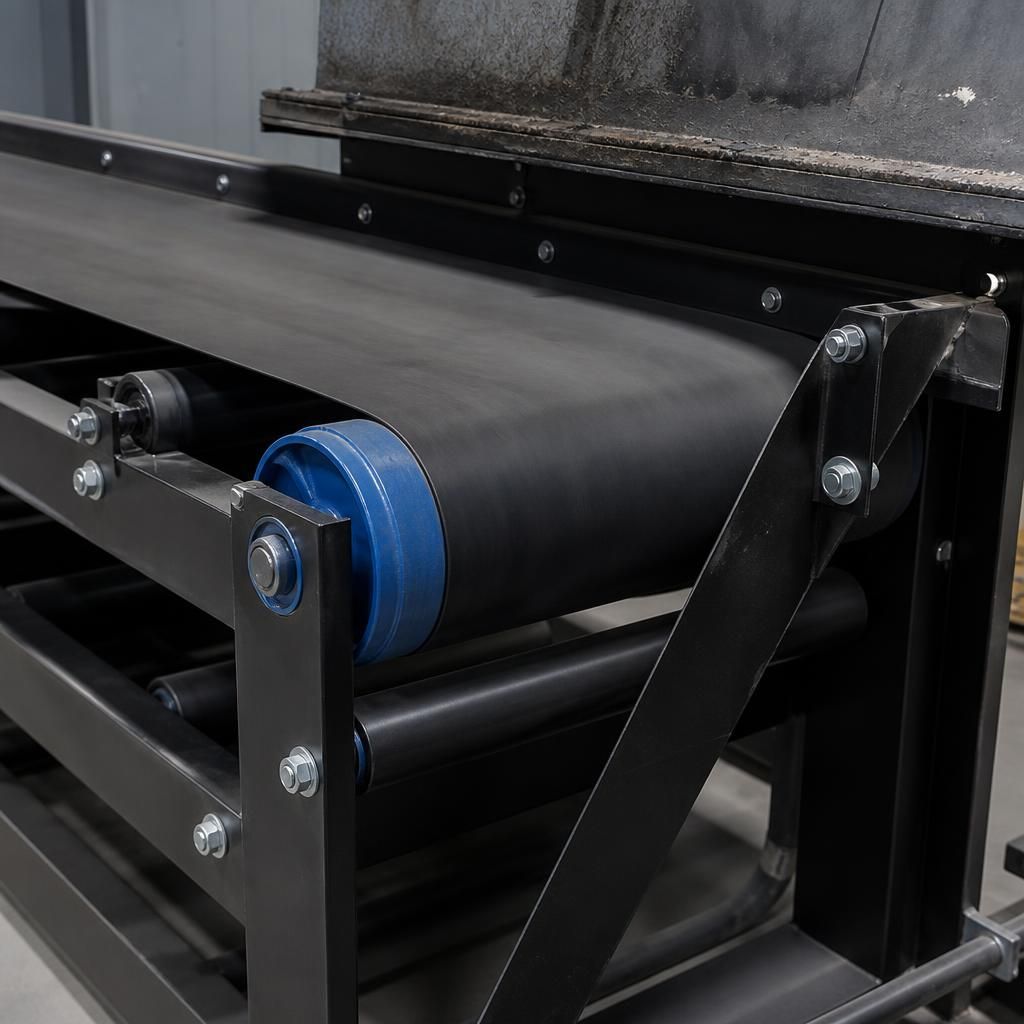
One long-term benefit of nylon coatings in high-wear applications is their ability to damp some contact noise and vibration. Where metal components repeatedly strike, slide or pass over one another, the polymer surface can soften the interaction compared with uncoated metal-to-metal contact. This may help reduce operational noise and limit vibration transmitted through guides, chutes, rollers and handling equipment.
The effect depends on the coating thickness, component design, impact energy and operating conditions, so it should be treated as an application-specific benefit rather than a guaranteed result. During specification, the coating system should be assessed alongside the required wear performance, load capacity and dimensional tolerances. Where suitable, improved damping can contribute to a more controlled working environment and reduce the mechanical stress associated with repeated hard contact over the component’s service life.