

What are the compatibility considerations when selecting a powder coating primer for different metal substrates?
When selecting a powder coating primer, match it to the metal substrate’s chemistry, surface condition, pretreatment and curing requirements. Steel, galvanised steel, aluminium and other alloys may need different primer formulations to ensure adhesion, corrosion protection and compatibility with the chosen topcoat without exceeding the substrate’s heat tolerance.
Powder coating primer compatibility depends on how the primer interacts with the substrate, the pretreatment, the topcoat and the curing process. A suitable system must wet and bond to the prepared metal, tolerate the substrate’s condition and composition, and provide the required protection without creating defects or interfering with the final coating.
Consider the exact metal grade, not just its general category. Two components both described as steel may differ in carbon content, alloying elements, mill scale, surface finish or contamination. These differences can affect cleaning, pretreatment response, outgassing and the way the primer flows. The coating specification should therefore identify the substrate and any treatments it has already received, such as galvanising, plating, anodising or passivation.
- Mild and carbon steel: These substrates are commonly suited to epoxy, hybrid or other corrosion-control primer systems, provided the surface is free from mill scale, rust, oil and fabrication residues. Welds, sharp edges, crevices and areas affected by heat can require particular attention because they may respond differently from the surrounding steel.
- Galvanised steel: The zinc layer changes the surface chemistry and should not be treated as bare steel. The coating must be suitable for zinc and for the chosen preparation method. Fresh galvanising, weathered galvanising and damaged or repaired areas may each present different adhesion and corrosion risks. The condition of the zinc surface, including white corrosion products and passivation residues, needs to be established before selecting the primer.
- Aluminium: Aluminium forms a tenacious oxide layer rapidly. Primers and pretreatment must be compatible with that oxide layer or with the method used to remove or convert it. Aluminium alloys may also contain copper, magnesium or silicon, so their response to cleaning and pretreatment can vary. Entrapped air in cast or porous aluminium can cause pinholing or blistering during the oven cycle.
- Stainless steel: Its passive chromium-rich surface can make adhesion more demanding than on ordinary steel. A primer intended for stainless steel should be assessed alongside the selected preparation process, particularly where the component will face moisture, chemicals or repeated handling.
- Cast iron and other porous castings: Graphite, machining fluids, mould-release residues and absorbed moisture can remain within the surface. Heating before coating may reveal trapped contaminants, but it can also cause gas release and pinholes. The primer should be selected only after the casting condition and the proposed preparation and outgassing procedure have been reviewed.
- Zinc die castings and mixed-metal assemblies: These may contain pores, release agents or dissimilar metals in close proximity. A primer must tolerate the substrate’s porosity and avoid creating a weak interface where different metals meet. The design should also be checked for galvanic effects if moisture can reach exposed edges or joints.
Check the substrate’s surface energy and cleanliness. A primer cannot compensate for oil, silicone, dust, salts, abrasive residue or poorly removed corrosion. Fabrication processes can leave weld spatter, anti-spatter products, laser-cut residues and marking inks, while handling can transfer grease to otherwise clean parts. Compatibility assessment should include the actual cleaning and preparation route, because a primer that performs well on an abraded, chemically pretreated surface may not perform in the same way on a merely degreased one.
Match the primer to the pretreatment chemistry. Conversion coatings, sealers and other pretreatments can improve the interface, but they must be compatible with the primer and fully controlled during application. Residual acidity, alkalinity, salts or moisture can undermine the coating system. For galvanised and aluminium components especially, the primer supplier or coater should confirm that the proposed pretreatment leaves a surface suitable for powder application rather than relying on assumptions based on the metal name alone.
Review the complete coating stack. Primer and topcoat are a system. Their resin chemistry, melt behaviour, cure window and film formation need to work together. A primer may adhere well to the metal but still be unsuitable if the topcoat does not bond to it, if the two layers soften or react differently during recoating, or if the primer changes the colour, gloss or texture of the finish. The intended topcoat should therefore be identified before the primer is approved, including whether it is polyester, epoxy, hybrid or another powder formulation.
Confirm curing compatibility with the component. The relevant temperature is the metal temperature, not simply the oven air setting. Thick steel sections, thin aluminium panels and assemblies with different thermal masses may reach the required cure condition at different rates. The primer must cure within the available process window while remaining suitable for the substrate, seals, inserts and any other heat-sensitive features. Under-cure can leave inadequate film properties; excessive heat can contribute to discolouration, substrate distortion, outgassing or damage to adjacent materials.
Assess geometry and electrical contact. Recesses, enclosed sections, overlaps and sharp edges affect powder deposition and film build. Faraday-cage areas may receive less material, while corners can accumulate or lose coating depending on the application settings. If the primer is applied electrostatically, the conductivity and earthing of the component, racking and contact points also matter. Non-conductive residues or poor contact can produce uneven coverage regardless of the primer’s theoretical compatibility.
Consider the required film build and service exposure. Primer selection should reflect whether the part will face outdoor moisture, salt, chemicals, abrasion, heat cycling or immersion. The primer must achieve its intended protective function at the specified thickness without causing runs, craters, pinholes or poor edge coverage. Excessive build can also affect dimensional tolerances, threads, mating faces and the appearance of the topcoat, so critical areas should be identified before production.
Use a representative trial where the substrate or process is variable. A test panel made from a similar metal grade and prepared through the proposed production route can reveal problems that a generic data sheet will not. Evaluation may include visual inspection, adhesion testing, film-thickness checks and exposure or corrosion testing appropriate to the service environment. For a batch of fabricated parts, the trial should include welds, edges, recesses and any areas repaired or treated differently from the main surface.
For industrial components, the practical decision is therefore based on the combination of metal grade, previous treatment, surface preparation, primer chemistry, topcoat, geometry and curing process. Providing those details before coating allows the system to be checked against the actual parts rather than selected solely from the substrate label.
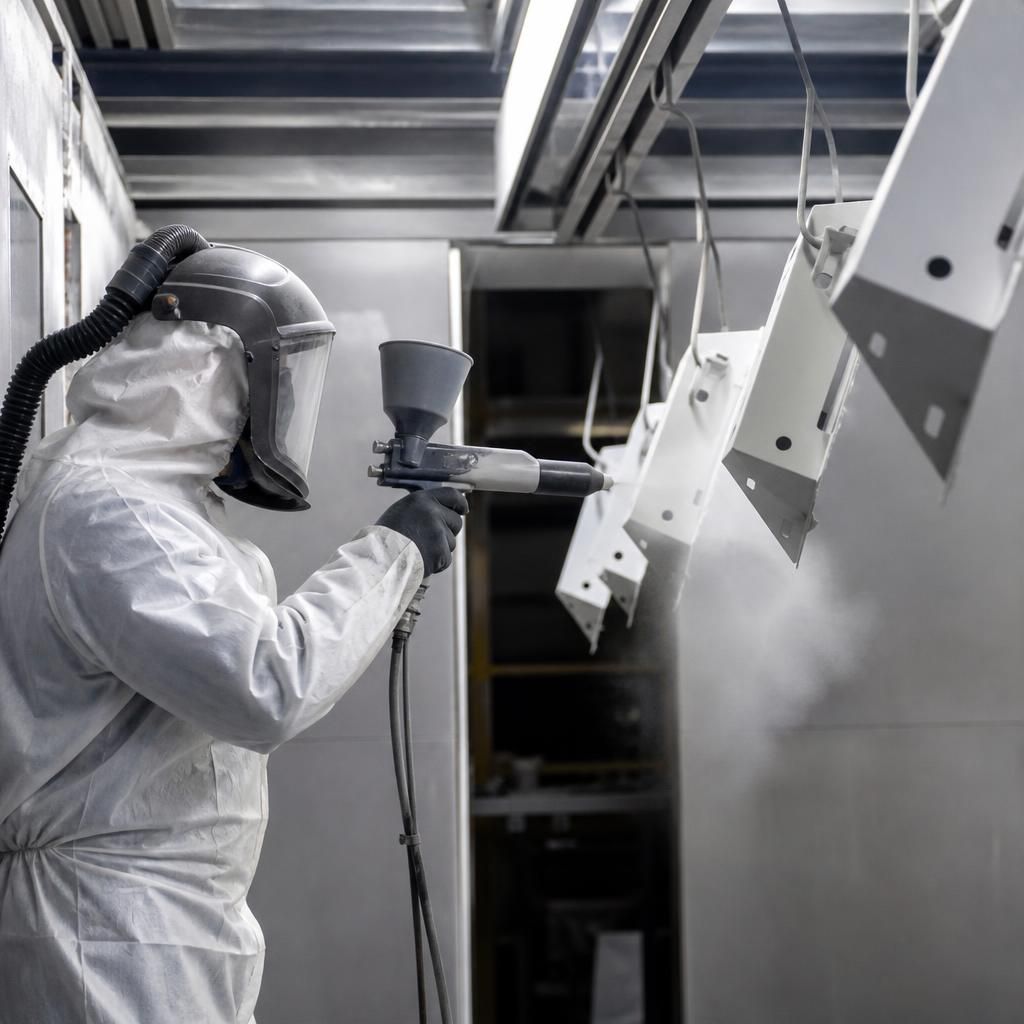
Primer compatibility also depends on how the system protects the metal, not only on whether it adheres. Barrier primers isolate the substrate from moisture and contaminants, while zinc-containing systems use a different corrosion-control mechanism and require suitable electrical contact and topcoat compatibility.
This distinction is important when coating galvanised steel or assemblies containing more than one metal. The primer should complement the existing substrate protection rather than create an unsuitable or unnecessarily complex coating stack. Confirm the intended corrosion mechanism against the metal type, service exposure and complete powder coating specification before approval.
Discuss powder coating primer compatibility for your metal substrate
Discuss your metal substrate, existing treatments and intended service conditions with our powder coating team before approving a primer system. We can help assess the complete coating specification for your components and advise on a suitable preparation and primer approach.