

What specific preparations are necessary before applying electrostatic epoxy powder coating to aluminium components?
Aluminium components should be inspected, cleaned and degreased to remove oils, dirt, oxidation and other contaminants before coating. The surface should then receive a suitable aluminium pretreatment, be thoroughly dried, and have threaded areas, contact points and surfaces that must remain uncoated masked before the epoxy powder is applied.
Effective preparation of aluminium for electrostatic epoxy powder coating involves controlling the component’s condition, geometry, surface chemistry and electrical contact before it enters the spray and curing stages. The aim is to create a clean, suitably keyed and chemically stable surface while ensuring the part can be coated and cured without dimensional, adhesion or appearance problems.
Confirm the aluminium specification and end use. The alloy, temper, previous treatment and intended service environment can affect the preparation route. Components that have been anodised, painted, mill-finished or exposed to weather may need different treatment from newly fabricated aluminium. The required coating thickness, appearance, corrosion resistance and operating temperature should also be agreed before preparation begins, because these factors influence the choice of pretreatment and powder system.
Review the component design before processing. Aluminium parts should be suitable for hanging, handling and oven curing. Enclosed sections need adequate venting and drainage where cleaning chemicals, rinse water or trapped air could otherwise remain inside. Small holes, channels and cavities may require particular attention because retained liquid can cause staining, adhesion defects or later corrosion. The coater should also check that the finished coating will not interfere with assembly tolerances, sliding fits, press fits or the engagement of fasteners.
Remove fabrication defects and residues. Welding spatter, sharp burrs, loose edges, embedded swarf and rough machining marks can show through the powder film or create thin areas at edges. These defects should be corrected using methods appropriate to aluminium, followed by removal of any abrasive dust or metal particles. Welded areas deserve careful inspection because heat-affected zones and weld residues can behave differently from the surrounding material. Silicone, marker ink, adhesive residue, cutting fluids and polishing compounds are particularly important to eliminate, as even small traces can cause craters, fisheyes or poor adhesion.
Use a controlled mechanical preparation where required. Light abrasion or suitable blasting can provide a consistent surface profile and help remove tenacious oxide or previous finishes. The method must be selected for aluminium rather than copied from steel practice: excessive pressure, unsuitable abrasive or prolonged blasting can distort thin sections, embed contamination or produce an unnecessarily coarse profile. After mechanical treatment, abrasive dust must be removed without reintroducing oil or moisture.
Control the chemical treatment sequence. Aluminium rapidly reforms an oxide layer after exposure, so the interval between preparation, pretreatment and powder application should be managed. A suitable conversion or other aluminium-specific pretreatment can improve coating adhesion and provide additional corrosion protection. Its effectiveness depends on concentration, temperature, contact time, rinsing and contamination control. Rinse stages must remove chemical residues rather than leave salts on the surface, and the treatment should be verified using the coater’s documented process controls.
Check the surface and the equipment before coating. Preparation is not complete simply because the component looks clean. Operators should check for visible staining, powdery oxide, water marks, remaining residues and areas missed by the treatment. The part must be fully dry, including holes, seams and recesses. Hooks, racks and suspension points should provide a reliable conductive path for the electrostatic charge, while remaining positioned so they do not create excessive uncoated areas or interfere with the required finish.
Plan masking and assembly protection from the drawing. Areas that must remain free of powder should be identified before the part is loaded, including bearing seats, mating faces, earth points, threaded features and precision bores. Masking materials need to tolerate the curing cycle and be fitted tightly enough to prevent powder migration. Where masking is not practical, the design may require post-coating removal or machining, which should be considered before setting final dimensions.
Manage moisture and outgassing risks. Cast aluminium, porous sections and components containing trapped machining fluids can release gas during curing. This may produce pinholes, bubbles or surface blemishes. Appropriate preheating, venting, drying or process trials may be needed for such parts, but the correct approach depends on the component’s construction and the powder manufacturer’s requirements. Any proposed treatment should be validated on representative parts rather than assumed to work identically across all aluminium grades and geometries.
For repeat or batch production, the preparation specification should record the approved cleaning and pretreatment stages, inspection criteria, masking locations, suspension method and handling controls. Representative samples can then be checked for appearance and adhesion before the full batch proceeds. This approach makes preparation repeatable and helps identify whether a defect originates from the aluminium, fabrication, pretreatment, application or curing stage.
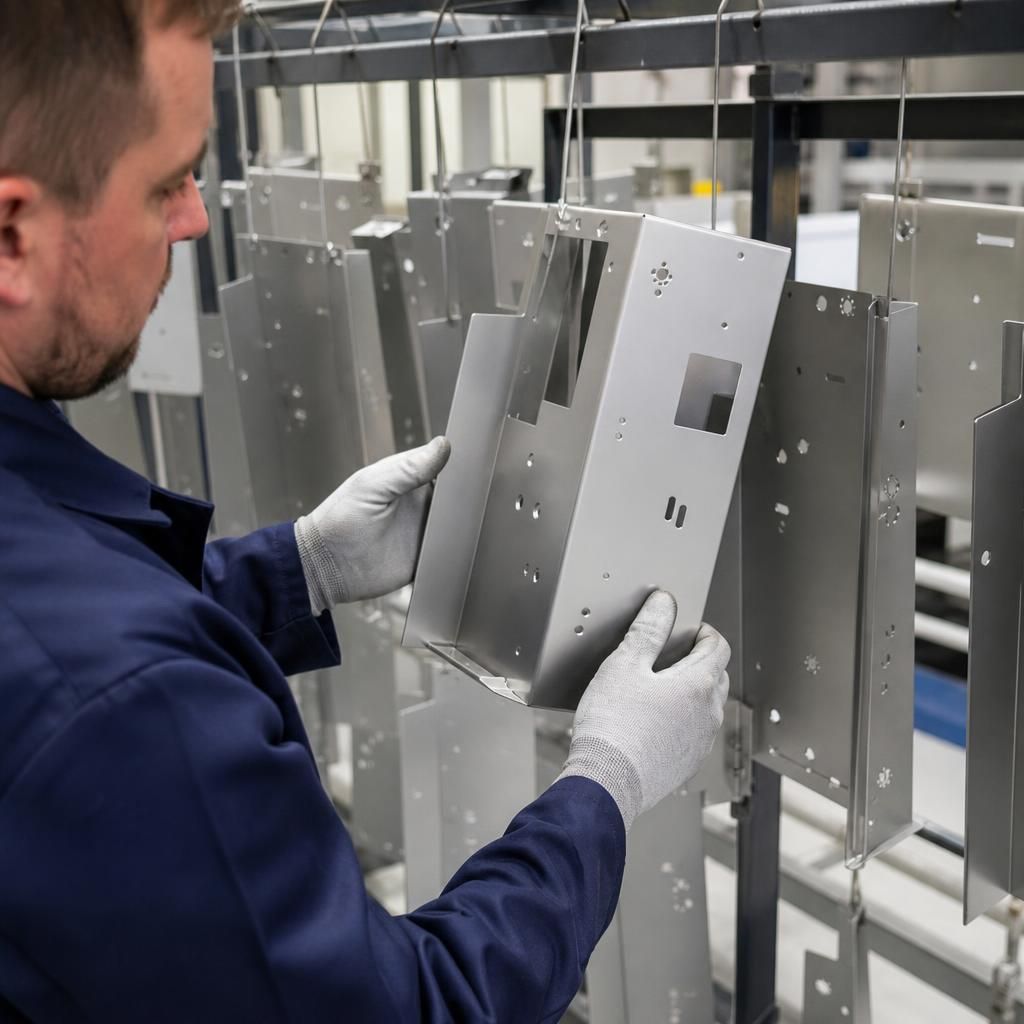
After aluminium has been cleaned and pretreated, it must be protected from recontamination before powder application. Operators should handle prepared surfaces with clean gloves, use uncontaminated racks and avoid placing parts on oily or dusty work surfaces. Bare-hand contact can leave salts and skin oils that interfere with coating adhesion, while workshop dust can become trapped in the finish.
Prepared components should therefore move through coating in a controlled sequence, with unnecessary handling and delays kept to a minimum. If a part is touched, dropped or exposed to moisture after treatment, it should be reassessed and, where necessary, cleaned or pretreated again rather than coated without inspection.