

What customisation options are available for powder coated perforated aluminium in terms of design and finish?
Powder coated perforated aluminium can be customised through the perforation pattern, hole shape, spacing, panel dimensions and formed geometry to suit a project’s functional and visual requirements. The finish can then be selected by colour, gloss level and texture, creating options ranging from understated architectural surfaces to highly visible, durable components.
Customisation of powder coated perforated aluminium involves coordinating the panel’s visual specification with the performance requirements of the finished component. Beyond the basic panel design, the coating can be tailored through colour selection, surface appearance, masking, coating coverage and the level of protection required for the installation.
Colour selection
Colour is usually specified using an established colour reference system, allowing the aluminium panels to align with a building scheme, corporate identity or surrounding metalwork. A single colour may be used for a consistent elevation, while contrasting colours can distinguish feature panels, access sections or internal and external faces. The selected colour should be assessed alongside the panel’s location, surrounding materials and expected exposure, as the same shade can appear different under natural and artificial lighting.
Where an exact visual match is important, a physical sample or finish approval is preferable to relying solely on an on-screen representation. Digital displays, lighting conditions and differences between coating batches can affect how a colour is perceived. A project specification should therefore identify the required colour reference, coating type and acceptable appearance before production begins.
Gloss and texture
The surface can be specified with a smoother or more textured appearance, depending on the desired balance between visual effect and practical use. Smooth finishes create a clean, uniform appearance, whereas textured finishes can provide a more tactile surface and may be useful where a less reflective appearance is preferred. Gloss level also affects how strongly light is reflected across the perforations and surrounding solid areas.
These choices are particularly relevant for façades, screening and architectural features, where the coating is part of the visible design. For industrial components, the decision may instead focus on cleanability, resistance to handling marks and compatibility with adjacent equipment. The selected appearance should be reviewed on the actual aluminium profile or perforated panel where possible, rather than judged only from a small colour card.
Masking and coating boundaries
Areas such as fixing points, threads, contact faces, drainage paths and assembly interfaces may need to remain free from powder coating. Masking can define these boundaries before the panels enter the coating process. This helps prevent interference during installation and ensures that parts intended to make electrical, mechanical or dimensional contact are treated appropriately.
Masking requirements should be shown clearly on the technical drawing. The specification can identify holes or edges that must remain uncoated, the permitted coating build-up around a fixing area and whether one or both faces require the same treatment. This is important for perforated aluminium because the coating must cover the required surfaces without obstructing functional openings or changing the fit of associated components.
Functional finish selection
Not every project requires the same coating specification. A decorative architectural finish may be sufficient for an internal feature, while external panels or industrial components may require a more protective system suited to their environment. The coating choice should take account of exposure to moisture, pollutants, abrasion, cleaning routines, handling and contact with other materials.
Specialist protective coatings, including nylon-based options where technically suitable, can be considered for applications requiring a different combination of surface protection and service performance. The correct choice depends on the aluminium grade, preparation method, forming requirements and intended use. It should be confirmed against the project specification rather than selected solely for its appearance.
Formed and assembled components
Perforated aluminium may be supplied as a flat panel or as part of a formed assembly. If bending, folding, cutting or joining is required, the order of operations matters. Forming before coating can reduce the risk of damaging the finished surface, but the geometry must be suitable for complete and even powder coverage. In other cases, separately coated parts may be assembled afterwards, with contact points and fasteners considered during the design stage.
Designers should allow for coating thickness at edges, folds, holes and interfaces. Tight tolerances, sliding joints and close-fitting parts may require specific allowances so that the finished coating does not affect assembly. Drawings should also distinguish between visible surfaces and areas where coating coverage is needed for protection but will not be seen.
How to specify the finish
- Identify the panel’s environment and the type of exposure it will experience.
- State the colour reference and required gloss or texture.
- Mark surfaces, holes and contact areas that need masking.
- Confirm whether the finish is decorative, protective or a combination of both.
- Provide drawings showing dimensions, interfaces, tolerances and assembly points.
- Request a sample or approval panel when colour and texture are critical.
A complete specification reduces uncertainty between the design intent and the coated result. For Midlands manufacturers, fabricators and construction businesses, a powder coating specialist can review the component drawings and advise whether the proposed finish, masking arrangement and coating system are compatible with the aluminium part and its intended use. Collection and delivery options can also support the movement of batches or larger panels between the customer and the coating facility.
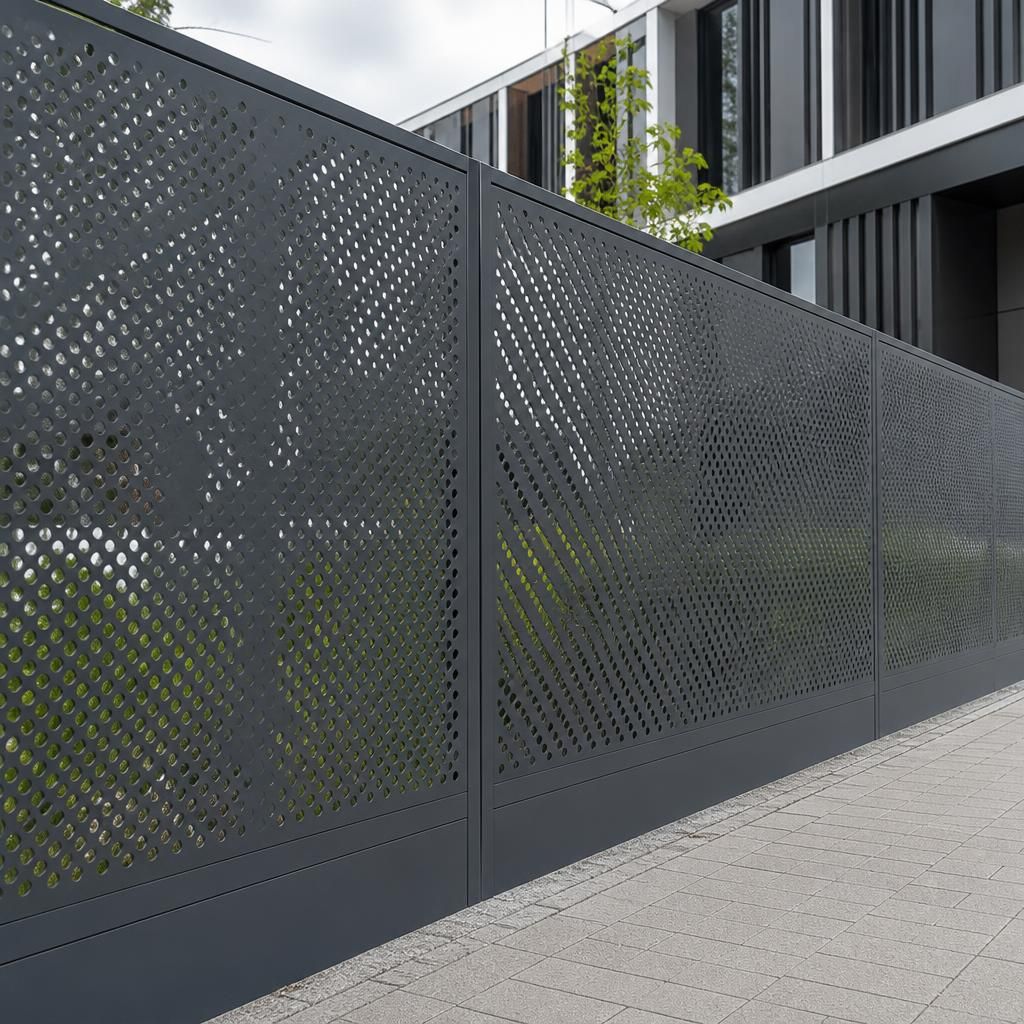
Customisation can also be applied to how individual perforated panels are arranged within a larger installation. Designers can control the direction of the perforation pattern, align or stagger adjoining sheets, and use borders, reveals or changes in panel orientation to create a consistent surface or a deliberate feature. This is particularly relevant where several panels form a screen, façade section or enclosure.
The layout should be reviewed alongside the viewing distance, lighting and the position of supporting frames. Small differences in alignment can be noticeable across a repeated panel system, while a planned change in orientation can add visual definition without relying on a different colour. Drawings should show the face direction, joint positions and pattern alignment so the coated panels can be installed in the intended sequence.