

What factors should be considered when integrating powder coated aluminium frames and tubes into an existing industrial setup?
Integrating powder coated aluminium frames and tubes into an existing industrial setup requires checking dimensional compatibility, connection points, load requirements, tolerances and access for installation. Also assess the operating environment, coating specification, contact with dissimilar metals, electrical or earthing requirements, and how the components will be inspected and maintained once installed.
Successful integration depends on treating powder coated aluminium frames and tubes as finished engineering components rather than uncoated stock. The design review should cover the existing system, the fabrication and coating sequence, assembly methods, handling, documentation and future replacement, so that the coating remains intact and the completed installation performs as intended.
Review the existing installation before specifying components. Record the condition of the supporting structure, the way loads are currently transferred and any constraints created by adjacent equipment. Check whether the new aluminium elements will be fitted into an operating production area, assembled on a workbench or installed as part of a larger fabricated module. This affects the preferred component lengths, joint arrangement, lifting method and order of assembly. A site survey or controlled dimensional record can prevent the new parts being designed around outdated drawings.
Define the interface and responsibility for each stage. An integration drawing should identify which features are supplied coated, which are machined or drilled afterwards, and which are completed by the installer. It should also record datum points, joint details, fastener types, concealed faces and any surfaces that must remain free from coating. This avoids uncertainty between the frame designer, fabricator, coater and installation team. Revision control is particularly important where the existing setup has been modified over time.
Plan the manufacturing sequence around the finish. Cutting, drilling, tapping, welding and edge treatment are normally completed before powder coating. Post-coating fabrication can expose the aluminium, damage nearby areas and leave burrs or sharp edges that compromise assembly. If a hole or machined feature must be produced after coating, it should be identified in advance and protected or refinished using a suitable method. Masking may be required for threads, bearing faces, sliding areas and other locations where a coating build-up would interfere with function.
Specify joint hardware as part of the coating system. Fasteners, washers, inserts, hinges, brackets and seals should be selected for the service conditions and for compatibility with the finished aluminium. The design should allow tightening without crushing the coated surface. Where a joint relies on a metal-to-metal contact, define whether the contact area is to be masked, machined or otherwise prepared. This is separate from general contact between dissimilar metals: the practical concern is ensuring that the selected joint still provides the required mechanical and, where applicable, electrical function after finishing.
Consider movement and service loads at the interfaces. Aluminium and surrounding steelwork can respond differently to temperature changes, vibration and repeated loading. Long members, rigidly fixed panels and assemblies connected to equipment with different movement characteristics may need an allowance or a joint that accommodates movement. Flexible seals, slotted fixing arrangements or defined expansion gaps may be appropriate, but these should be engineered rather than introduced during installation. The same review should consider vibration transfer, fatigue at recurring joints and loosening of fasteners.
Protect the finish during transport and assembly. Powder coating provides a durable surface, but it is not intended to withstand careless dragging, impact from tools or contact with abrasive debris. Components should be separated during handling and supported at suitable points. Protective packaging should not trap moisture or contaminants against the finish, and temporary coverings should be removed in accordance with the coating supplier’s guidance. During installation, use clean supports and avoid placing coated edges directly on rough floors or steelwork.
Control any site modifications. Unplanned drilling, grinding or welding is a common cause of local coating failure. If alteration becomes unavoidable, the affected area should be cleaned, any sharp edges removed and the exposed substrate treated with a compatible repair system appropriate to the specification. Repairs should be recorded, particularly where the component is used in a demanding industrial environment. A simple permit or approval process for modifications can prevent apparently minor changes from undermining the original finish.
Check cleanliness and contamination risks. Existing industrial equipment may carry oil, process residue, dust or chemicals that can transfer to newly finished parts. The surrounding area and contact surfaces should be cleaned before installation, using methods that will not attack the coating. If the frame forms part of a hygienic, cleanable or contamination-sensitive setup, the design should minimise crevices, open tube ends and ledges where residue can collect. Suitable end caps, drainage arrangements or sealed joints may be needed.
Align the finish with functional and visual requirements. Colour, gloss and texture should be agreed against an approved sample or specification, particularly where new parts must sit alongside existing coated components. Colour variation can arise from differences in substrate, geometry, batch and viewing conditions, so a nearby existing finish should not automatically be treated as the correct reference. Also identify faces that will be visible after assembly and confirm whether all sides require the same treatment.
Build verification into the handover. The project record should include the agreed coating specification, colour reference, preparation requirements, drawings, revision status and any approved deviations. On receipt, inspect packaging, edges, holes, masked areas and visible faces before the components are incorporated into the setup. After assembly, check joint security, moving clearances, seals, access panels and the condition of the finish. Photographs and an installation record can provide useful evidence of the original condition for later maintenance.
Plan for future removal and replacement. Components integrated into an existing line or framework should be removable without dismantling unrelated equipment wherever practicable. Accessible fasteners, replaceable inserts, labelled parts and retained drawings reduce disruption when a frame or tube is altered later. If the coating specification or component geometry is critical to a replacement, retain the relevant records rather than relying on visual matching alone.
For a B2B project, the most reliable approach is to issue a complete technical brief before manufacture, including interface drawings, finish requirements, joint details, handling instructions and acceptance checks. A powder coating specialist can then review which features need masking, pre-treatment or particular handling before the aluminium components enter the wider industrial assembly process.
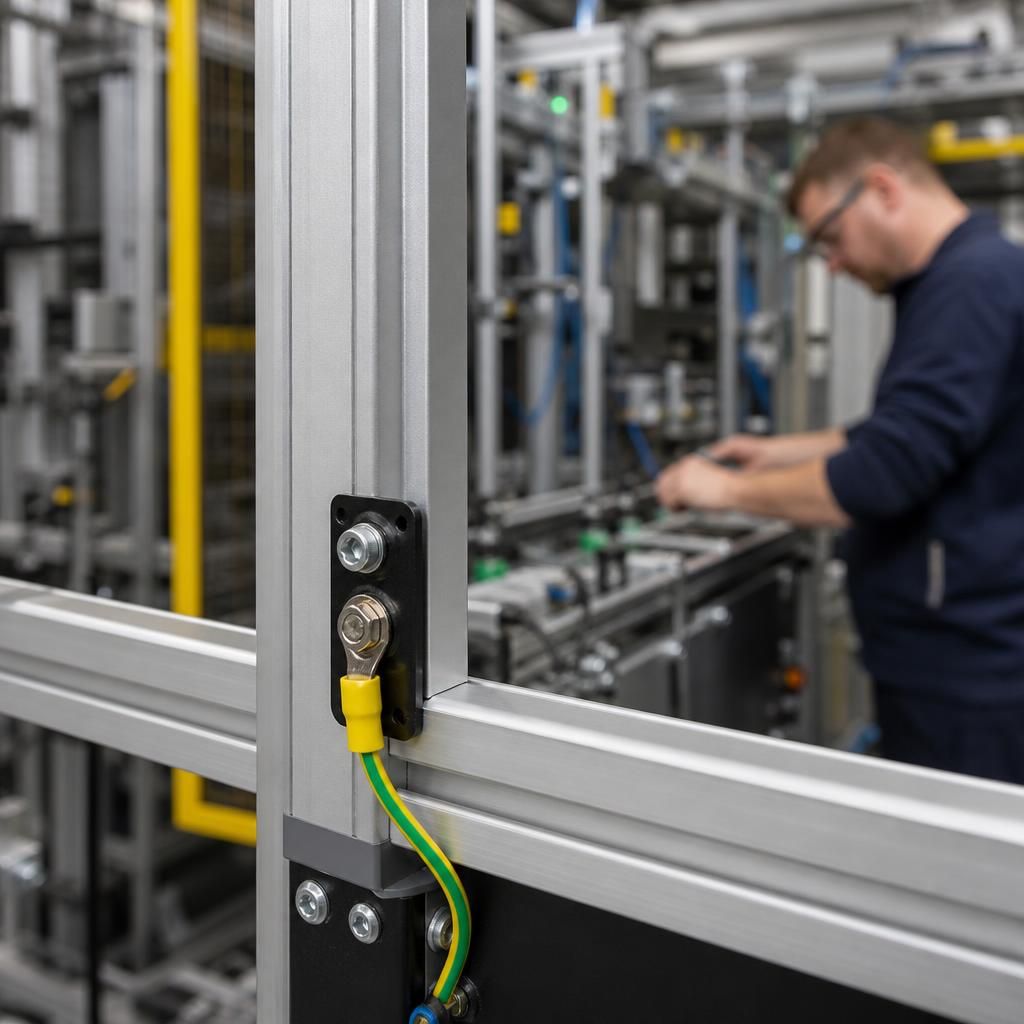
Electrical bonding needs separate consideration. Powder coating can interrupt electrical continuity between aluminium frames, tubes and connected equipment, so an earthed path should not depend on two coated surfaces touching. Where the assembly forms part of a protective bonding or static-control system, specify dedicated earth studs, conductive contact points or masked areas during design rather than removing coating on site.
Define how continuity will be checked after assembly and record the test results with the installation documentation. This is particularly important where removable panels, bolted joints or painted supporting structures could create inconsistent contact between sections.
Discuss Integrating Powder Coated Aluminium Frames and Tubes
Prepare your interface drawings, coating specification and installation requirements for review by a powder coating specialist before manufacture. This allows potential compatibility, masking and assembly issues to be addressed before the aluminium frames and tubes enter your existing industrial setup.