

What customisation options are available for powder coated aluminium to meet specific industry requirements?
Powder coated aluminium can be customised through colour, gloss level, surface texture and coating specification to suit an application’s visual and performance requirements. Further options may include protective or specialist coatings, such as nylon, along with defined masking and finish requirements for components used in manufacturing, construction and automotive applications.
Customisation for powder coated aluminium is primarily a specification exercise: the coating system, preparation method, curing conditions, component handling and inspection criteria are selected around the part’s environment and function. This allows the finish to be defined for requirements such as corrosion exposure, wear, chemical contact, appearance, electrical use or compatibility with an existing assembly.
Key customisation areas include:
- Application-specific coating selection: Aluminium components used indoors, outdoors, in construction, manufacturing or automotive applications may require different levels of resistance. The appropriate powder system can be selected according to exposure to moisture, abrasion, cleaning agents, oils or other operating conditions. Where standard powder is not suitable, a specialist protective coating may be considered.
- Surface preparation: Preparation is matched to the aluminium substrate and the condition of the parts. This can include cleaning, removal of contaminants and suitable pre-treatment before powder application. Good preparation is important for adhesion and for reducing the risk of premature coating failure.
- Film-build requirements: The coating specification can set an acceptable film thickness range rather than relying solely on visual appearance. This is relevant where the finished part must fit within tight clearances, retain dimensional accuracy or provide a defined level of protection. Critical dimensions, holes, threads and mating faces should be identified before production.
- Component-specific coverage: Aluminium fabrications often include folded sections, corners, recesses, apertures and welded areas. The coating approach can be reviewed against the geometry of each part so that accessible surfaces, vulnerable edges and functional areas are considered during processing.
- Functional areas and exclusions: Some surfaces may need to remain free from coating because they form an electrical contact, accept a fastener, locate against another component or require subsequent machining. These requirements should be shown on a drawing or clearly identified with the parts supplied.
- Batch and production controls: For repeat orders, the specification can record the agreed coating system, preparation requirements, appearance standard, inspection points and packing method. This helps maintain consistency between batches and makes it easier to identify changes if the component design or service environment is altered.
Industry requirements should also account for the condition and design of the aluminium before it reaches the coating stage. Castings, extrusions, fabricated assemblies and previously coated components can present different preparation challenges. Welds, sharp edges, trapped residues, porosity and inaccessible areas may affect the finished result, so these features should be discussed during quotation and technical review rather than treated as purely cosmetic details.
Drawings, photographs, sample components and written specifications are useful when defining a bespoke requirement. They can identify areas requiring coating, areas that must remain uncoated, critical dimensions, acceptable visual variation and any post-coating operations. A representative sample or approval panel may also be used where the appearance or surface standard is particularly important.
For manufactured parts, the specification should distinguish between appearance requirements and performance requirements. A uniform visual finish may be appropriate for visible architectural components, while industrial parts may place greater emphasis on adhesion, resistance to handling or compatibility with assembly. Defining the priority in advance helps avoid selecting a finish based on appearance alone when the component will operate in a demanding environment.
Powder coated aluminium can therefore be tailored at several stages, from substrate preparation through to final inspection and packing. The most reliable approach is to provide the part’s end use, operating environment, construction details and critical dimensions so the coating requirements can be assessed as part of the complete component specification.
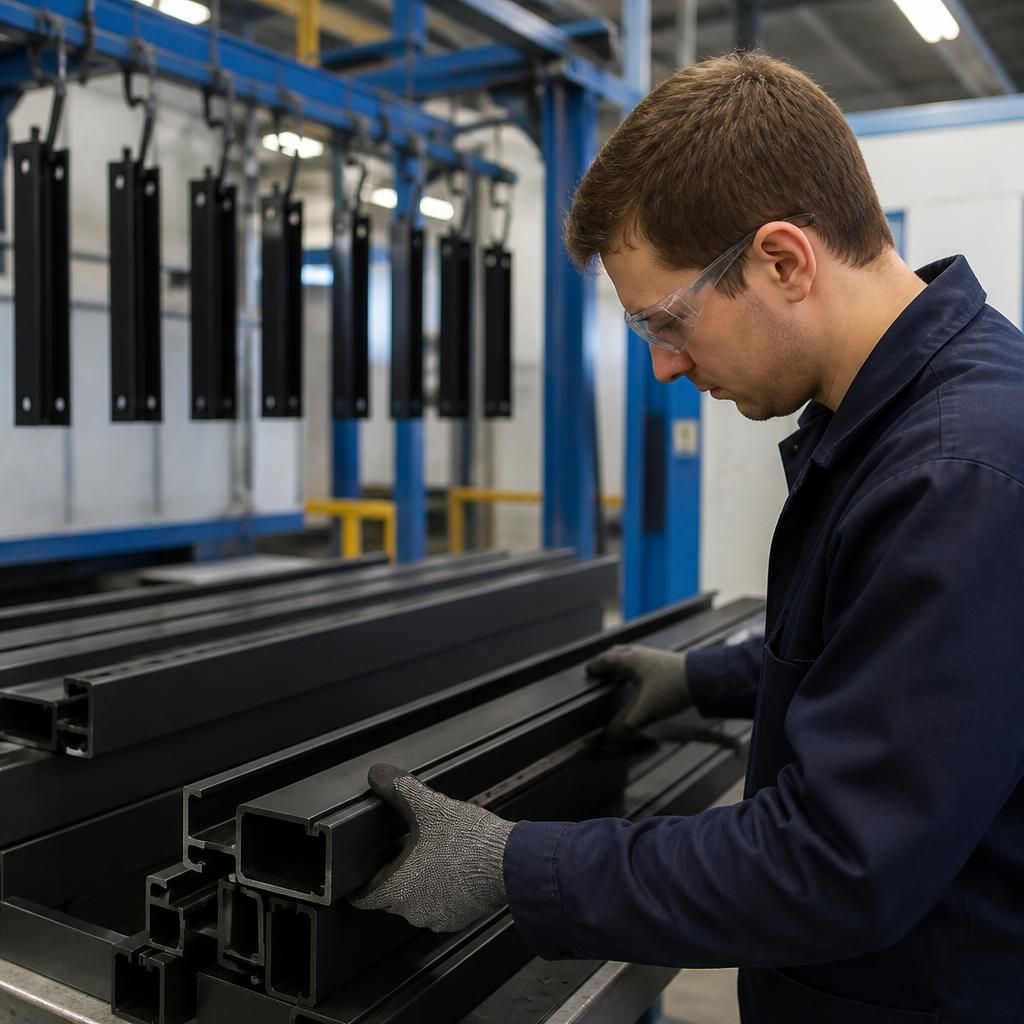
Specialist nylon powder coating is one option where aluminium components require a finish with properties beyond colour and appearance. It may be considered for parts exposed to repeated contact, abrasion, impact or the need for a more insulating surface, subject to the component design and operating conditions.
Because nylon coatings can differ from standard architectural or general-purpose powder systems, the specification should identify the areas to be coated, the required coating build and any surfaces that must remain accessible for assembly. The intended use, contact points and cleaning conditions should be reviewed before the coating system is selected.