

What type of protective primer is best suited for powder coating repairs in high-humidity environments?
A two-pack epoxy primer containing a corrosion-inhibiting pigment, such as zinc phosphate, is generally best suited to powder coating repairs in high-humidity environments. It provides a dense barrier and strong adhesion when applied to clean, dry, correctly prepared metal, but it must be confirmed as compatible with the repair powder coat and fully cured according to the product specification.
The most suitable approach is to specify the primer as part of a complete repair system rather than choosing it by the word “waterproof” alone. In high-humidity conditions, the system must control moisture at the metal interface, maintain adhesion beneath the repair powder coat and provide a stable base at exposed edges, scratches and cut-outs.
Check the repair coating system before selecting the primer. The primer, powder repair material and any topcoat must be chemically compatible and suitable for the intended service environment. Some primers can interfere with powder flow, appearance or intercoat adhesion, particularly where the repair area is small and the primer film is close to the visible finish. The technical data should confirm whether the primer is intended for use beneath powder coatings and specify its recommended overcoating window.
Surface preparation is critical in humid conditions. Remove rust, mill scale, loose coating, grease, salts and other contamination before priming. Abrasive preparation is normally preferred for steel because it creates a clean, profiled surface. On previously coated components, feather the sound coating around the damaged area so that the repair does not leave a sharp step. Any prepared metal should be protected from condensation and handled with clean, dry equipment before the primer is applied.
Relative humidity and metal temperature should be considered during application. If the metal is near its dew point, invisible condensation can form even when the surface appears dry. This can reduce adhesion and trap moisture beneath the repair. The applicator should follow the product data sheet for limits on humidity, substrate temperature, thinning, mixing and recoat time. Dehumidification or controlled local conditions may be necessary when the component cannot otherwise be kept dry.
Film thickness also requires control. Too little primer may leave pores, pinholes or weak protection at the damaged area, while excessive thickness can create solvent entrapment, cracking or problems with the subsequent powder coat. Measure the applied film where practical and avoid building a heavy ridge at the boundary of the original coating. Pay particular attention to corners, welds, drilled holes and exposed edges, where water can remain or initiate corrosion.
Zinc-rich primers can be useful in some corrosive-service systems, but they are not automatically the best choice for every powder coating repair. Their performance depends on electrical contact with the steel, suitable formulation and compatibility with the powder coating. They may also affect surface appearance or require a specified barrier or tie-coat. Use one only where the complete coating specification supports it; do not substitute it for an epoxy repair primer without checking the system requirements.
Single-pack primers, general-purpose metal primers and products intended only for decorative touch-up may be unsuitable where the repair will face persistent humidity. They can have limited resistance to water vapour, weaker intercoat adhesion or insufficient protection at exposed steel. Etch primers are also selected for particular adhesion problems rather than as a universal corrosion barrier, so their role should be confirmed before they are included in the repair.
After priming, allow the coating to cure for the period and under the conditions specified by the manufacturer. Applying powder or a further coating too soon can soften the primer or compromise the bond; waiting too long without following the recommended preparation can create another adhesion risk. Inspect the finished repair for missed areas, pinholes, lifting, visible edge lines and signs that moisture has reached the substrate.
For components exposed to sustained condensation, wash-down or outdoor humidity, the repair specification should record the substrate preparation method, primer type, dry-film target, overcoating limits and final cure requirements. Where the original coating has widespread corrosion, repeated failure or damage around joints and welds, local priming may not be sufficient and full stripping and recoating can provide a more reliable basis for restoration.
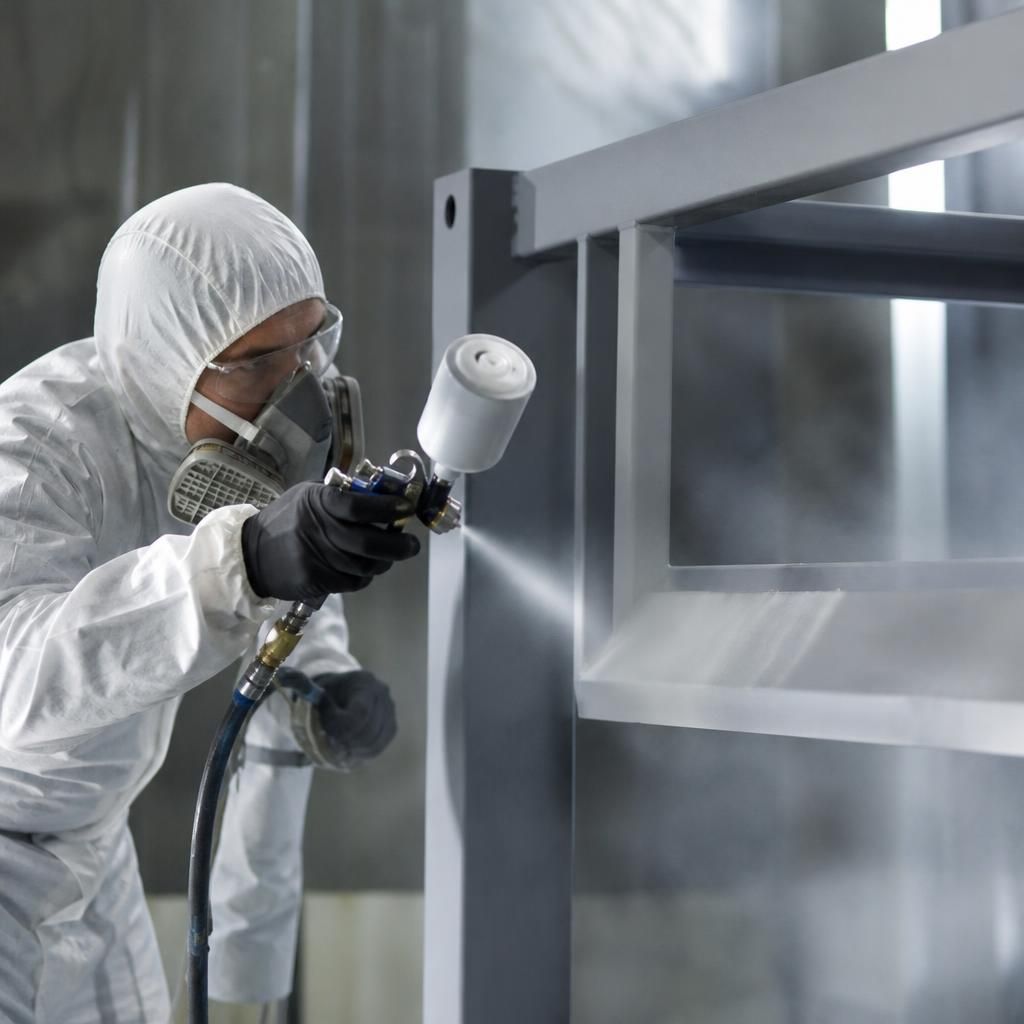
Substrate type is an important qualification when selecting a primer for a humid environment. A two-pack epoxy primer with a corrosion-inhibiting pigment is commonly suited to prepared steel, but the same product should not be assumed suitable for aluminium, galvanised steel or other treated metals. These surfaces can require different preparation and a primer specifically approved for the substrate and the intended powder coating system.
Check the primer’s technical information for substrate limitations, preparation requirements and overcoating compatibility. Where the repair involves mixed metals or an unusual treatment, a small trial area can help confirm adhesion and finish before the complete repair is carried out.
Discuss Your High-Humidity Powder Coating Repair Requirements
Discuss your high-humidity powder coating repair requirements with Powder-coatings.co.uk, providing details of the substrate, damage and service conditions. The repair specification can then be considered against the required primer and powder coating compatibility.