

How does the condition of the metal substrate influence the choice of powder coating removal method?
The metal substrate’s type, thickness, surface condition and susceptibility to damage determine which powder coating removal method is suitable. Sound, robust steel may tolerate more aggressive mechanical or thermal treatment, while thin sections, aluminium, corrosion or existing damage generally require a more controlled process to avoid distortion, gouging or further substrate loss.
The substrate’s material, construction and existing defects determine how much mechanical, chemical or thermal action it can safely tolerate. The removal method should therefore be selected not only for its ability to detach the powder coating, but also for its effect on dimensions, edges, welds, surface profile and any protective layer that must remain intact.
Begin with a substrate assessment. Before selecting a process, identify the base metal and inspect representative areas after removing loose dirt and grease. The assessment should record pitting, flaking corrosion, cracks, dents, sharp edges, welds, joints, drilled holes and areas where the metal has already become thin. Coating removal can expose defects that were hidden beneath the finish, so the condition of the metal should be assessed before deciding how aggressively to proceed across the whole component.
Mechanical methods are generally more appropriate where the substrate is structurally sound and dimensional accuracy is not likely to be affected by controlled abrasion. Abrasive blasting can remove coating from complex profiles and prepare the surface for repair, but the media, pressure and angle must be matched to the metal. Excessive impact can round machined edges, enlarge openings, mark relatively soft sections or create an unsuitable surface profile. Scraping, sanding and other localised methods may be preferable around precision faces, threaded areas and delicate details.
Where corrosion has caused pitting or section loss, aggressive mechanical treatment can remove more metal from already weakened areas. In these cases, the objective may be to remove the coating while preserving as much original material as possible, followed by a separate inspection and repair decision. Localised treatment is often more controlled than applying one high-intensity process to the entire component.
Chemical stripping requires compatibility checks. A chemical remover must be suitable for the substrate as well as for the powder coating. Some metals and metallic finishes can be attacked, stained or discoloured by an unsuitable formulation. This is particularly important where the component includes aluminium, zinc-based protective layers, mixed-metal assemblies or inserts made from a different material. Joints, recesses and blind holes also need attention because trapped stripper or softened coating can remain after the visible surface appears clean.
Thermal removal is governed by the construction of the part and any treatment it has already received. Heat may be unsuitable for components that have been heat-treated, bonded, brazed or assembled with seals, bearings, plastics or other heat-sensitive materials. It can also affect the properties of some metals or distort sections that are not adequately supported. The fact that a substrate is thick does not automatically make thermal treatment suitable; the complete assembly and its previous manufacturing processes must be considered.
Fabricated items need a separate review of their welds and joints. Heat-affected zones may respond differently from the parent metal, while corners and weld profiles can retain coating after flat areas have been cleared. For hollow sections, drainage and access are relevant because moisture, chemicals or blast media can become trapped. Any method that risks forcing material into an enclosed section should be avoided unless it can be removed reliably afterwards.
- Sound, heavy sections: controlled mechanical treatment may be suitable, subject to the required finish and dimensional tolerances.
- Thin, intricate or precision components: use the least aggressive process capable of releasing the coating, with particular protection for edges, threads and mating faces.
- Corroded or pitted metal: use a selective process and inspect the exposed surface rather than assuming that coating removal has restored the part.
- Mixed-material assemblies: check every exposed material for chemical and thermal compatibility before treatment.
- Previously treated or coated substrates: establish whether a zinc layer, conversion coating or other protective finish is intended to remain.
A trial on a representative, less critical area is useful where the substrate or assembly is uncertain. The trial should assess removal rate, substrate marking, edge retention, residue and the condition of any underlying protective layer. If the test reveals pitting, distortion, chemical attack or excessive surface damage, the process should be changed before larger areas are treated.
After removal, inspect the metal for newly exposed corrosion, cracks, distortion, media contamination and remaining coating in recesses. The findings may alter the next stage of repair and determine whether the component is suitable for preparation and recoating. In practice, the safest choice is the method that removes the old powder coating while imposing the least unnecessary change on the substrate’s geometry, metallurgy and intended function.
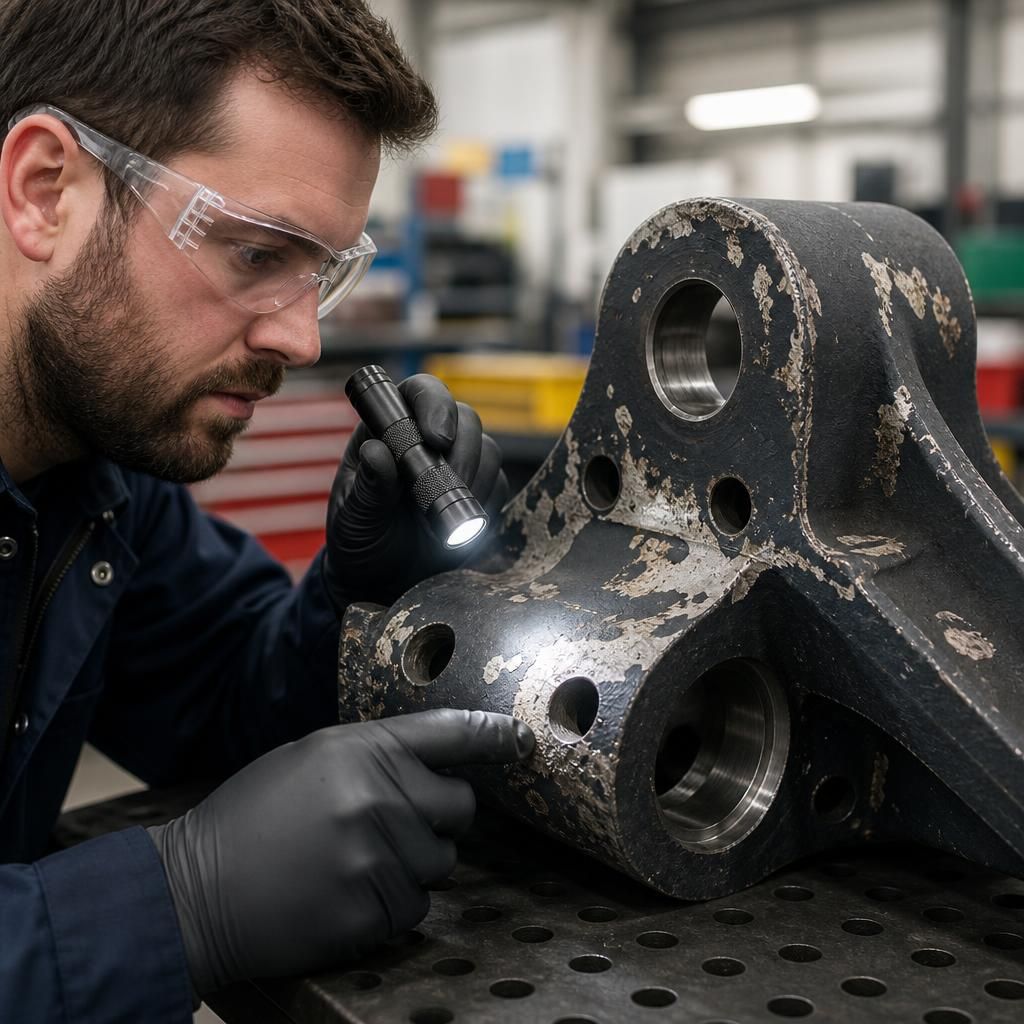
The acceptable removal method is determined by the substrate’s required post-treatment condition, not only by whether the metal appears sound. Components with defined dimensional, sealing, electrical or alignment functions may need the coating removed without altering the surface profile, tolerances or contact points. The removal specification should therefore identify critical features before work begins and state what constitutes acceptable substrate condition after treatment.
This distinction is important when a coating is being removed before repair or recoating. A method that removes the finish efficiently may still be unsuitable if it leaves embedded media, an excessive profile, chemical residue or a surface that no longer meets the component’s functional requirements. Where the acceptance criteria are unclear, the removal process should be agreed alongside the inspection and repair requirements rather than selected on coating removal speed alone.
Discuss your metal substrate and coating removal requirements
Discuss your metal substrate and coating removal requirements with our team before work begins, including the component’s material, construction and critical tolerances. This helps establish a suitable removal specification for repair or recoating.