

What are the advanced solutions available for addressing severe rust and corrosion issues on powder-coated metals?
Severe rust and corrosion on powder-coated metals may require more than local touch-up: the damaged coating is removed, corrosion is mechanically or abrasively eliminated, and any weakened metal is repaired or replaced before recoating. Advanced protection can include a suitable anti-corrosion primer, high-build protective system or specialist powder coating selected for the component’s environment and expected service conditions.
Advanced solutions for severe rust and corrosion on powder-coated metals involve diagnosing the failure mechanism, establishing whether the component remains structurally sound, and specifying a coating system for the actual service environment. The correct treatment may combine detailed inspection, targeted metal restoration, enhanced pre-treatment, a multi-layer protective system and measures to prevent water or contaminants reaching vulnerable areas.
Condition assessment before treatment
Severe corrosion is not always visible from the size of the rust mark. Rust may have spread beneath apparently sound powder coating, while pitting, crevice corrosion and corrosion around welds can reduce the effective thickness of the metal. An advanced assessment should therefore identify:
- the distribution and depth of corrosion, including concealed or inaccessible areas;
- whether corrosion is concentrated at seams, joints, fasteners, drainage points, edges or welds;
- the likely cause, such as trapped moisture, salt deposits, chemicals, abrasion, poor drainage or contact between dissimilar metals;
- areas where the coating has lost adhesion or has been damaged by impact; and
- whether any loss of section affects the component’s strength, fit or intended use.
For critical or load-bearing components, coating repair should not replace an appropriate engineering inspection. Where necessary, thickness checks or other non-destructive examination can help establish whether the part is suitable for restoration or should be replaced.
Targeted metal restoration
When corrosion has caused pitting or localised loss of metal but the component remains suitable for use, the affected area may require controlled restoration rather than simply being coated over. This can involve removing corrosion products from pits, blending sharp transitions, rebuilding suitable local areas and ensuring that repaired surfaces are compatible with the specified coating system. Deeply damaged sections, cracked welds or distorted parts may require fabrication work or replacement before coating can provide a reliable result.
The aim is to create a stable, clean and correctly profiled substrate. Filling over active corrosion, scale or poorly bonded material can trap contaminants and leave a hidden source of coating failure beneath the new finish.
Enhanced corrosion-protection systems
Where exposure is demanding, a single decorative powder coat may not provide the required level of protection. A specialist may specify a system with separate functional layers, such as:
- a corrosion-inhibiting base layer selected for the metal and environment;
- a compatible powder topcoat that provides the required barrier, appearance and resistance; and
- additional protection at edges, joints, apertures or other areas where coating coverage is difficult to maintain.
For components exposed to salt, industrial pollutants, moisture or cleaning chemicals, the specification should consider the complete coating system rather than choosing a colour or finish in isolation. Compatibility between layers, curing requirements, film build and the component’s operating temperature all affect long-term performance.
Specialist powder options
Some severe-duty applications benefit from a specialist coating rather than a standard architectural or general-purpose finish. A nylon or other thermoplastic coating can be relevant where the component needs additional resistance to abrasion, impact, friction or certain chemicals, provided the substrate and application method are suitable. This type of coating is not a universal solution to active corrosion; it still depends on sound metal, thorough preparation and correct treatment of edges and recesses.
For components requiring both corrosion resistance and mechanical durability, the specification may therefore prioritise a protective coating system with a robust service profile rather than a purely cosmetic recoat.
Design and assembly corrections
Recurring corrosion often indicates that the original design or installation is allowing water and contaminants to remain in contact with the metal. Advanced remedial work should consider whether the component has:
- unsealed overlaps or crevices that retain moisture;
- blocked or missing drainage paths;
- unprotected cut edges, drilled holes or threaded areas;
- tight contact between dissimilar metals that can encourage galvanic corrosion; or
- areas subject to repeated impact or rubbing that break the coating.
Where practical, sealing, improved drainage, suitable washers or isolating materials, edge protection and revised handling procedures can reduce the chance of a repeat failure. These measures are particularly important where the component will continue to face the same environmental conditions after recoating.
Quality controls for a severe-corrosion repair
An advanced repair specification should define how the finished work will be checked. Relevant controls can include inspection of the prepared substrate, confirmation that surfaces are free from visible contamination, verification of coating coverage and checks for defects such as pinholes, runs, missed areas or poor adhesion. Film thickness and cure should be assessed against the requirements of the selected system, not against a generic target that may be unsuitable for the component.
Edges, recesses, weld zones, fixing holes and the reverse side of a part deserve particular attention because they are common routes for moisture entry. A visually attractive surface can still fail prematurely if these areas remain contaminated, under-coated or difficult to drain.
Choosing between repair and replacement
Restoration is generally considered where the remaining metal is stable, the geometry can be recovered and the component can be prepared without leaving active corrosion. Replacement may be more appropriate where section loss is extensive, corrosion is concealed within inaccessible areas, the part has lost dimensional accuracy or the cost and risk of recovering it outweigh the value of the original component.
The most effective advanced solution is therefore determined by the condition of the metal, the cause of the corrosion and the component’s future exposure. A coating specialist can use those factors to recommend whether the part needs a conventional repair, a reinforced multi-layer system, a specialist nylon finish, design changes or complete replacement before recoating.
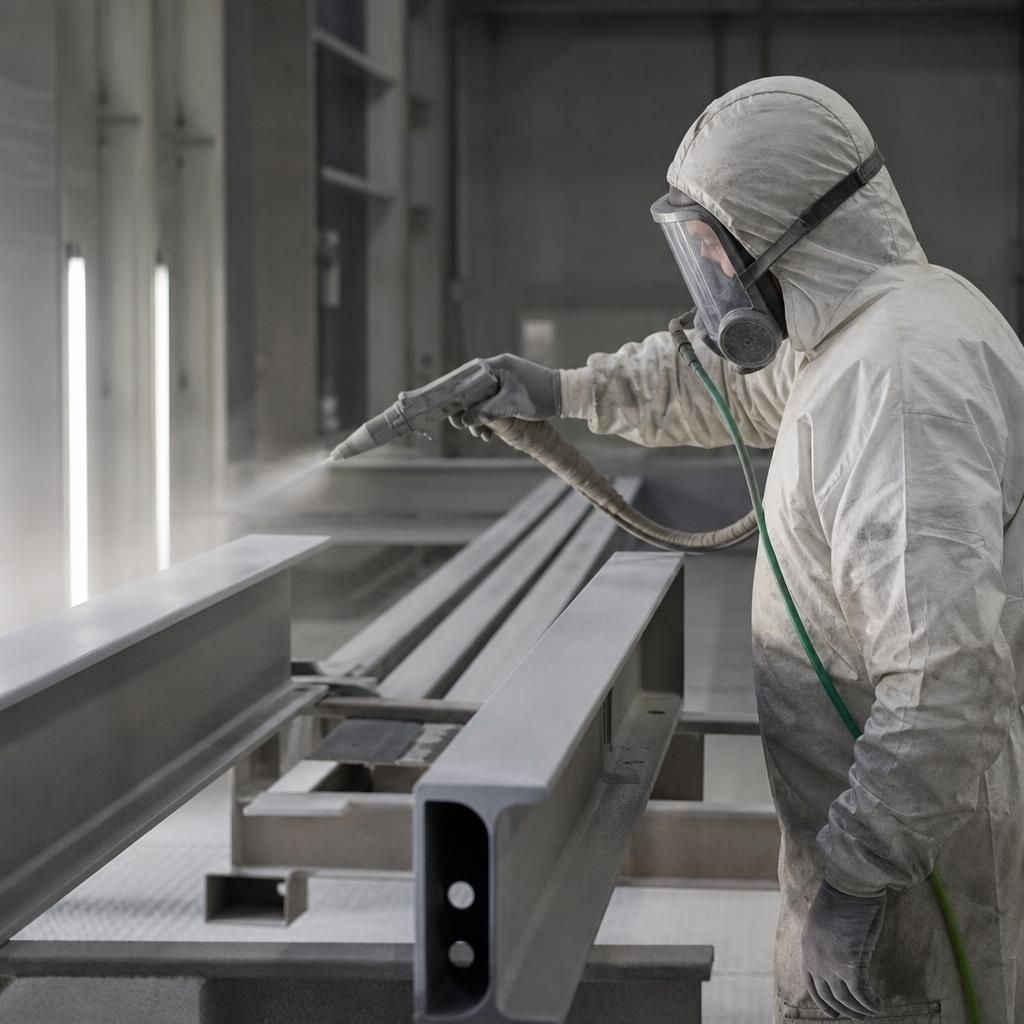
For severe corrosion on suitable steel components, a zinc-based underlayer can provide an additional barrier beneath the powder coat. Zinc-rich primers or zinc metallising systems help protect exposed steel by providing sacrificial protection, meaning the zinc is preferentially consumed if moisture reaches a damaged area. This approach is different from simply increasing the thickness of the decorative topcoat.
Such systems need careful specification. The existing coating and corrosion products normally need to be removed, the steel must be suitable for the preparation method, and the zinc layer must be compatible with the powder topcoat and curing process. Zinc-based protection is therefore most appropriate where the component’s exposure and remaining condition justify a more specialised specification, rather than as a universal treatment for every rust-damaged part.