

What are the specific advantages of using Rilsan Nylon 11 compared to other powder coating options for metal components?
Rilsan Nylon 11 offers metal components a combination of flexibility, impact resistance, corrosion protection and wear resistance that standard powder coatings may not provide together. Its tough, resilient finish is particularly suitable where components face abrasion, repeated handling, chemical exposure or movement.
Rilsan Nylon 11 differs from many conventional powder coatings because it combines a low-friction surface, electrical insulation and resistance to a wide range of industrial fluids with a resilient thermoplastic finish. These properties can make it a more suitable choice than standard epoxy or polyester powder where metal components require more than general-purpose decorative protection.
- Low-friction surface: Nylon 11 provides a naturally smooth surface with low friction. This can reduce drag where coated components come into contact with other parts, helping it suit guides, rollers, bushes, handling equipment and moving assemblies. It is also useful where a coating must resist scuffing caused by repeated contact.
- Resistance to oils, fuels and chemicals: The coating can provide strong resistance to many oils, fuels, hydraulic fluids, cleaning agents and industrial chemicals. This gives it an advantage in environments where a conventional decorative powder may soften, stain or lose performance after repeated fluid contact. Suitability still depends on the exact chemical, concentration, temperature and exposure period.
- Electrical insulating properties: Nylon 11 is non-conductive, so it can provide electrical isolation between a metal substrate and surrounding components. This is useful for selected housings, brackets, supports and other parts where the coating must act as an insulating layer as well as a protective finish. The required dielectric performance should be confirmed against the operating voltage and design specification.
- Resistance to moisture-related degradation: Nylon 11 has low moisture absorption compared with some other polyamide materials. This helps the coating retain more consistent dimensional and surface characteristics in damp conditions, while its barrier properties help limit the contact between the metal and the surrounding environment.
- Good surface finish and cleanability: The coating can produce a smooth, continuous surface that is easier to wipe clean than a heavily textured finish. This can be beneficial for components exposed to dirt, grease or process residues, particularly where regular cleaning is part of the operating procedure.
- Thermoplastic behaviour: Unlike thermosetting powders, which cure through an irreversible chemical reaction, Nylon 11 melts and forms a bonded polymer layer during application. This gives the material different processing and repair characteristics. The application method, heating cycle and substrate preparation must be selected carefully to produce the required film thickness and adhesion.
Compared with epoxy powder coatings, Rilsan Nylon 11 may be preferable where surface friction, impact from handling, repeated contact or exposure to oils and fuels are more important than maximum hardness alone. Compared with polyester powder, it can offer a more specialised engineering surface for components subjected to fluid contact and mechanical interaction, rather than serving primarily as a general external finish. These are comparative tendencies, not universal rules: the best coating depends on the substrate, operating temperature, chemical exposure, electrical requirements, appearance and application method.
Rilsan Nylon 11 is therefore most valuable when several of these requirements occur together. A coating specification should identify the substances contacting the component, the type of movement or loading involved, cleaning methods, required insulation and the acceptable appearance. Testing a representative component or prepared sample is advisable where exposure conditions are severe or the coating will be used in a safety-critical assembly.
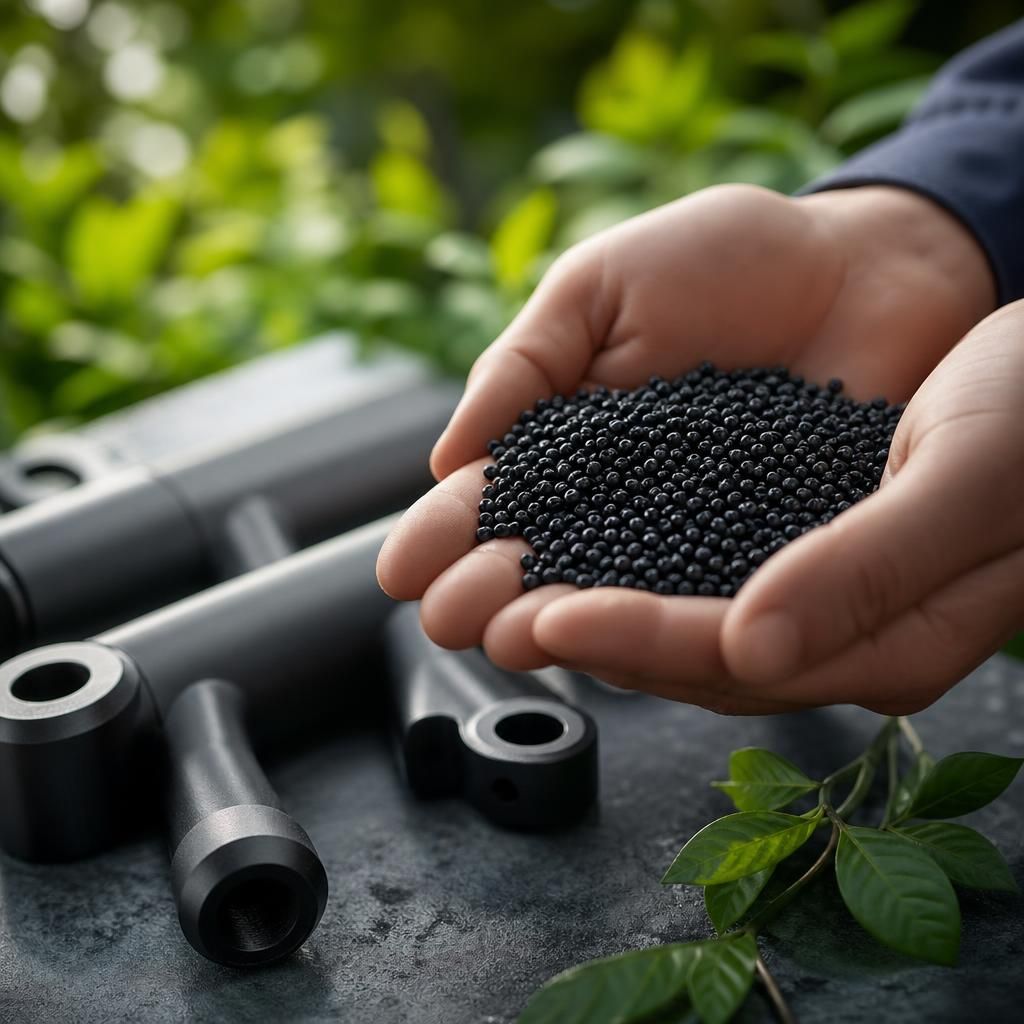
One additional advantage of Rilsan Nylon 11 is that it is made from a polymer containing a significant bio-based raw-material component. This can reduce reliance on wholly fossil-derived feedstocks compared with some conventional coating polymers, while still providing an engineering-grade finish for metal components.
Its bio-based origin does not mean the coating is biodegradable, and it should not replace technical evaluation. The relevant comparison remains the complete specification, including service conditions, coating performance, application requirements and the environmental impact of the component over its intended life.
Discuss Rilsan Nylon 11 for your metal components
Discuss your component’s operating conditions and coating specification with our team to assess whether Rilsan Nylon 11 is suitable for the application. Enquire about coating options for your metal components, including collection and delivery across the Midlands and surrounding areas.