

What customisation options are available for achieving both functional and aesthetic goals with protective powder coatings?
Protective powder coatings can be customised through colour, gloss level, texture and finish, while the coating type and specification are selected to suit functional requirements such as corrosion, chemical, abrasion or weather resistance. The correct combination depends on the metal substrate, operating environment, appearance required and performance expected from the finished component.
Customisation of protective powder coatings involves matching the coating specification and application details to the component’s working conditions, while selecting an appearance that meets the project’s visual requirements. The main variables are the coating chemistry, primer or undercoat, colour, gloss, texture, film build, masking and curing requirements.
Functional customisation
The coating system should be selected according to the risks the component will face rather than appearance alone. Relevant considerations include exposure to moisture, salts, chemicals, sunlight, impact, abrasion, heat and repeated handling. A specification may therefore call for a particular resin technology, a protective primer, or a multilayer system instead of a single decorative coat.
- Corrosion protection: the system can be designed around the metal substrate, the level of surface preparation and the severity of the environment. Primer selection and complete coverage of edges, joints and recessed areas may be important where corrosion could begin.
- Chemical resistance: components exposed to cleaning products, oils, fuels or process chemicals may need a coating chosen for resistance to the specific substances and contact conditions involved.
- Abrasion and impact resistance: handling equipment, industrial furniture, guards and fabricated parts can require a tougher finish or a specification that prioritises resistance to wear and mechanical damage.
- Weathering performance: outdoor parts may need a system selected for resistance to ultraviolet exposure, rain, temperature changes and general atmospheric conditions, with colour retention considered alongside corrosion protection.
- Temperature requirements: operating and curing temperatures should be assessed separately. A coating must be suitable for the temperatures encountered in service, while the metal component must also tolerate the coating process without distortion or damage.
Where a component needs more than one type of protection, a primer and topcoat can be specified as a system. This may provide a better balance between corrosion resistance, appearance and durability than trying to make one layer perform every function. The choice should be confirmed against the substrate, the intended use and any relevant performance requirements.
Aesthetic customisation
Colour is usually selected from an established colour reference system or an approved project sample. This is particularly important when coated parts must match existing equipment, branded assets or other manufactured components. A colour reference alone may not define the whole appearance: gloss, texture, coating thickness, lighting and the shape of the component can all affect how the finished surface looks.
- Gloss: low-gloss and matt finishes can reduce visible reflections and may help disguise minor surface variation, whereas higher-gloss finishes generally create a smoother, more reflective appearance.
- Texture: fine, medium or heavier textures alter both the visual character and the way handling marks or small surface imperfections are perceived. Texture should not be used to conceal inadequate preparation or defects in the underlying metal.
- Surface effect: smooth, textured, metallic and other specialist appearances can be considered where the required finish remains compatible with the protective performance of the coating system.
- Two-tone designs: separate colours or finishes can be applied to different areas where the component has a visual identification function or forms part of a coordinated assembly.
Appearance decisions can also affect maintenance. Highly reflective or very dark finishes may make fingerprints, dust, scratches or unevenness more noticeable, while textured finishes can be more difficult to clean in some applications. The most attractive option is not automatically the most practical one for the component’s environment.
Application details that support the specification
Customisation includes how the coating is applied, not simply which colour is chosen. Areas that must remain uncoated, such as threads, electrical contact points, locating faces, bearing seats or close-fitting interfaces, can be identified for masking. Masking plans should be agreed from the component drawing or sample so that functional tolerances are preserved and unnecessary overspray is avoided.
Racking and handling points should also be considered. Powder coating requires the component to be supported and electrically connected during application, so small contact marks may occur where it is hung or positioned. Their location can often be planned on non-critical or less visible areas. Parts with difficult geometry may need a defined orientation to reduce the risk of powder build-up, shadowing or incomplete coverage.
Film thickness is another specification choice. Excessive build can affect fit, threads, edges and moving interfaces, while insufficient coverage may reduce protection. Critical dimensions, masking limits and acceptable coating build should be identified before production, particularly for fabricated assemblies, close-tolerance parts and components that must be assembled after coating.
Consistency across batches
For repeat orders, the approved colour, gloss, texture, coating type, preparation standard, masking arrangement and curing requirements should be recorded as one agreed specification. A retained sample or approved reference panel can help assess future batches, although the appearance may still vary slightly with component geometry, surface condition and viewing conditions. Consistency is easier to manage when parts are presented in a repeatable condition and any changes to the substrate or design are declared before coating.
For a new project, useful information includes the metal type, component dimensions, service environment, expected handling, areas that must remain uncoated, required appearance and any dimensional limits. Where the balance between protection and appearance is uncertain, sample work or an agreed test piece can help compare colour, texture, gloss, coverage and compatibility with assembly requirements before the full batch is specified.
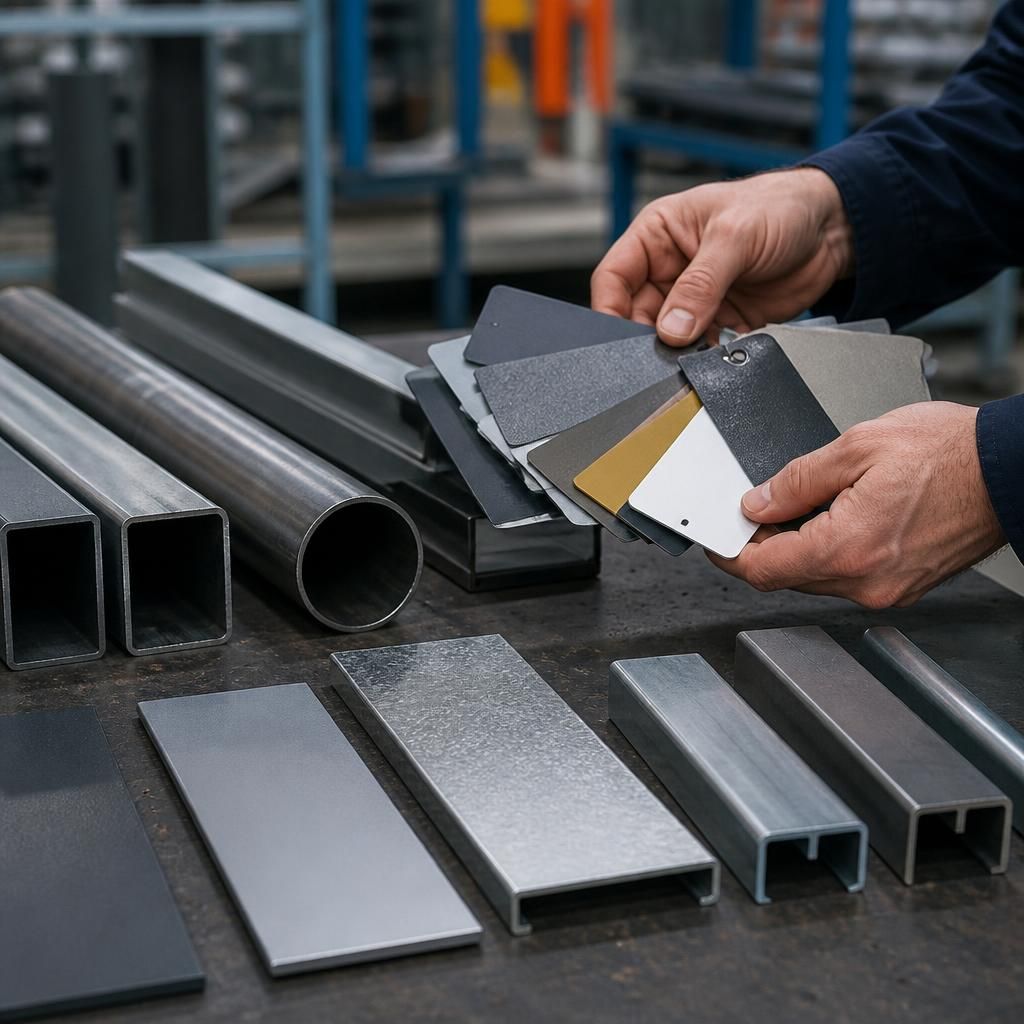
The metal substrate is a fundamental customisation factor because the same colour and gloss may require different preparation and coating specifications on mild steel, galvanised steel or aluminium. Surface condition, existing treatments and the risk of adhesion problems should be assessed before choosing the final powder system. This helps ensure that the aesthetic finish is supported by a suitable protective base rather than selected independently from the metal beneath it.
For components combining different metals, the specification should also account for how each substrate will be prepared and coated. A coordinated system can maintain a consistent appearance across the assembly while addressing the distinct corrosion and adhesion considerations of each material.
Discuss your protective powder coating customisation requirements
Discuss your protective powder coating customisation requirements with the team, including the finish and performance criteria your components must meet. A drawing or sample can help assess the specification against the part’s intended use.