

How does the powder coating process impact the overall cost and lead time for automotive parts?
Powder coating affects automotive-part cost and lead time mainly through the preparation required, the part’s size and condition, the coating specification, and the number of components processed together. Cleaning, repairs, masking, colour or finish changes, curing and collection or delivery arrangements can add handling stages, while well-prepared batch work is generally more straightforward to price and schedule.
Powder coating affects the total cost and lead time of automotive parts by adding a controlled sequence of inspection, preparation, application, curing and quality checks to the component manufacturing process. The effect is not determined by coating material alone: part design, required tolerances, production quantities, specification detail and the condition in which components arrive all influence the amount of work involved.
Cost is influenced by more than the coating charge. A quotation may need to account for handling, component identification, racking or jigging, preparation, masking, application, curing, inspection and packing. Small parts can sometimes require as much individual handling as larger parts, particularly where each item must be positioned separately or protected from coating. Conversely, a batch of identical components may allow the work to be organised more efficiently because the same settings, fixtures and inspection criteria can be used repeatedly.
Part geometry is also important. Recesses, narrow channels, threaded areas, mating faces and concealed edges can require additional attention to ensure that the finish is applied where required and excluded where it is not. If a component must retain a precise fit with another part, the coating thickness and areas requiring masking should be defined before work begins. Poorly defined tolerances can lead to clarification, additional inspection or rework, all of which may affect the final cost and programme.
The coating specification affects both planning and price. A standard single-colour finish is generally simpler to organise than work involving several colours, different textures, multiple gloss levels or separate finish requirements within one batch. Specialist requirements, including protective or nylon coatings, may involve different handling and process controls from a conventional decorative finish. The specification should therefore identify the intended function of the coating, appearance requirements, areas to remain uncoated, acceptable film build and any testing or documentation needed.
Automotive components may also arrive as mixed batches containing different metals, shapes or previous treatments. These differences can prevent all parts from being processed in exactly the same way. Separating the work into compatible groups may improve process control, but it can add handling and scheduling stages. Providing an accurate parts list, drawings or photographs and the required quantities helps a coating provider assess this before confirming a price and production plan.
Lead time is mainly a sequence-management issue. The programme depends on when the parts, specification and any required approvals are available, as well as the number of process stages needed for the particular components. Time may be required to inspect the incoming parts, resolve technical questions, prepare fixtures, complete the coating work and carry out final checks. Where components are needed for vehicle assembly, these stages should be allowed for in the wider manufacturing schedule rather than treating coating as an incidental final task.
- Part readiness: Components that arrive clearly identified, separated by batch and accompanied by the necessary requirements are easier to process than parts requiring clarification.
- Fixture and masking requirements: Special positioning or protection of functional surfaces can add preparation and handling stages.
- Batch organisation: Grouping compatible components can reduce unnecessary process changes, whereas fragmented or mixed work may require separate runs.
- Approval stages: A first-off sample, colour confirmation or inspection approval may need to be completed before the wider batch proceeds.
- Post-coating operations: Reassembly, packaging, transport planning or additional customer inspection can extend the period before parts are ready for use.
Cost and lead time can increase when parts require rework after inspection. Typical causes include contamination, unsuitable previous finishes, damage revealed during preparation, incorrect masking instructions or a coating build that interferes with a functional area. These risks are reduced when the coating requirements are agreed before manufacture and when surfaces, threads, bearing areas, earth points and other critical features are identified clearly.
For repeat automotive work, the first batch may involve more technical review because the process needs to be established and checked against the component requirements. Once the specification, fixtures, masking points and inspection approach are documented, later batches can be planned with greater consistency. This does not remove the need for inspection, but it can make the work easier to estimate and integrate into production control.
When requesting a quotation, provide part drawings where available, material information, quantities, dimensions, required colour and finish, functional areas, masking details, quality expectations and the date by which the coated components are needed. It is also useful to explain whether the parts are prototypes, one-off replacements or repeat production items. This allows the coating process to be assessed as part of the complete automotive component workflow, giving a more reliable view of both the cost and the time required.
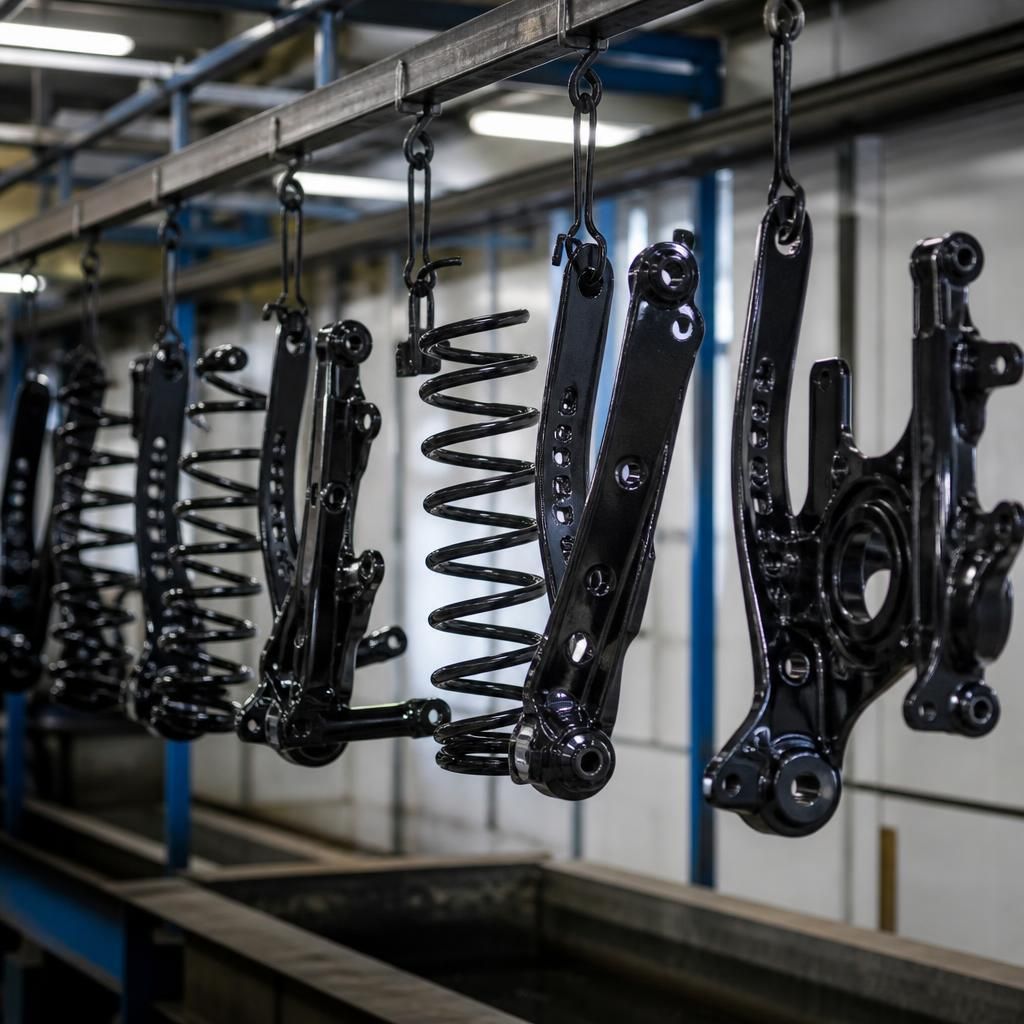
Automotive parts designed with powder coating in mind can be simpler to process than components adapted after manufacture. Drainage and venting provisions help prevent cleaning or pretreatment fluids becoming trapped in hollow sections, while suitable hanging points can reduce the need for temporary fixtures or extensive masking. Agreeing these details during component design also helps protect contact points used for electrical grounding and supports consistent positioning during curing. Addressing them before production can limit avoidable preparation, clarification and rework, improving the accuracy of both the quotation and the planned lead time.