

What specific logistical and operational considerations should be evaluated when choosing a powder coating provider for high-volume production runs?
When choosing a powder coating provider for high-volume production runs, assess usable capacity, batch handling, production planning, quality controls, material and colour management, packaging, and collection and delivery arrangements. Confirm that the provider can process your component sizes and volumes consistently while meeting agreed specifications, documentation requirements and scheduling needs.
Choosing a powder coating provider for high-volume production requires more than checking whether it can accept a large order. The assessment should cover technical compatibility, repeatability, part preparation, specification control, traceability, communication, commercial terms and contingency arrangements. These factors determine whether the coating operation can be integrated into your manufacturing process without creating avoidable rework, delays or inconsistencies.
Start with technical compatibility. Provide the coater with accurate information about the substrate, component dimensions, mass, geometry, required film build, operating environment and finished appearance. Confirm that its equipment can accommodate the largest and heaviest parts, as well as the smallest components in the same programme. Complex shapes, deep recesses, enclosed sections and thin edges may require different hanging or application methods. The provider should also identify limitations before production begins, rather than discovering them during a live run.
Assess how the parts will be prepared for coating. Surface condition has a direct effect on adhesion and finish quality. Ask how oil, dirt, mill scale, rust, weld residues and existing coatings will be removed, and whether the proposed pre-treatment is suitable for the metal involved. For aluminium, galvanised steel, mild steel and previously coated components, the preparation route may differ. Clarify who is responsible for degreasing, blasting, chemical pre-treatment, masking and the removal of temporary fixtures. Components arriving with variable contamination or inconsistent fabrication quality can introduce avoidable variation into a high-volume programme.
Define the acceptance criteria in measurable terms. A purchase order should identify the powder type, colour reference, gloss level, texture, target film thickness, masking requirements and any areas that must remain uncoated. It should also state how appearance is to be judged and which defects are unacceptable. Where a coating must meet a functional requirement, such as resistance to abrasion, chemicals, weather or corrosion, record that requirement alongside the relevant test or inspection method. A reference sample or approved first-off part can help establish the expected finish before the full production quantity is processed.
Check first-off and change-control procedures. Before committing all components to a run, agree whether a sample or initial production batch will be inspected and approved. This is particularly useful where the finish is new, the component design has changed or several parts must match. Establish how alterations to the drawing, substrate, powder, colour, masking pattern or curing requirements will be authorised. Uncontrolled changes can make otherwise similar batches difficult to compare and may invalidate earlier approval work.
Review traceability and documentation. For regulated, safety-critical or contract-controlled work, the provider should be able to link coated parts to the relevant job information. Useful records may include part numbers, revision levels, powder identification, preparation method, coating instructions, inspection results and any non-conformance reports. Agree how these records will be supplied and retained. Clear labelling of containers and production lots is also important where components are being returned to different assembly lines or incorporated into multiple finished products.
Consider how the coating operation fits your own factory process. Examine the handover points between fabrication, coating, inspection and final assembly. Decide whether parts will arrive in a defined sequence, whether different component types must remain segregated and how rejected or quarantined items will be identified. If the coating provider needs drawings, schedules, purchase-order references or electronic job data, establish a consistent method for issuing the latest version. A defined communication route reduces the risk of outdated instructions being used on repeat work.
Evaluate handling requirements before agreeing the job. Parts need suitable lifting points, hanging areas or racking arrangements throughout preparation, spraying, curing, inspection and return. Ask whether the component design allows secure suspension without leaving unacceptable contact marks. Discuss masking of threads, bearing seats, electrical contact points and close-fitting interfaces, since excessive coating in these areas can affect assembly. Where parts are prone to distortion or damage, agree suitable support and handling methods in advance.
Examine commercial and contractual terms carefully. The quotation should distinguish coating work from additional operations such as stripping, blasting, masking, repair or sorting. Check how non-conforming parts, customer-supplied powder, repeat processing and changes in quantity will be handled. It is also sensible to agree responsibility for damage caused by unsuitable fabrication, inadequate protection before coating or requirements that were not included in the original specification. Clear terms reduce disputes when the production scope changes.
Ask how exceptions will be managed. High-volume work can be affected by damaged parts, incomplete batches, specification changes, powder availability, equipment maintenance or unexpected defects in the substrate. The provider should explain how affected work is isolated, assessed and reported, and how any rework decision is approved. You should also know who authorises deviations from the coating instruction and how replacement or reprocessed parts are distinguished from the original lot.
Finally, compare providers using a written evaluation rather than price alone. A suitable high-volume powder coater should demonstrate that it understands your component constraints, can document the agreed process, communicates changes clearly and can integrate with your manufacturing controls. For Midlands manufacturers, fabricators, construction firms and automotive businesses, a provider offering industrial batch, large-scale and specialist coatings should be assessed against the same technical and operational criteria before the first production run is scheduled.
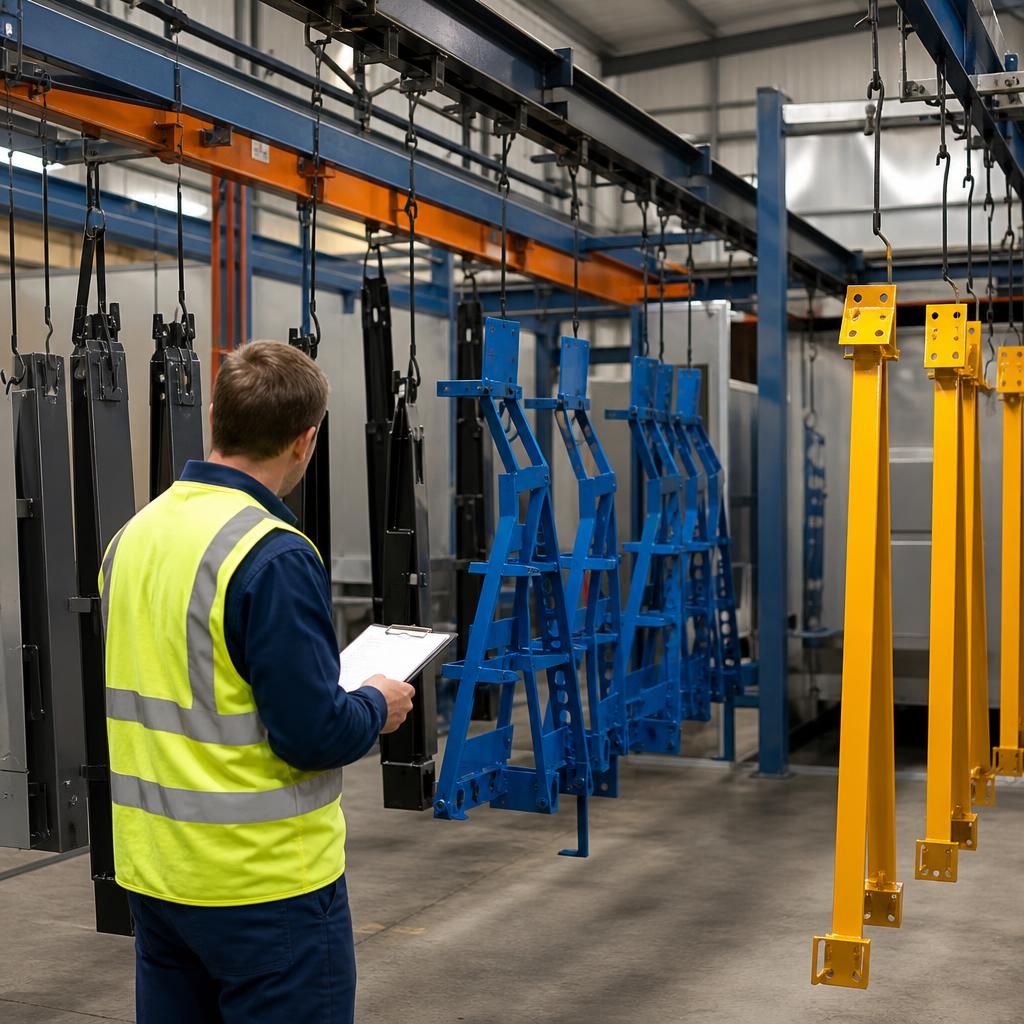
For high-volume production, evaluate how the provider manages mixed component types and colour changes within the overall run. Ask whether parts can be grouped by powder colour, substrate, finish or curing requirement, and how those changeovers are planned. This helps reveal whether your order will be processed as a controlled sequence or divided into smaller, less efficient production lots.
Provide an anticipated parts schedule rather than only a total quantity. Include expected batch sizes, repeat orders, priority components and any date-sensitive assemblies. The provider can then assess how the work fits its production plan and identify conflicts between different coating requirements before components are dispatched. A clear schedule also makes it easier to coordinate deliveries from your fabrication or manufacturing operation with the return of completed parts.
Discuss Your High-Volume Powder Coating Requirements
Discuss your high-volume powder coating requirements with the team, including your component specifications, production volumes and finish requirements. This allows the proposed coating process and handling arrangements to be considered before work is planned.