

How does the choice of powder coating method impact the quality and durability of the finish in industrial applications?
The powder coating method affects how evenly the powder covers the component, the achievable film thickness, edge coverage and the consistency of the finished surface. Electrostatic spray is versatile for varied shapes and controlled production, while fluidised-bed coating can produce thicker, highly protective layers on suitably shaped parts; selecting the appropriate method helps achieve the required finish quality and service durability.
The choice of powder coating method affects durability by controlling how the powder is deposited, how consistently the coating covers the component and how well the process suits the part’s geometry and service conditions. A method that produces a uniform, well-adhered coating with the specified film build will generally provide more reliable corrosion, impact and wear resistance than an unsuitable process, even when the same powder is used.
Electrostatic spray coating is usually selected where components have varied shapes, detailed profiles or different coating requirements within the same production run. The powder is electrically charged and directed towards an earthed metal component. The electrostatic attraction helps the particles adhere before curing, while the operator or automated equipment controls the application pattern.
Quality depends on more than simply charging the powder. Effective earthing, the correct spray distance, suitable air pressure and controlled gun movement all influence deposition. Poor earthing can reduce transfer to the component, while excessive powder delivery can create uneven build, roughness or defects after curing. Skilled application is particularly important around corners, recesses, apertures and enclosed sections, where the electrostatic field may not distribute powder evenly.
Corona and tribo spray systems produce different application characteristics. Corona systems charge powder using an electrical field and are widely adaptable, but the charge can contribute to the Faraday cage effect in deep recesses. Tribo systems charge the powder through friction within the gun rather than by using a charging electrode. They can be useful for certain profiles and powders, although they require compatible powder behaviour and carefully controlled equipment settings. The appropriate system is therefore determined by the component design, powder specification and required production control.
Fluidised-bed coating uses air to suspend powder in a tank, creating a fluid-like bed. A heated component is immersed in the powder, which melts onto the surface and forms a comparatively substantial protective layer. This approach can provide excellent resistance where a robust coating is required, particularly on components with a shape that allows them to be immersed and withdrawn consistently.
Its limitations are equally important. Fluidised-bed coating is less suited to thin, decorative finishes, intricate assemblies, sharp changes in section or parts that cannot be heated uniformly. The component’s mass, wall thickness and thermal conductivity affect how much powder melts and how evenly the coating develops. If the part is too cool, the powder may not fuse completely; if it is excessively hot, the coating may become too thick, uneven or visually inconsistent.
Preheating and post-application heating can also be combined in different ways. In a conventional spray process, powder is applied to a prepared, usually cool component before the complete coating is cured in an oven. Preheated spray applications can help build coating on particular parts, but they require close control of temperature and powder deposition. These variations can alter the final film build and appearance, so they should be established through process trials rather than assumed to be interchangeable.
The selected method affects several measurable aspects of finish quality:
- Film thickness: the method must achieve the specified dry film build without excessive material at edges, corners or overlaps.
- Coverage: recesses, internal faces and complex profiles may need different gun angles, application stages or an alternative process.
- Surface appearance: application consistency influences texture, gloss uniformity, orange peel, pinholes and visible inclusions.
- Adhesion: the deposited powder must bond to a suitably prepared substrate and be fully fused during curing.
- Defect control: contamination, moisture, poor grounding and unstable powder delivery can create defects that reduce both appearance and protection.
- Repeatability: automated movement, controlled part positioning and consistent powder recovery can reduce variation across batches, provided the equipment is correctly set up.
Durability is the result of the complete coating system, not the application method in isolation. Powder chemistry, substrate condition, pretreatment, film thickness and curing all interact with the chosen deposition process. For example, a high-performance powder will not compensate for inadequate preparation, and a well-applied coating can still lose performance if it is under-cured, over-cured or contaminated before curing. The method must therefore be assessed against the required corrosion protection, chemical exposure, abrasion, impact and outdoor weathering conditions.
Component design should be considered before production begins. Drainage and venting may be needed for hollow sections, while sharp edges can require suitable edge preparation or a coating system designed to maintain protection at those points. Weld spatter, trapped fabrication residue and inaccessible surfaces can also create local weaknesses regardless of whether spray or immersion is used.
A practical selection process starts with the part rather than the equipment. Review the component’s dimensions, weight, geometry, material, required finish, target film build and expected service environment. Then consider whether the coating needs to be decorative and tightly controlled, or thicker and primarily protective. Small or complex batches may favour a flexible spray process, whereas suitably shaped components requiring a heavier protective layer may be more compatible with fluidised-bed application.
Quality checks should be matched to the specification. Depending on the application, these can include visual inspection, dry-film thickness measurement, adhesion testing and checks for cure or surface defects. Inspecting representative areas such as edges, recesses and welded zones is important because an apparently satisfactory broad surface may conceal local under-coverage.
For industrial work, the most reliable result comes from selecting the application method, powder and pretreatment as one coating system. Manufacturers and fabricators should provide component drawings, material details, service conditions and finish requirements so the process can be assessed before a production batch is coated. A regional specialist such as Powder Coatings can use those requirements to determine whether spray, fluidised-bed or a more specialised application route is appropriate for the metal components involved.
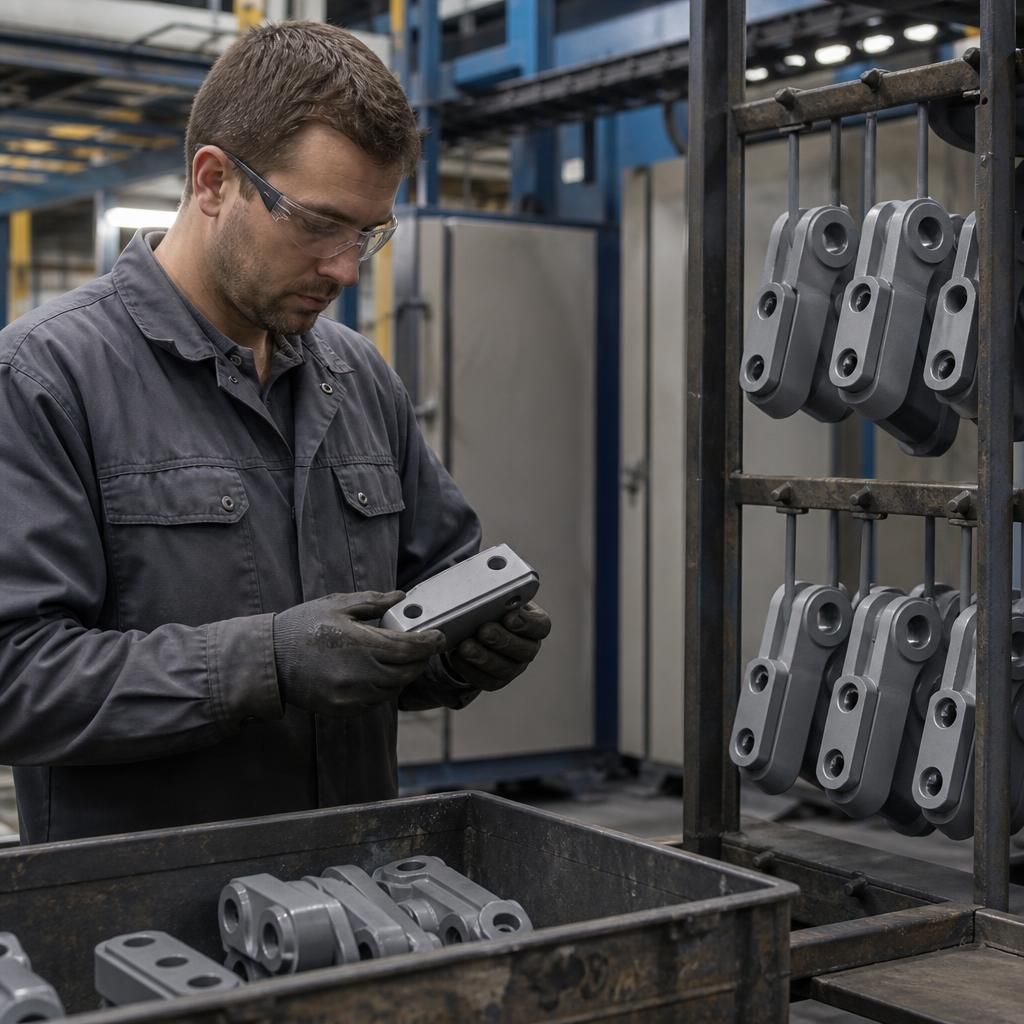
Powder coating method selection also affects dimensional accuracy. Film build on threaded holes, bearing seats, mating faces and close-fitting joints can interfere with assembly if these areas are not masked or subsequently cleared. A spray process usually allows more local control, while a heavier-build process requires particularly careful consideration of access, masking and finished clearances.
These details influence durability as well as fit. Excessive coating may be damaged when parts are forced together, whereas inadequate protection on an exposed edge or interface can leave a route for corrosion. Reviewing tolerances and masking requirements before application helps preserve both the component’s function and the continuity of its protective finish.
Discuss the Right Powder Coating Method for Your Application
Discuss your component requirements with Powder Coatings to identify the most suitable powder coating method for the intended application. Provide drawings, material details and finish requirements so the proposed process can be assessed before coating begins.