

What environmental and sustainability benefits does your powder coating process offer compared to traditional paint methods?
Powder coating can offer a lower-impact alternative to traditional liquid paint by using little or no solvent, producing fewer volatile organic compound (VOC) emissions and allowing excess powder to be recovered rather than discarded. Its durable finish can also extend the service life of coated metal components, reducing the need for frequent recoating and associated material use.
Powder coating can reduce the environmental burden of finishing metal compared with conventional liquid painting because the coating is applied as a dry powder and cured directly onto the component. The main advantages are reduced solvent use, more efficient use of coating material, fewer hazardous emissions during application and the potential to lower lifecycle impacts. The overall result depends on the powder formulation, pretreatment system, curing equipment, component design and how the process is managed.
Lower reliance on solvent-based materials: Traditional liquid paints commonly use solvents to keep resins and pigments in a workable form. These solvents can evaporate during application and curing, contributing to atmospheric emissions. Powder coatings are supplied in a dry form, so the coating system does not require the same solvent carrier. This can reduce the quantity of solvent-related materials handled at the finishing stage and simplify controls for airborne emissions.
Efficient transfer of coating material: Powder is applied electrostatically, giving the particles an electrical charge so they are attracted to the earthed metal component. This helps the coating reach exposed surfaces and can make application more controlled than conventional spray painting. Where the equipment and component geometry allow, unused powder can be separated and managed for recovery rather than becoming general process waste. The environmental benefit depends on the powder being suitable for recovery and on the application system being correctly set up.
Fewer process emissions: Powder coating does not rely on the same solvent evaporation stage as liquid paint. This can reduce volatile emissions from the coating operation and may also reduce the need for solvent-handling infrastructure. It does not mean that every powder coating process is emission-free: preparation chemicals, cleaning agents, curing equipment and any other materials used on site still need appropriate control.
Potentially simpler material handling: Dry powder avoids some of the storage and handling issues associated with liquid paints, such as managing solvent-containing mixtures and preventing liquid spills. Powder must still be stored, handled and disposed of responsibly. Its environmental performance is affected by ordering the correct specification and quantity, avoiding contamination between colours or coating types, and keeping unused material suitable for its intended use.
Energy use needs to be assessed separately: Powder coating requires heat to cure the film, normally in an oven. Liquid paint may also require heated drying or extended air-drying, so a direct comparison depends on the coating chemistry, component size, line configuration and energy source. A well-managed curing process avoids unnecessary heating by matching the oven settings to the powder manufacturer’s requirements. Over-curing wastes energy and can affect the finish, while under-curing can prevent the coating from achieving its specified properties.
Pretreatment remains part of the environmental assessment: Before coating, metal components may require cleaning, degreasing, blasting or chemical pretreatment. These stages can involve water, detergents, conversion chemicals and process residues. They should therefore be considered alongside the powder itself when comparing environmental performance. Responsible management includes controlling rinse water, separating waste streams, maintaining process baths where applicable and disposing of residues through suitable routes.
Lifecycle considerations: A sustainability assessment should examine more than the application stage. Relevant questions include:
- What resin and pigment system is appropriate for the component and its service environment?
- What curing temperature and cycle are required?
- How much coating material is transferred to the component, and how is unused powder managed?
- What preparation chemicals, water and energy are used before and during coating?
- Can components be processed in suitable batches to avoid unnecessary setup, cleaning and oven use?
- How will coated parts be handled, maintained and treated at the end of their service life?
Powder coating is not automatically the lowest-impact option in every application. Small or heat-sensitive components may require a different approach, and thermoset powder cannot simply be melted and recoated after curing. Powder coating can nevertheless provide a strong environmental alternative where the component can tolerate the curing conditions and the process is designed to control energy, pretreatment materials and residual powder. For Midlands manufacturers, fabricators, construction firms and automotive businesses, these process details are important when assessing sustainability rather than relying on the coating type alone.
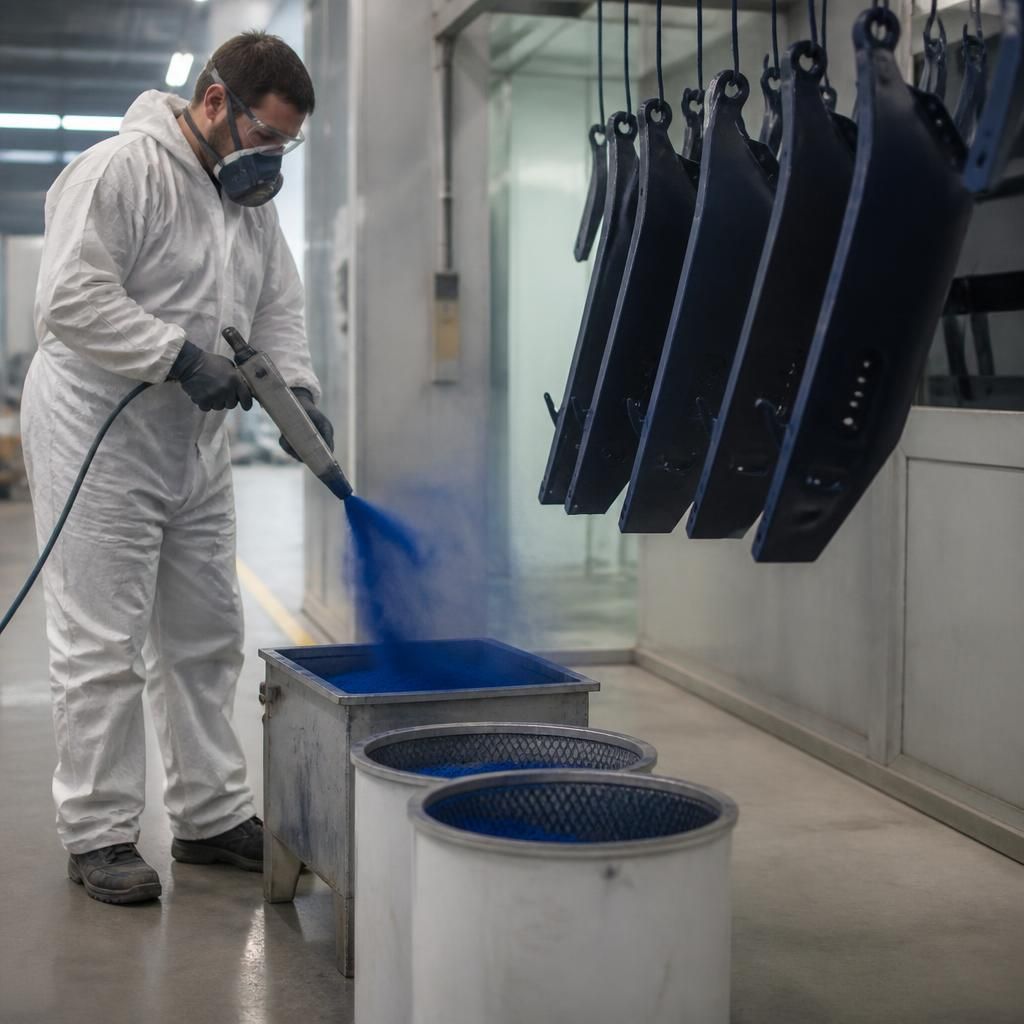
One practical sustainability benefit of powder coating is that it can produce a more manageable waste stream than conventional liquid painting. Dry overspray may be collected through the application system, while liquid paint operations can generate solvent-contaminated materials such as used wipes, residues and paint sludge. Recovery is not automatic: excess powder, booth filters and cleaning residues must be kept separate and handled through suitable waste routes.
This makes process control important. Correctly specified powder, clean application equipment and planned colour changes can help prevent usable material being contaminated. The environmental result therefore depends not only on choosing powder coating, but also on how overspray, filters and preparation residues are segregated and managed.