

What environmental factors should be considered when selecting an anti-rust coating for metal parts?
When selecting an anti-rust coating for metal parts, assess exposure to moisture, salt, chemicals, UV radiation, temperature changes and abrasion. The coating system should match the part’s environment and service conditions, including whether it will be used indoors, outdoors, in a corrosive atmosphere or near industrial chemicals.
The correct anti-rust coating is determined by the complete service environment, not simply by whether a metal part is used indoors or outdoors. Selection should consider the type and duration of exposure, the base metal, the part’s design, the preparation process and the consequences of coating failure. These factors help establish whether a standard powder coating is suitable or whether a more specialised protective coating system is required.
Assess the exposure category
Environmental conditions vary considerably between a dry internal assembly area, a manufacturing plant, a roadside structure and a coastal installation. A part may face occasional condensation, repeated washing, airborne pollutants, immersion, or persistent exposure to a corrosive atmosphere. Record where the component will be installed, whether exposure is continuous or intermittent, and whether contaminants can collect on horizontal or recessed surfaces.
- Internal locations: Consider condensation, poor ventilation, process fumes and contact with cleaning products. An indoor part can still corrode if moisture is trapped against the metal or if the surrounding process generates corrosive vapours.
- External locations: Account for rainfall, condensation, deposited dirt and pollutants, along with the way water drains from the component. Outdoor exposure usually places greater demands on edge coverage, film integrity and resistance to weathering.
- Coastal or salt-exposed locations: Salt deposits can retain moisture and accelerate corrosion, particularly at damaged areas, joints and crevices. The coating specification and preparation standard should therefore reflect the severity of this exposure.
- Industrial environments: Fumes, dust, oils, solvents and process chemicals may affect the coating even where direct contact is occasional. Identify the actual substances involved rather than selecting a coating solely from the name of the industry.
Consider the type of chemical contact
Not all chemical exposure has the same effect. A coating may withstand brief splashes but be unsuitable for continuous immersion, repeated cleaning or contact with a concentrated chemical. Obtain information about the substance, its concentration, temperature, contact time and method of removal. Also check whether the part will be exposed to alkaline cleaners, acidic residues, solvents, hydraulic fluids or automotive chemicals.
Where chemical resistance is important, request confirmation that the proposed coating system is appropriate for the specific operating conditions. A general statement that a coating is chemically resistant is not enough if the component will be immersed, steam-cleaned or exposed to changing chemicals.
Examine temperature and thermal cycling
Temperature affects both the metal and the coating. High operating temperatures can alter coating performance, while repeated heating and cooling can create movement between the substrate and the coating film. This may contribute to cracking, loss of adhesion or moisture reaching exposed metal.
Consider the normal operating temperature, short-term peaks, heating rate and cooling rate. Components fitted near engines, ovens, exhaust systems or other heat sources may need a coating selected specifically for elevated temperatures. Temperature should also be assessed alongside chemical exposure, because a substance that is relatively mild at ambient temperature may become more aggressive when heated.
Review sunlight and weathering requirements
For externally installed parts, ultraviolet exposure can gradually affect the appearance and surface properties of a coating. The required level of colour and gloss retention should be considered separately from corrosion protection. A finish may continue to protect the substrate while its colour or gloss changes, so the specification should identify whether appearance is critical throughout the component’s service life.
Weather exposure also includes rain impact, frost, condensation and repeated wetting and drying. These conditions can reveal weaknesses in poorly sealed joints, sharp edges or damaged areas. The coating choice should be considered alongside the component’s geometry and the measures used to prevent water from remaining on the surface.
Account for abrasion, impact and handling
Some parts are exposed to vibration, rubbing, impact from tools, sliding contact, grit or frequent handling. Mechanical damage can expose the substrate and create an entry point for corrosion, even where the surrounding coating remains intact. Identify contact points, lifting areas, fasteners and surfaces that may be scraped during installation or service.
If abrasion is expected, the specification may need to prioritise hardness, flexibility, adhesion or resistance to repeated mechanical contact. A coating that performs well in a static environment may not be appropriate for a component that moves against another surface or is regularly cleaned with abrasive equipment.
Match the coating to the substrate and design
The base material influences the risk and mechanism of corrosion. Steel, galvanised steel, aluminium and other metals require consideration of their surface condition, any existing treatment and their response to preparation and curing. Mixed-metal assemblies can also create localised corrosion if moisture and an electrical connection are present between dissimilar metals.
Design details are equally important. Crevices, folded sections, lap joints, deep recesses, threaded areas and unsealed hollow sections can retain moisture or make consistent coating coverage difficult. Drainage and ventilation should be considered before coating, and weld spatter, sharp edges, oil contamination and residues should be removed during preparation. A durable coating cannot compensate fully for a design that traps water or prevents adequate surface preparation.
Check preparation and application conditions
Surface preparation is part of the environmental specification because contamination and poor adhesion can shorten coating life. Rust, mill scale, grease, salts and previous coatings may need to be removed using a method compatible with the metal and the selected system. If the substrate is prepared but then exposed to damp or contamination before coating, the intended protection may be reduced.
Application conditions also matter. Surface temperature, condensation risk, cleanliness and curing conditions should be controlled so that the coating forms a continuous, properly bonded film. Complex fabrications may require particular attention to edges, internal faces and areas affected by welding or handling.
Consider environmental and regulatory requirements
Environmental selection can include the effect of the coating process itself. Powder coating is a dry finishing process, but the complete specification may still involve preparation chemicals, cleaning stages, waste handling and energy use during curing. Where a business has environmental or workplace requirements, these should be reviewed alongside the coating’s technical performance.
For components used with drinking water, food-processing equipment, medical applications or other controlled environments, check the relevant material and hygiene requirements before selecting a coating. The correct choice depends on the finished part’s use, not only on its resistance to atmospheric corrosion.
Use a documented service profile
Before requesting a coating recommendation, compile the following information:
- the metal type and current surface condition;
- the indoor, outdoor, coastal, industrial or chemically exposed location;
- the substances likely to contact the part, including cleaning agents;
- normal and peak operating temperatures;
- expected impact, abrasion, vibration and handling;
- the required appearance and tolerance for colour or gloss change;
- the component’s geometry, joints, drainage points and inaccessible areas; and
- any cleaning, inspection or maintenance procedure used in service.
This information allows the coating system, preparation method and application requirements to be assessed together. For manufacturers, fabricators, construction firms and automotive businesses across the Midlands, specialist powder coating advice can help relate the proposed finish to the component’s actual environment, with collection and delivery options available for suitable projects.
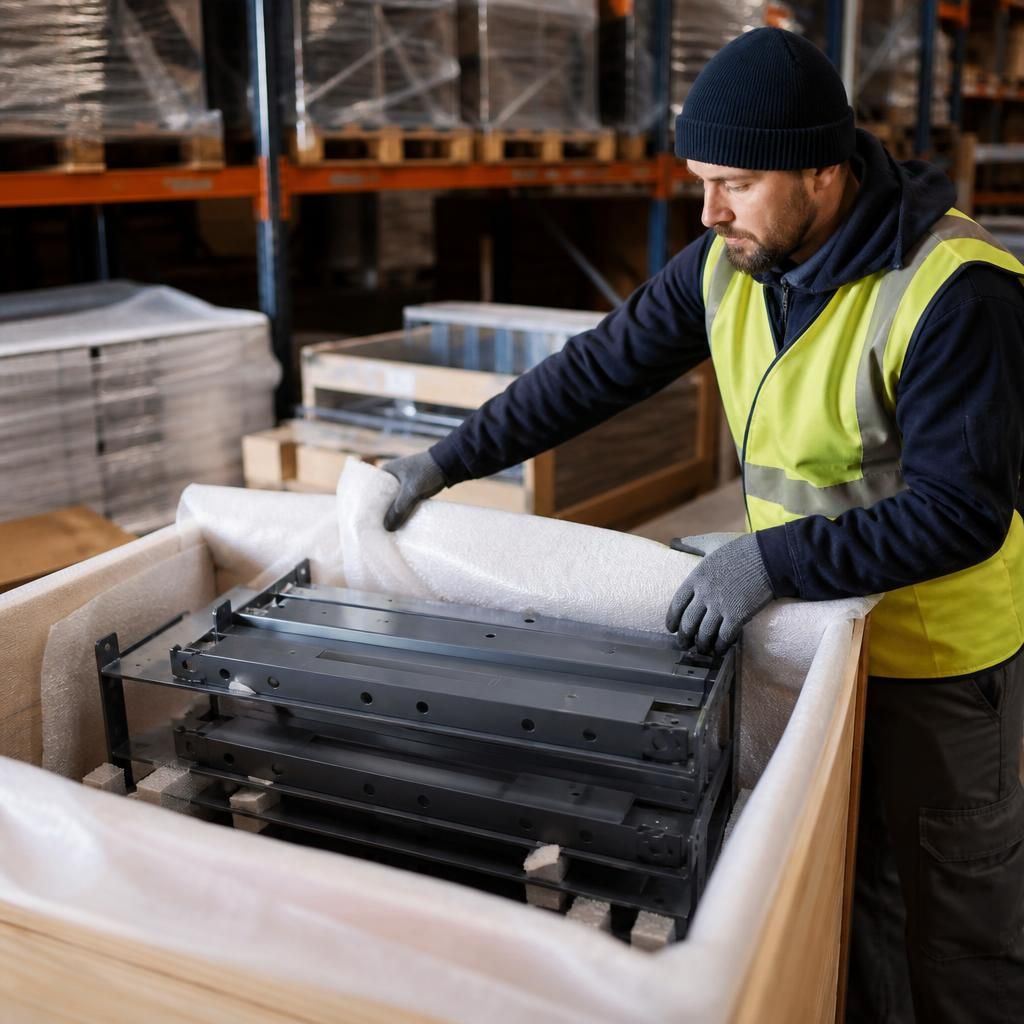
Environmental assessment should include the period between coating and installation, not only the component’s final operating location. Uncovered transport, damp storage areas, condensation inside packaging and contact between stacked parts can introduce moisture or damage the finish before the component is put into service.
Specify how coated parts will be packed, stored and handled. Packaging should not retain moisture against the surface, and separators may be needed where components could rub together. If parts are stored for an extended period or moved between different environments, plan an inspection for marking, impact damage and early corrosion before installation. This helps prevent storage conditions from undermining an otherwise suitable anti-rust coating system.