

How does a conveyorised powder coating system improve product consistency and reduce waste?
A conveyorised powder coating system improves product consistency by controlling how each component is prepared, coated and cured as it moves through a repeatable production process. Consistent application reduces defects, rework and overspray, helping manufacturers use powder more efficiently while maintaining an even, durable finish across each batch.
A conveyorised powder coating system improves consistency and reduces waste by standardising the variables that most affect the finished coating: component presentation, conveyor speed, powder application, electrical grounding and oven curing. Instead of relying on separate manual handling decisions for each part, the line establishes a controlled sequence that can be monitored, repeated and adjusted for the component being processed.
Consistent component movement is the starting point. A conveyor carries parts through the preparation, application and curing stages at a defined speed and spacing. This gives each component a more predictable exposure time at every stage and helps maintain a consistent distance between the workpiece and spray equipment. Suitable jigs and hangers also prevent parts from swinging, touching one another or presenting difficult faces at inconsistent angles.
The racking arrangement has a direct effect on both finish quality and powder consumption. Parts should be positioned so that coating equipment can reach the required surfaces without excessive shadowing. Correct spacing helps reduce powder striking adjacent components or the line itself, while suitable contact points support effective grounding. For repeat production, using dedicated or repeatable hanging arrangements can reduce variation between batches.
Automatic application equipment supports repeatability by controlling settings such as powder output, air volume, electrostatic charge and gun movement. These settings can be matched to the part geometry, required film build and powder type. Once a suitable process window has been established, operators can use the same settings for comparable work rather than compensating by eye for every component.
Electrical grounding is particularly important in electrostatic powder coating. The powder is charged as it is sprayed and is attracted to the grounded metal workpiece. Poor grounding can contribute to uneven deposition, weak coverage around edges and increased powder falling past the part. Keeping hooks and contact points clean, and checking the continuity of the line, helps maintain predictable transfer to the component.
Waste reduction comes from controlling several different loss points rather than simply using less powder. A well-managed line can help limit:
- overspray caused by unsuitable gun settings, excessive powder output or poor part positioning;
- rework and rejected parts resulting from uneven coverage, contamination or incorrect curing;
- powder lost when components are too close together or difficult surfaces are presented poorly;
- powder discarded during colour or product changes; and
- energy and material use associated with processing a component more than once.
Powder recovery equipment may collect suitable overspray for reuse, but recovered material must be managed carefully. Its suitability depends on the powder system, colour, contamination risk and the required finish. Mixing incompatible powders or returning contaminated material to the process can create defects, so recovery arrangements should be defined as part of the production method rather than treated as an automatic saving.
Pretreatment contributes to consistency by giving powder a clean, suitably prepared surface to adhere to. The relevant cleaning and conversion stages need to be controlled for the metal type, surface condition and coating specification. Inadequate preparation can lead to adhesion problems or corrosion-related failure, while excessive chemical carryover or insufficient drying can introduce defects into the coating. Monitoring bath condition, rinsing and drying helps identify process drift before it affects a larger batch.
The curing oven must deliver the required metal temperature and dwell time, not merely a high air temperature. Parts with different thicknesses and thermal masses heat at different rates, so the oven process should be verified against the component being coated. Stable airflow and temperature distribution help the powder flow and cure evenly across the load. Under-curing can affect performance, while over-curing may alter the appearance or properties of the finish.
Process records make consistency measurable. Useful checks include powder batch and colour, line speed, application settings, grounding condition, pretreatment parameters, oven temperatures and results from visual or coating tests. Recording these details helps identify whether a defect began during preparation, application, handling or curing. It also makes it easier to reproduce a proven process when the same component returns for a later production run.
Conveyorised equipment does not remove the need for skilled oversight. Operators still need to review part geometry, select appropriate hooks and settings, inspect coverage and respond to changes in powder, substrate or production load. The main advantage is that routine decisions are converted into defined procedures and controllable settings, making variation easier to detect and waste easier to investigate.
For manufacturers assessing a line, the most useful comparison is not simply the conveyor speed or number of spray guns. Consider how the complete system controls hanging, grounding, application, recovery, colour changes, pretreatment and curing for the actual component range. A line designed around those variables is more likely to deliver repeatable results while reducing avoidable powder use, rework and material handling.
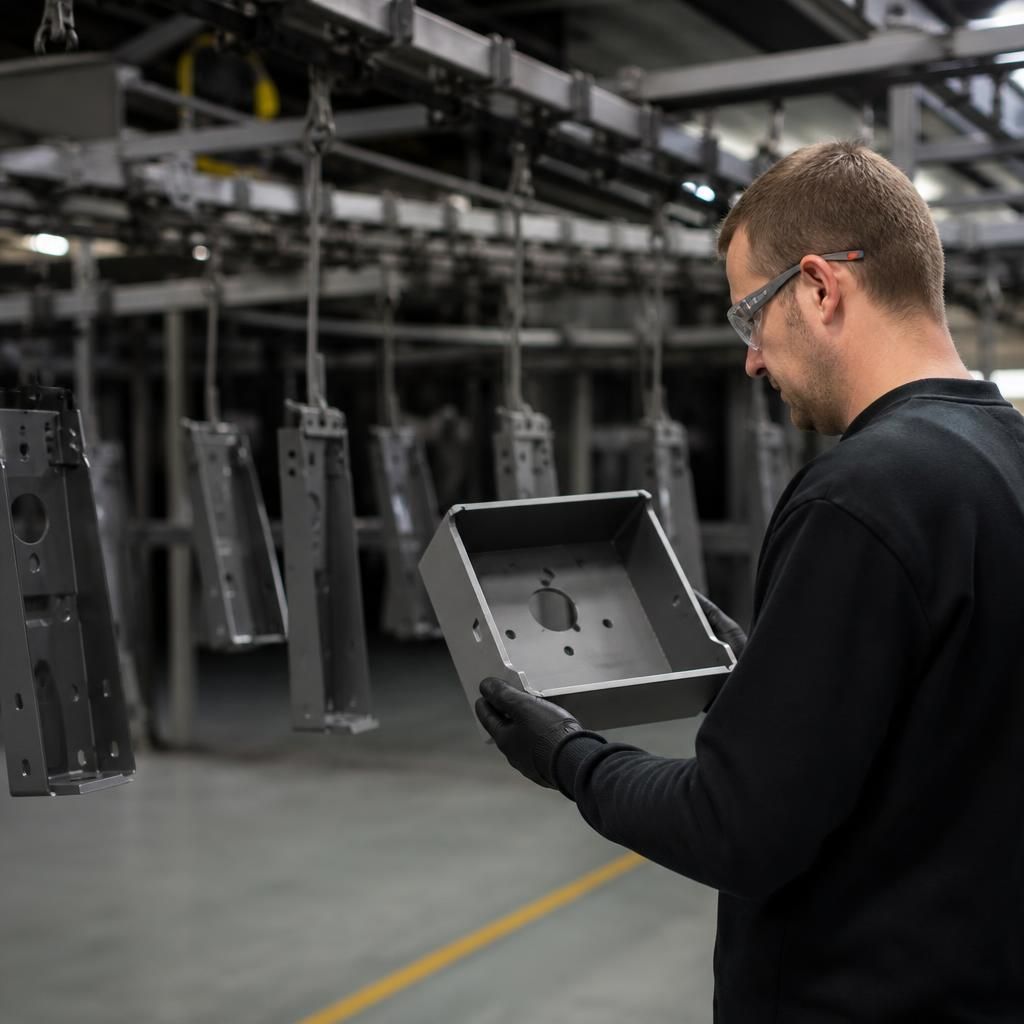
Defined inspection points help a conveyorised powder coating system prevent defects from progressing through the line. Checking components after pretreatment can identify contamination, moisture or incomplete cleaning before powder is applied. A further check after spraying can reveal missed areas, excessive build or poor coverage while the part can still be corrected without sending a defective component through the curing oven.
Post-cure inspection then confirms the finished coating against the required appearance and specification. Separating preparation, application and curing faults makes corrective action more precise, reducing the risk of processing an entire batch with the same defect. This staged approach supports consistent output while limiting unnecessary rework, stripping and disposal of coated components.