

How do you ensure compatibility between a mini powder coating machine and different types of powder coatings?
Ensure compatibility by matching the powder’s chemistry, particle characteristics and curing requirements to the mini powder coating machine’s spray system, voltage settings and oven capability. Confirm the powder manufacturer’s technical data, then apply a test panel to check transfer efficiency, film thickness, adhesion and finish before production use.
Compatibility is confirmed by checking that the mini powder coating machine can handle the powder’s application method, feed behaviour, charging characteristics and required production controls. A powder that works well in one system may not perform consistently in another, so compatibility should be established before coating production components rather than assumed from the powder’s general suitability for metal.
Start with the powder’s application instructions. Confirm that the product is intended for electrostatic spray application and that its recommended equipment arrangement matches the machine being considered. Some specialist products, including certain nylon and protective coatings, may require particular spray technology, component materials or process controls. The powder supplier’s instructions should identify any restrictions relating to the gun, charging method, hose, nozzle or feed equipment.
Check the machine’s powder-handling capability. The delivery system must move the powder evenly from its container to the gun without bridging, pulsing or clogging. Review the machine’s operating instructions for compatible hopper and injector arrangements, powder capacity, hose connections and nozzle options. A system that cannot maintain a stable powder flow will make it difficult to achieve a consistent coating, even if the powder itself is suitable.
Carry out a small feed trial before committing to a production run. Look for:
- steady powder movement through the hose;
- no visible accumulation around the injector, hose joints or nozzle;
- no intermittent surging from the gun;
- consistent spray output when the operator repeats the same settings; and
- easy cleaning without powder becoming trapped in internal parts.
These checks are particularly important when moving between powders with noticeably different flow behaviour. If the machine requires a specific type of fluidising or conveying arrangement, use the configuration recommended for that powder rather than compensating by making uncontrolled adjustments.
Control powder condition before it enters the machine. Powder should be kept in its original sealed packaging until required and protected from moisture, contamination and excessive temperature changes. Damp or contaminated powder can feed unevenly and may leave deposits in the equipment. Do not combine unused powder with recovered material, or blend different colours and products, unless the powder supplier specifically permits it. Reclaimed powder can have different characteristics from virgin material and may need separate controls.
Before loading a new product, inspect the hopper, injector, hose, gun and nozzle for residual powder. A small amount of a previous colour can contaminate a light finish, while residue from a different product may affect the appearance or performance of the new coating. Thorough changeover cleaning is therefore part of compatibility control, not simply general housekeeping. Where frequent product changes are expected, removable or dedicated powder-contact components can make segregation easier.
Confirm that the charging system suits the powder. Mini machines may use different methods of imparting an electrostatic charge. The powder must respond predictably to the machine’s charging arrangement, and the gun must be suitable for the intended application. During a controlled trial, assess whether the powder reaches the workpiece evenly, including edges and recessed areas, without excessive build-up on the gun or unstable deposition.
The component itself also affects practical compatibility. The workpiece should be electrically conductive and properly grounded, with oil, scale, rust and other contamination removed through an appropriate preparation process. Poor grounding can make a compatible powder appear unsuitable because transfer becomes inconsistent. Complex shapes may require changes to gun distance, movement and spray sequence to reduce excessive deposition on corners or weak coverage in recesses.
Validate the complete process rather than the machine alone. The machine, powder, workpiece preparation and curing equipment operate as one system. Use a representative component or controlled sample that reflects the actual metal, geometry and coating specification. Record the machine configuration, powder batch, application settings, preparation method and curing process so that a successful trial can be reproduced.
Inspect the result for defects such as pinholes, craters, orange peel, uneven coverage, edge pull-back or poor appearance in recessed areas. Where the coating is required to provide corrosion protection, wear resistance or chemical resistance, confirm the relevant performance requirements using the appropriate inspection or test method. Visual acceptance alone may not demonstrate that the selected combination is suitable for the finished component.
Repeat the compatibility check whenever there is a significant change to the powder product, colour, supplier specification, application equipment, workpiece material or curing process. The same machine may handle several powders successfully, but each change should be controlled through documented settings and a trial rather than relying on an earlier result.
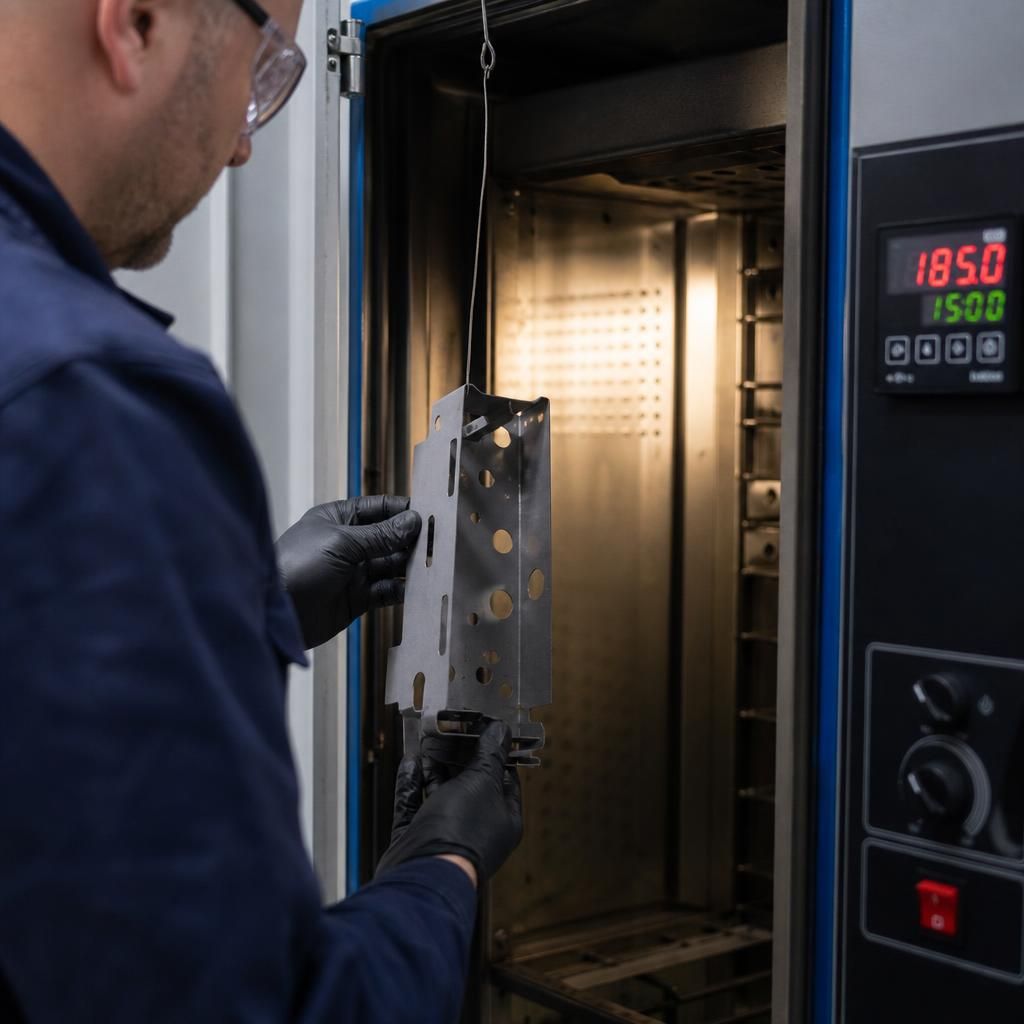
Curing compatibility is the final check between a mini powder coating machine, the selected powder and the finished component. Confirm that the available oven can achieve and maintain the powder manufacturer’s specified metal temperature and cure time. The air temperature shown on an oven controller does not necessarily represent the temperature reached by the workpiece, particularly where parts vary in thickness or have complex shapes.
Record the curing conditions during a trial and compare the result with the powder’s technical data. Insufficient curing can leave a coating with weak adhesion or reduced resistance, while excessive heat or time may affect colour and finish. Do not judge cure solely by appearance; assess the completed coating against the performance requirements for the component. A powder should only be approved for routine use when both the application equipment and curing process are suitable.
Discuss Your Powder Compatibility Requirements
Discuss your powder compatibility requirements with our team before selecting or configuring a mini powder coating machine. Provide details of the powder types, component materials and required finish so the application and curing process can be assessed against your specification.