

How can I ensure the powder coating setup is compatible with the range of materials and finishes my business requires?
Ensure compatibility by matching the setup’s pretreatment, application, curing and handling capabilities to the metals, component sizes, powder chemistries and finish specifications in your production range. Confirm the required temperature profiles, coating thicknesses, colour changes and surface-performance requirements with equipment suppliers, then validate the process using representative test parts before committing to the setup.
Ensure compatibility by assessing the complete coating process against every substrate, component type, powder chemistry and finish specification in your product range. A suitable powder coating setup must provide a controlled and repeatable process window, rather than simply being large enough to accommodate the work.
Start with a written product and finish schedule. Record the materials you coat, including mild steel, stainless steel, aluminium, galvanised items or other alloys, together with their dimensions, mass, geometry and surface condition. Note which products require decorative appearance, corrosion resistance, chemical resistance, impact performance, electrical insulation or a specialist coating. This schedule gives equipment suppliers a clear basis for assessing whether the proposed line, booth, oven, guns and handling equipment are suitable.
Substrate compatibility involves more than selecting a powder colour. Different metals can require different cleaning, preparation and contamination controls. Aluminium may need treatment that preserves its surface while supporting adhesion, whereas galvanised or zinc-coated components can require preparation to manage surface variation and the risk of outgassing. Castings, welds, folded sections and porous parts may also behave differently during heating. The setup should therefore support the preparation methods and inspection controls required by the actual components, not just standard fabricated steel.
Check the powder technology as well as the colour. Thermosetting powders and thermoplastic materials can have different application, heating and handling requirements. A specialist finish such as nylon may need an application method and equipment configuration that differs from a conventional architectural or industrial powder. For each powder family, obtain the technical data sheet and confirm the required storage conditions, application range, curing or fusion requirements, film characteristics and cleaning procedure. Do not assume that a setup suitable for one powder will automatically produce an acceptable result with another.
The equipment should also be assessed against the required appearance and performance class. Smooth, textured, matt, gloss, metallic and special-effect finishes can differ in how they reveal contamination, uneven film build or application marks. Metallic and multi-component powders may require particularly consistent application and careful process control. If the business needs both decorative finishes and high-performance protective coatings, establish whether the same booth, recovery system and application equipment can be used without creating contamination or colour-control problems.
Review the physical handling arrangements. Racks, hooks, jigs and conveyors must provide reliable electrical contact where electrostatic application is used, while holding each component securely through preparation, coating and heating. Contact points should be positioned so that they do not leave unacceptable uncoated areas. The handling system must also accommodate the component orientation needed to reduce powder shadowing, runs, pooling or uneven coverage. Heavy or awkward parts may require different lifting and support arrangements from smaller batch work.
Consider the oven as a process-control system, not simply a heated enclosure. Its usable space, airflow, loading pattern and temperature uniformity must suit the largest and densest parts in the range. The relevant curing condition is generally based on the component metal temperature, so the setup should be capable of demonstrating that parts reach the required profile without overheating sensitive materials or compromising the finish. Temperature monitoring on representative loads can identify cold spots, excessive dwell or inconsistent heating before the setup is placed into routine production.
Control powder changes and contamination. If several colours, chemistries or finish types will be used, define how the booth, hoses, guns, recovery equipment and surrounding work area will be cleaned between jobs. Recovered powder should only be reused where its identity and condition can be controlled and where the powder supplier permits it. Mixing incompatible materials or allowing residue from a dark, textured or specialist powder into a light or smooth finish can create visible defects and may affect performance. A setup that supports quick changes is useful only if the cleaning and verification process is sufficiently thorough.
Compatibility also depends on the quality checks built into the operation. Agree inspection methods for adhesion, film coverage, cure, colour, gloss, texture and visible defects according to the requirements of the finished component. Where a coating is intended for a demanding environment, confirm which validation tests and records are needed. The setup should make it possible to identify the powder batch, preparation route, application settings and oven profile associated with each production run.
Validate before committing to the full setup. Use representative parts or test panels covering the most difficult substrates, geometries and finishes. Include the heaviest or most thermally challenging components, not only an easy flat sample. Review the results with the powder supplier and equipment supplier, then correct issues such as poor adhesion, insufficient coverage, uneven curing, pinholing, outgassing or colour variation. This trial should also test realistic changeover, loading and cleaning procedures.
Finally, obtain compatibility information in writing. The equipment specification should identify supported powder systems, substrate limitations, operating conditions, cleaning requirements, oven capabilities and any restrictions on reclaim or specialist materials. Keeping this information with the production documentation helps prevent unsuitable powders or components being introduced later. For a business whose range is likely to change, choose a setup with documented adjustment and validation options rather than one designed around a single material and finish.
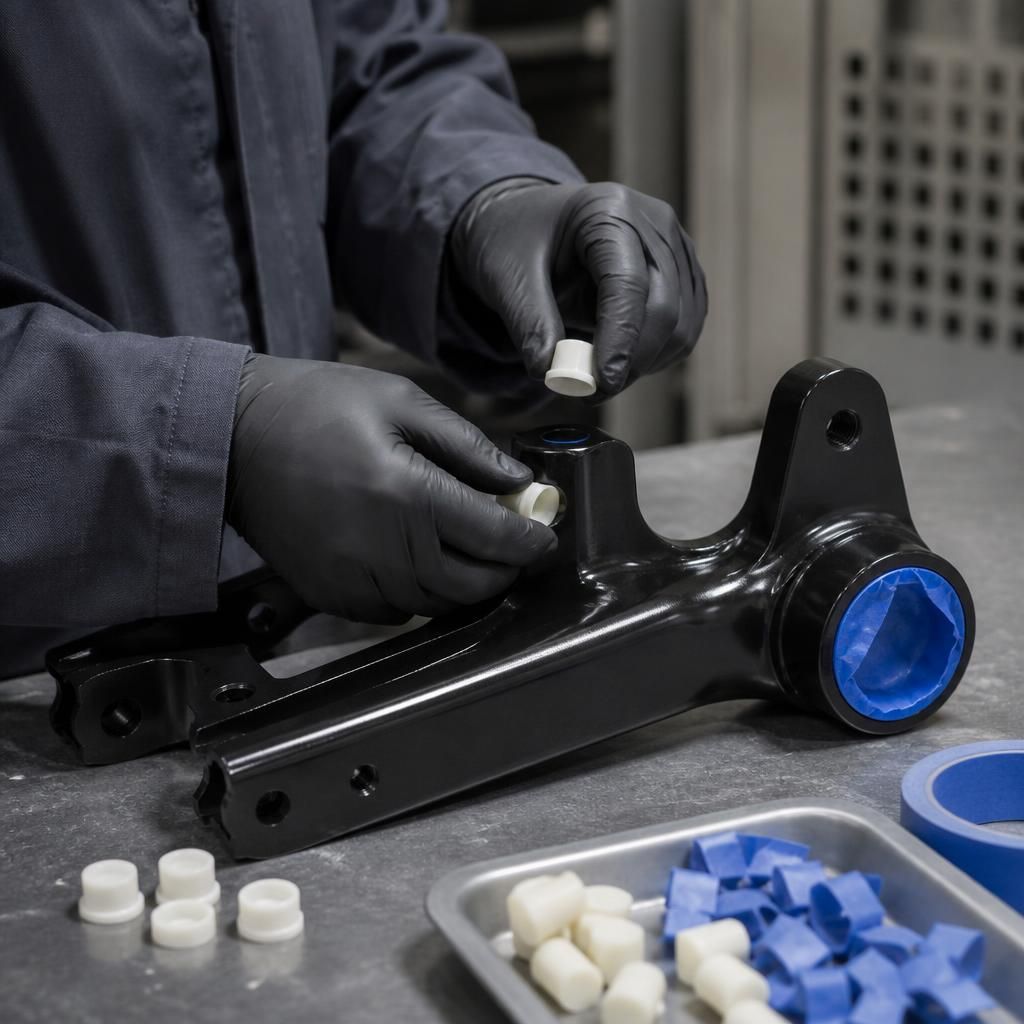
Compatibility also depends on how the setup protects areas that must remain free from coating. Threaded holes, bearing seats, machined faces, earth points and close-tolerance interfaces may require plugs, caps, masking or dedicated fixturing before application.
Check that the proposed process can accommodate these requirements without disrupting electrical contact, part positioning or curing. Masking materials must withstand the relevant oven or fusion conditions, while their removal should not damage the finish or leave residue. Include masking and demasking in representative trials, particularly where coated and uncoated surfaces must meet accurately.