

How can I assess the scalability of a powder coating equipment package to ensure it can evolve with my business growth?
Assess the scalability of a powder coating equipment package by comparing its current capacity with your projected workload, then checking whether key elements such as application equipment, curing capacity, material handling and controls can be expanded or upgraded without replacing the whole system. Also confirm that the package can accommodate future part sizes, coating types, production methods, available floor space and site services, with clear compatibility between existing and additional equipment.
A scalable powder coating equipment package is one that can support higher or more varied production demands without forcing a complete redesign, creating avoidable quality problems or making existing equipment redundant. Assessing scalability therefore involves more than checking the maximum rated output: it requires an examination of how the package will adapt to changes in product mix, process control, staffing, maintenance and site infrastructure.
Start with a staged growth model. Define the operation as it is now, then describe the likely stages of development. Consider changes such as larger customer orders, more frequent production runs, additional component types, tighter finish specifications and a move from occasional batches towards more structured production. For each stage, identify what must increase or change. This creates a practical basis for assessing whether the proposed package has usable capacity rather than relying on an optimistic headline specification.
Usable capacity can be restricted by factors that are not immediately visible in equipment ratings. Product loading and unloading, colour changes, masking, inspection, cleaning and curing may each limit the number of parts that can pass through the process. A package that appears adequate when measured by one individual component may become a constraint when the full production cycle is considered. Ask the supplier or integrator to explain the assumptions behind any capacity claim, including part geometry, coating thickness, batch size, changeover method and required finish quality.
Assess the package as a series of connected stages. The least flexible or slowest stage can determine the performance of the whole line. Review how components move between preparation, application, curing, cooling, inspection and dispatch, and consider whether each stage can cope with the others as demand develops. A future upgrade is useful only if it does not shift the bottleneck to another part of the process. This assessment should include loading arrangements, transfer distances, storage points and the space needed to separate coated and uncoated work.
Check whether the equipment has a modular design. Modular systems may allow additional booths, guns, racks, conveyors, curing capacity, extraction equipment or control functions to be introduced in stages, provided the original layout and services allow for them. The important issue is not simply whether an item can be added, but whether the addition can be integrated safely and controlled consistently. Request a written explanation of which parts are designed for expansion, which parts would need modification and which parts would eventually have to be replaced.
Compatibility should be assessed at both mechanical and control-system level. Future equipment must be capable of operating with the existing transfer arrangements, electrical supply, extraction, compressed air, heating, ventilation and safety circuits. Controls should also allow later equipment to be monitored and managed without creating isolated systems that require separate supervision. Clarify how software, sensors, recipes, alarms and data records would be handled after an upgrade. A package with suitable physical capacity but limited control integration may be difficult to expand efficiently.
Review flexibility in relation to the work itself. Growth is not always a matter of processing more identical parts. Manufacturers and fabricators may introduce new dimensions, different substrates, more complex geometries or additional powder systems. Assess the usable working envelope, loading method, hanging options, gun adjustment and curing control against the range of components likely to be processed. Consider whether frequent changes between jobs will reduce practical output through cleaning, masking or colour-change requirements.
Quality requirements should form part of the scalability assessment from the beginning. Increased throughput is not a successful expansion if it produces inconsistent coverage, poor adhesion, uneven curing or excessive rework. Establish how the package will maintain repeatable process conditions as workload increases. Useful points to examine include temperature monitoring, powder recovery, application consistency, recipe control, inspection procedures and the availability of records for investigating defects. A scalable package should support repeatability, not merely faster movement of parts.
Evaluate the site before committing to a growth path. Mark the present footprint and reserve areas for likely additions, maintenance access, operator movement, material storage and safe segregation. Assess floor loading, ceiling height, access routes and the feasibility of bringing larger equipment into the building. Also establish whether future electrical, gas, compressed-air, ventilation or extraction demands can be accommodated. Expansion that requires relocating the whole process may be technically possible but commercially disruptive.
Maintenance and downtime planning are also relevant. Ask whether wear parts, filters, nozzles, guns, sensors and control components can be replaced without extensive dismantling. Determine how an additional module would affect servicing access and whether the process can continue in a reduced configuration during maintenance. Review the expected support arrangements, spare-parts strategy, technical documentation and staff training requirements. A package that is difficult to maintain may lose its practical scalability even if its production specification looks suitable.
Compare expansion cost with replacement cost. Request a staged outline covering the initial package, likely additions, site modifications, commissioning, training and any required control changes. This helps distinguish a genuinely expandable solution from one that only appears inexpensive at the first stage. Include the cost of disruption, temporary production arrangements, new extraction or utilities and disposal or relocation of equipment. The cheapest starting configuration is not necessarily the most scalable if later upgrades involve extensive duplication.
Before selecting the package, ask for evidence that the proposed expansion route is technically realistic. This might include a layout showing reserved space, a utilities schedule, a control-system description, equipment interface details and a written list of upgrade assumptions. Where the work is specialised, evaluate representative components or process samples against the intended future requirements rather than relying solely on catalogue descriptions.
A useful final test is to score the package against several scenarios: increased volume, wider component range, additional coating requirements, a second production shift, equipment failure and a future site reconfiguration. For each scenario, record what must be added, what must be altered, how much disruption is involved and whether finish quality can be maintained. If the answers are clear and supported by documentation, the package is more likely to evolve in a controlled way. If expansion depends on unspecified upgrades, spare capacity that has not been demonstrated or incompatible future equipment, the risks should be resolved before purchase.
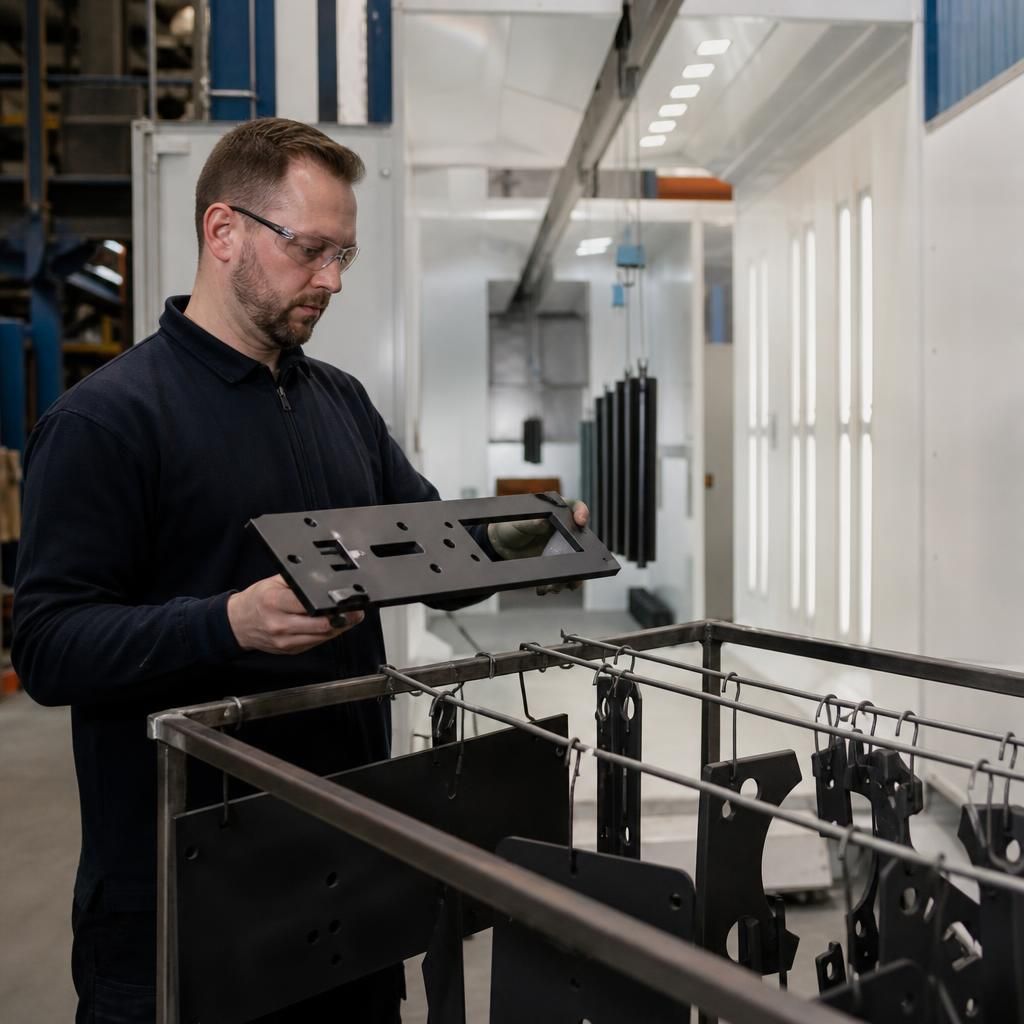
Representative product trials are a practical way to test whether a powder coating equipment package can support future growth. Use components that reflect the likely range of sizes, geometries, substrates, coating types and finish requirements rather than testing only the easiest current job.
Record the settings and results for each trial, including loading method, powder application, curing conditions, colour changes, inspection findings and any rework. This creates evidence for future production planning and identifies limitations before additional equipment is ordered. If a proposed upgrade would require substantially different settings, handling methods or process controls, its effect on the wider package should be assessed in advance.