

What specific industries benefit most from using powder coated steel tubes, and how does it improve their operational efficiency?
Powder coated steel tubes benefit construction, manufacturing, fabrication and automotive businesses that need consistent, durable components with an attractive finish. The coating can improve operational efficiency by combining corrosion and wear resistance with reduced finishing work, helping simplify handling, assembly and ongoing maintenance.
Powder coated steel tubes deliver the greatest operational benefits in industries that use repeatable metal components, handle them in batches or require a controlled finish before assembly. The main efficiency gain comes from moving finishing into a planned production stage, where tube specification, coating application, curing, inspection and packing can be managed as part of one defined workflow.
Construction and building systems
Construction businesses use steel tube in frames, balustrades, barriers, supports, access equipment and other fabricated assemblies. A consistent factory-applied finish helps contractors receive components in a condition suitable for installation, rather than arranging separate finishing operations between fabrication and site work. This can make scheduling simpler, particularly where several identical tube sections must be incorporated into one project.
Coated tubes can also support clearer component control. Parts may be specified by finish, colour or application area, helping fabricators and installation teams distinguish batches and reduce confusion during assembly. The coating specification still needs to match the intended exposure, substrate preparation and design of the component; powder coating is not a substitute for suitable steel detailing or drainage.
Manufacturing and equipment production
Manufacturers benefit when tube is used repeatedly in machine guards, equipment frames, workstations, conveyor structures, storage systems and enclosures. A repeatable coating process makes the finish easier to incorporate into standard product designs and production instructions. Once the approved coating system is established, purchasing and quality teams can work from a defined specification rather than treating every component as a separate finishing task.
This is particularly useful for batch production. Tubes can be grouped by size, finish and production sequence, allowing handling and inspection to be planned in advance. Consistent presentation also helps manufacturers maintain a uniform appearance across assemblies made at different times, provided the same coating specification and curing requirements are followed.
Fabrication and subcontract manufacturing
Fabricators often work with cut, drilled and welded tube that must pass through several operations before reaching the end customer. Powder coating is most efficient when the complete fabrication is designed and prepared before coating, so that avoidable drilling, welding or grinding does not damage the finished surface. This encourages better production planning: components can be inspected, packed and sent to assembly or installation once the finishing stage is complete.
For businesses supplying repeat orders, retaining clear records of the tube material, preparation method, powder type, colour and curing requirements can reduce specification errors between batches. The coating provider should also understand the component dimensions, access requirements and likely handling method, as these factors affect how consistently the tubes can be processed.
Automotive and transport-related production
Automotive businesses and specialist transport manufacturers use tubular steel in supports, frames, brackets, guards and fabricated accessories. Here, operational efficiency depends on the coating being compatible with the component’s function and production route. Parts that are repeatedly handled during assembly need a finish selected for the expected contact, exposure and cleaning conditions, while visible components may require closer control of colour and surface appearance.
Powder coating can fit well into a repeatable component supply chain because requirements can be documented and applied consistently across a batch. However, parts subject to significant heat, movement, impact or safety-critical loading require a technical review rather than selection based on appearance alone. Weld areas, enclosed sections and masking points should be agreed before processing to avoid later correction work.
Where the efficiency benefit is strongest
- High-volume or repeat production, where an agreed specification can be used across multiple batches.
- Multi-part assemblies, where consistent tube finishes simplify identification and final assembly.
- Projects with controlled installation sequences, where finished components can be inspected and packed in the order they are needed.
- Products exposed to regular handling or industrial conditions, where the selected coating system is matched to the operating environment.
- Businesses seeking a defined external finishing stage without adding coating equipment and process control to their own workshop.
Factors that determine the real-world result
Operational efficiency is not created by the coating alone. Tube dimensions, wall thickness, steel condition, weld quality, surface contamination, holes, threaded areas and the design of hanging points all influence preparation and processing. Components should arrive ready for treatment, with fabrication complete and areas that must remain uncoated clearly identified. Poor preparation can lead to rework, regardless of the coating method.
Specification should also consider service conditions. Indoor and outdoor use, moisture, chemicals, abrasion, ultraviolet exposure and cleaning methods may require different powder technologies or pretreatment arrangements. A coating provider can help match the finish to these conditions and confirm practical requirements for batch size, packing, collection and delivery. For Midlands manufacturers and fabricators, using a regional specialist with collection and delivery options can also help integrate coated tubes into an existing production flow without changing the component’s intended use.
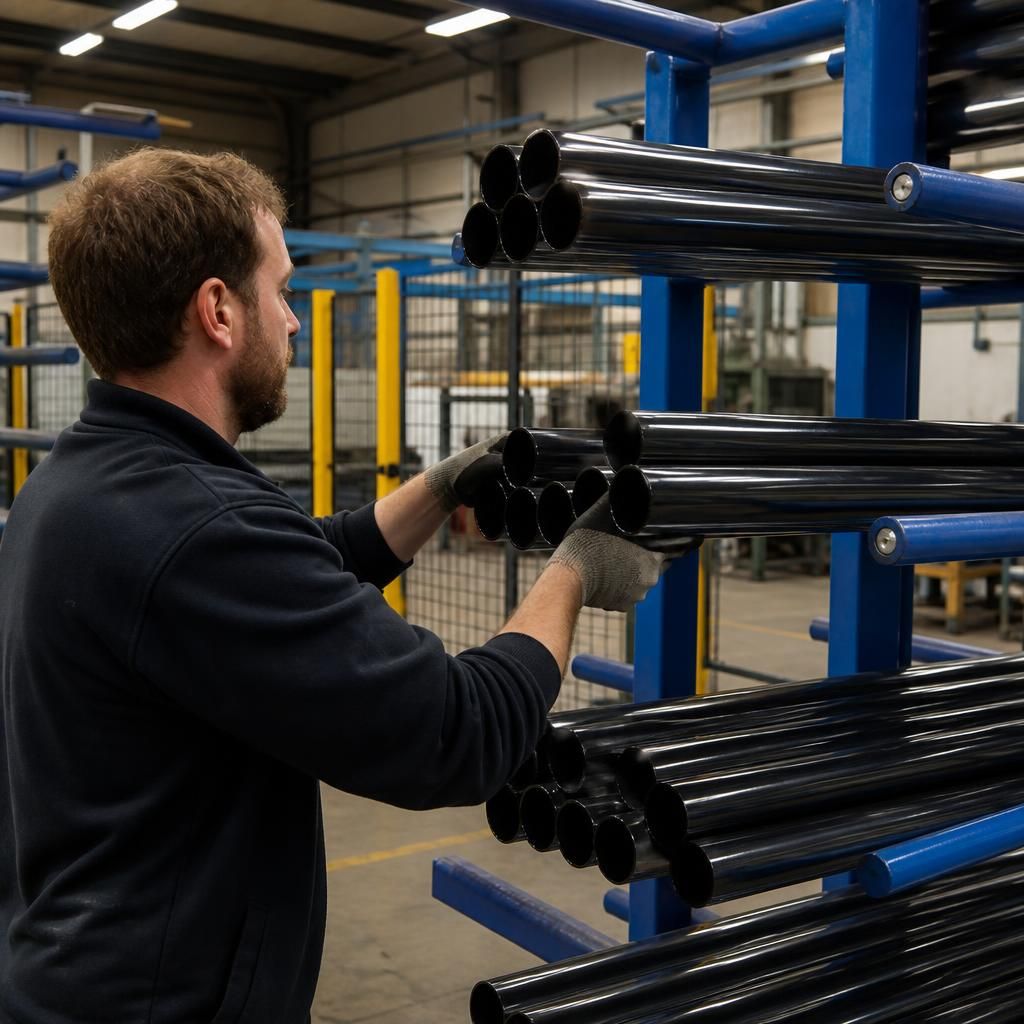
Powder coated steel tubes can improve workflow efficiency because the finished surface is dry and ready for controlled handling after curing and cooling. This avoids the drying space and contamination risks associated with wet finishes, helping manufacturers, fabricators and construction suppliers move components into inspection, packing or assembly without introducing a separate drying stage.
The benefit is greatest where floor space, handling routes and production sequencing are tightly managed. Tubes can be transferred between defined workstations with less risk of marking the surface during normal handling, provided the coating has been fully cured and suitable packing is used. The coating specification must still reflect the tube’s exposure, contact points and expected level of abrasion.
Discuss your powder coated steel tube requirements
Discuss your powder coated steel tube requirements with our team, including tube dimensions, intended service conditions, finish specification and batch needs. This helps establish whether the proposed coating system is suitable for your components and production process.