

How does the integration of a pre treatment plant enhance the quality and lifecycle of powder coated products?
Integrating a pre-treatment plant gives metal components a controlled, repeatable surface preparation before powder application. By removing contaminants and forming a suitable conversion layer, it promotes stronger adhesion, improves resistance to corrosion and environmental wear, and helps the finished coating remain effective for longer.
Integrating a pre-treatment plant enhances powder-coated products by making surface preparation more consistent, controllable and repeatable before the coating is cured. This improves process stability across individual components and production batches, helping the finished coating perform more reliably throughout its service life.
Controlled process conditions are central to the benefit. A dedicated plant can coordinate the movement of components through each treatment stage, with controlled exposure to cleaning, rinsing and conversion processes. This reduces the variation that can occur when parts are prepared manually or through loosely connected operations. Consistent treatment is particularly important for batches containing different component sizes, profiles, folds or recessed areas.
The plant also improves the management of rinsing and drying. Residues from earlier stages, trapped moisture and contamination can affect the final finish if they are not properly controlled. Effective rinsing limits carry-over between process stages, while drying ensures that parts enter the powder application area in a suitable condition. This helps reduce avoidable finish problems such as uneven coverage, surface contamination, blistering or localised defects.
Improved process repeatability supports more predictable production results. A pre-treatment plant can be configured around the material, geometry and intended use of the components, rather than applying the same approach to every item. Steel, galvanised steel and aluminium may require different preparation parameters, and the treatment sequence may need to account for sharp edges, welds, cavities or assembled sections. Matching the process to the substrate helps the coating system function as intended without placing unnecessary stress on the metal.
Integration also makes process monitoring more practical. Operators can check factors such as chemical condition, temperature, contact time, rinse quality and drying performance, then identify when adjustment or maintenance is required. Keeping these variables within the appropriate operating range helps limit batch-to-batch variation and makes it easier to investigate a defect. Where production records are maintained, information about the treatment cycle can also support quality checks and discussions between the coater and the customer.
The effect on lifecycle is not limited to appearance. A soundly prepared and consistently coated component is less likely to require premature remedial work caused by local coating failure, exposed metal or inconsistent coverage. This can help preserve the intended protective function for longer, particularly where components face outdoor exposure, moisture, handling or industrial conditions. The actual service life still depends on the metal substrate, coating specification, environment, design and maintenance regime.
A plant can also reduce handling between preparation and powder application. Fewer unnecessary transfers lower the opportunity for prepared surfaces to be touched, contaminated or damaged before coating. Carefully designed racking and component positioning are important as well, because they allow treatment media, drying air and powder to reach the relevant surfaces while limiting shadows, pooling and inaccessible areas.
For large or repeat production runs, these advantages become more significant because the same process can be applied across a high volume of parts without relying solely on individual operator technique. The plant does not remove the need for inspection or correct specification; it provides a controlled foundation on which coating application and curing can be carried out more consistently.
The main quality and lifecycle benefits are therefore:
- more uniform preparation across individual components and batches;
- better control of rinsing, drying and treatment conditions;
- fewer avoidable defects caused by residue, moisture or handling;
- greater suitability for different substrates and component geometries;
- clearer process monitoring and defect investigation; and
- more dependable long-term performance when the coating system is correctly specified for its environment.
For manufacturers and fabricators, assessing a pre-treatment plant should involve more than checking its size. The relevant questions include whether it suits the metals and component dimensions involved, how effectively it manages recessed or complex shapes, how process conditions are monitored, and how parts are transferred into powder coating. These factors determine whether the plant genuinely improves consistency and supports the expected lifecycle of the finished products.
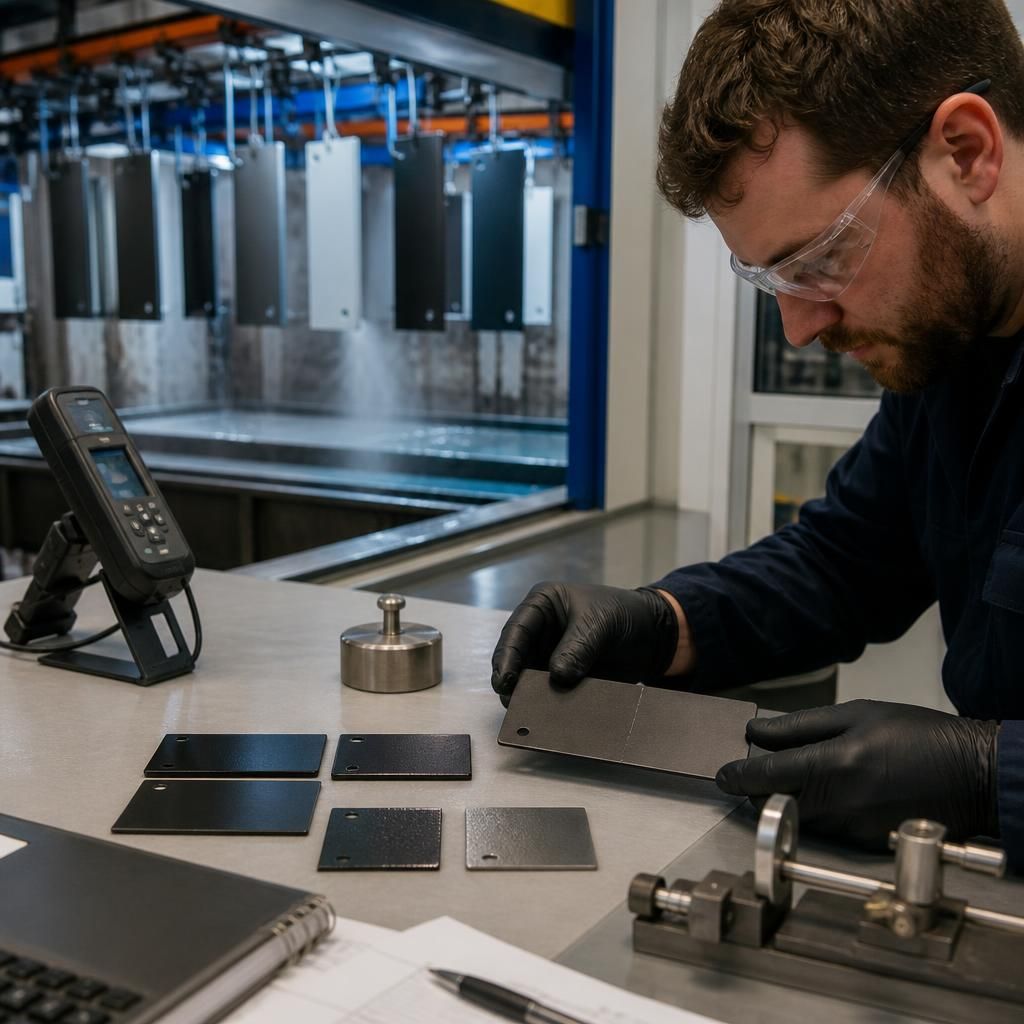
A pre-treatment plant enhances powder-coated product lifecycle most effectively when its process is validated against the complete coating specification. The treatment must be suitable for the substrate, the powder system and the conditions the finished component will face. A process that is appropriate for one metal or use may not provide the same foundation for another.
Validation can include representative test pieces, adhesion checks and corrosion-performance assessment before a production process is adopted. These checks help confirm that the prepared surface and powder coating work as a compatible system, rather than assessing either stage in isolation. The result is a more informed specification, with potential weaknesses identified before coated components enter service. This supports consistent quality decisions and helps ensure that the expected lifecycle is based on tested compatibility rather than appearance alone.
Discuss Your Pre-Treatment Plant Requirements
Discuss your component materials, dimensions, production volumes and intended service environment to establish whether a pre-treatment plant is suitable for your powder coating requirements. This assessment can help define the appropriate treatment sequence and quality checks before production begins.