

How does chromate powder coating pretreatment enhance adhesion properties for different metal types?
Chromate powder coating pretreatment enhances adhesion by forming a thin conversion layer that chemically interacts with the metal surface and provides a stable key for the powder coating. It is particularly effective on aluminium and zinc-coated steel, while untreated or differently composed metals may require a compatible pretreatment selected for their surface chemistry.
Chromate powder coating pretreatment enhances adhesion by conditioning a metal surface so the powder coating can form a consistent, durable bond after curing. Its effectiveness depends on the metal’s chemistry, the condition of the surface, the preparation sequence and the compatibility of the conversion treatment with the powder system.
Aluminium and aluminium alloys: Chromate conversion treatment is commonly associated with aluminium because the naturally forming oxide film can vary in thickness and composition. A controlled pretreatment helps produce a more uniform surface for coating, including on extrusions, sheet, castings and fabricated components. However, aluminium alloys do not all react identically. Silicon-rich cast alloys, copper-bearing alloys and surfaces contaminated by machining lubricants may require adjusted cleaning and pretreatment stages to achieve consistent results.
Zinc-coated and galvanised steel: Zinc surfaces can also benefit from a compatible chromate-based treatment. The process helps manage the reactive zinc surface and reduces the risk of poor bonding caused by residues, oxidation or uneven surface condition. Galvanised parts may have spangle patterns, passivation residues, storage stains or areas of exposed steel, so the preparation must be selected for the actual coating and condition rather than assumed from the base material alone.
Mild and carbon steel: Chromate is not automatically the preferred pretreatment for every steel component. Clean steel can develop flash rust or retain mill scale, oil and corrosion products, all of which can weaken coating adhesion. Steelwork is often assessed for a preparation route designed specifically for ferrous surfaces, such as suitable cleaning and phosphate-based treatment where appropriate. The important consideration is that the pretreatment matches the substrate and the powder coating specification.
Stainless steel: Stainless steel presents a different adhesion challenge because its chromium-rich passive surface is chemically stable and may not respond to a process intended for aluminium or zinc. Degreasing, removal of fabrication residues and controlled mechanical or chemical preparation may therefore be needed before coating. Welds, heat-affected zones and areas contaminated by iron particles should receive particular attention because they can behave differently from the surrounding stainless surface.
Cast metals and mixed-metal assemblies: Cast aluminium, die-cast zinc and components containing more than one metal can have variations in porosity, alloy content and surface reactivity. A treatment that is suitable for one part of an assembly may be unsuitable for another. Masking, separate processing or an alternative pretreatment may be required where aluminium, zinc and steel are joined together.
- Cleaning: Oils, drawing compounds, fingerprints, dust and polishing residues must be removed before the conversion stage. A conversion treatment cannot compensate for a barrier of contamination.
- Surface condition: Rust, heavy oxide, mill scale, sharp burrs and embedded abrasive material can create weak areas beneath the powder film.
- Rinsing and drying: Chemical carry-over, salts or trapped moisture can interfere with the coating interface and may contribute to blistering or premature breakdown.
- Process control: Concentration, contact time, temperature and bath condition affect the consistency of the treated surface. Excessive treatment can be as unsuitable as insufficient treatment.
- Powder compatibility and curing: The powder formulation, film thickness and cure schedule must suit the prepared substrate. Good pretreatment cannot correct under-curing or contamination introduced after treatment.
Adhesion should therefore be considered as an interface system rather than a property supplied by the chromate stage alone. The conversion treatment provides a controlled foundation, while cleaning, rinsing, drying, application and curing determine whether that foundation remains effective. Edges, recesses, drilled holes and welds often need additional attention because they are more difficult to clean and coat uniformly than broad flat areas.
For a production component, the appropriate approach is to identify each substrate and any existing finish, then review the manufacturing history. Useful information includes the alloy or steel grade, whether the part is galvanised, previous exposure to oil or corrosion, welding and fabrication processes, and the intended service environment. Where several metals are present, a coating specialist can assess whether one pretreatment sequence is suitable for the complete assembly or whether different preparation methods are needed.
Adhesion performance can be checked using an agreed inspection or test method appropriate to the component and coating specification. Visual inspection alone may identify staining, incomplete coverage or residue, but it cannot fully demonstrate the bond between the powder film and substrate. Testing should be interpreted alongside coating thickness, cure verification and the expected conditions of use.
Chromate pretreatment can therefore provide a strong adhesion basis for suitable aluminium and zinc-containing surfaces, but it should not be treated as a universal solution for every metal. Correct substrate identification and a process matched to the surface chemistry are essential when powder-coated components must perform consistently in industrial service.
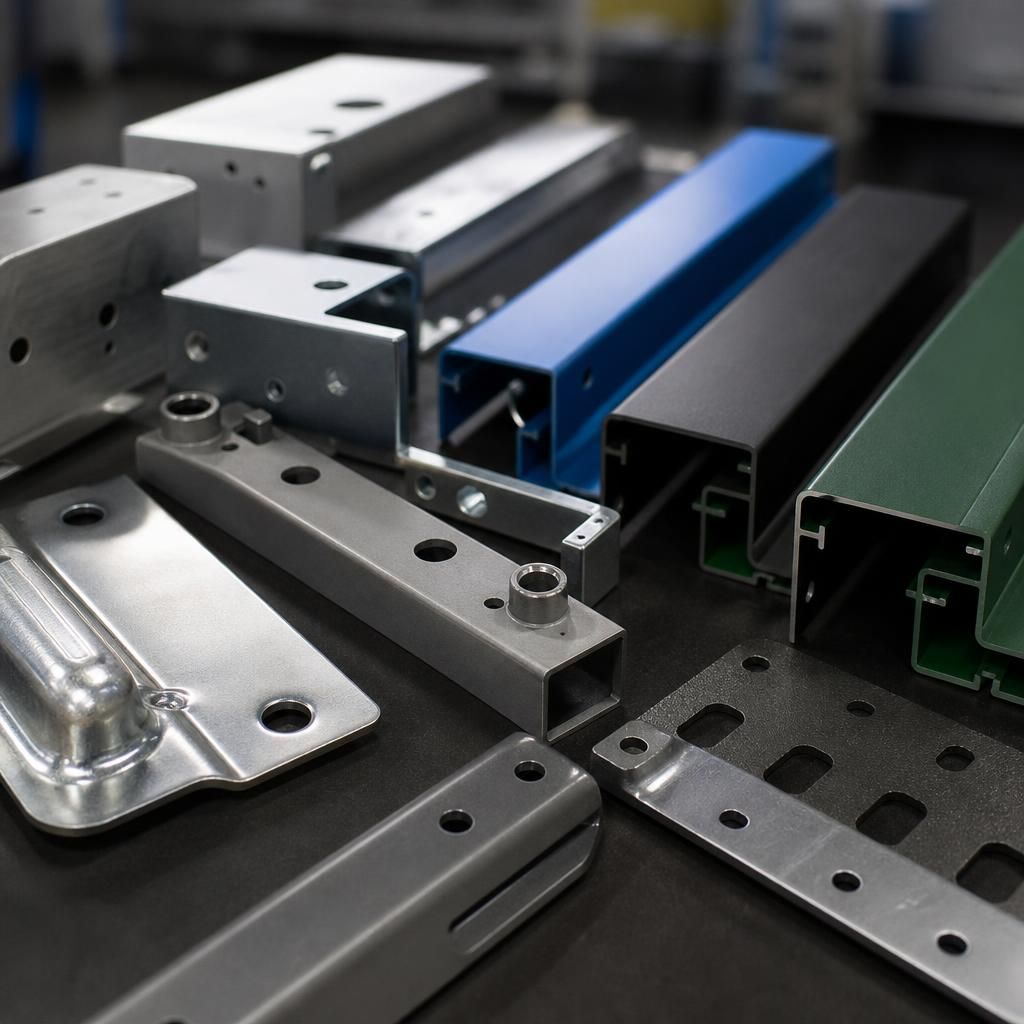
Adhesion across different metal types also depends on how the coated component responds to movement in service. Aluminium, steel and zinc-based substrates can expand and contract differently as temperatures change, while fabricated parts may experience vibration, flexing or local stress. A well-developed conversion layer provides a consistent interface between the metal and the cured powder film, helping the coating remain bonded when the substrate and finish are placed under normal service stresses.
This is particularly relevant to assemblies containing more than one metal. The joint should be assessed as a complete coating system because movement, surface chemistry and coating thickness may vary from one section to another. The powder formulation and cure schedule must remain compatible with the prepared surfaces; chromate pretreatment supports the interface, but it does not remove the need to consider the component’s design and operating conditions.
Discuss Your Metal Substrate and Pretreatment Requirements
Discuss your metal substrate, existing finish and service requirements with our coating team to identify a pretreatment approach suited to the component. We can help assess whether chromate powder coating pretreatment is appropriate before processing begins.