

How can I ensure my metal components achieve optimal corrosion resistance during pretreatment?
Achieve optimal corrosion resistance by matching the pretreatment system to the metal substrate, removing all oil, dirt, mill scale and oxidation, and applying a compatible conversion treatment. Thorough rinsing, complete drying and checks for uniform surface coverage are also essential before powder coating, as residues or untreated areas can undermine protection.
Optimal corrosion resistance during pretreatment depends on controlling the entire surface-conditioning system, not simply applying a chemical treatment. The aim is to produce a chemically stable, uniform surface that allows the powder coating to adhere consistently and prevents corrosion from developing beneath or around the finish.
Assess the components before selecting the process
Inspection should begin before the parts enter the pretreatment line. Identify the substrate, its previous treatment, the severity of the intended service environment and any features that could retain contamination. Rolled steel, galvanised steel and aluminium can respond differently to cleaning and conversion stages, so a process suitable for one material may be unsuitable for another.
Pay particular attention to:
- Existing oxidation, welding residues, heat tint, scale or corrosion products
- Oil, drawing compounds, fingerprints, marking inks and protective films
- Crevices, folded edges, threaded holes and hollow sections where chemicals or moisture may remain
- Mixed-metal assemblies, where galvanic reactions or incompatible treatments may affect performance
- Areas that have been repaired, ground or mechanically abraded and may have a different surface condition from the surrounding metal
Where components have unusual contamination or a demanding end use, a trial treatment or test panel can help establish whether the selected preparation produces the required surface before production parts are processed.
Control each stage rather than relying on the final appearance
A surface can look clean and still be chemically unsuitable for coating. Pretreatment should therefore be managed through defined operating conditions, including chemical concentration, temperature, contact time, spray pressure where applicable and the condition of the treatment baths. If these variables drift, the coating foundation may become inconsistent even when the parts appear visually acceptable.
Bath maintenance is equally important. Accumulated oils, dissolved metals, sludge and reaction by-products can reduce the effectiveness of a treatment system. Regular checks and appropriate replenishment help keep the chemistry within its specified operating range. Records of these checks provide useful evidence that the process has remained controlled and can help identify the cause if coating performance varies between batches.
Give rinsing and water quality proper attention
Rinsing is not merely a way of moving parts between tanks. It removes carry-over from one stage before the next treatment is applied. Poorly maintained rinse stages can allow salts or chemical residues to remain on the surface, creating a weak interface or contributing to under-film corrosion.
Rinse water quality, flow, coverage and renewal should be considered alongside the treatment chemistry. Parts should be positioned so that liquid can drain from recesses rather than becoming trapped. This is particularly important for fabricated items with enclosed sections, overlapping joints or complex geometry.
Prevent flash corrosion after preparation
Once a reactive metal surface has been prepared, delay, humid conditions or inadequate drying can allow flash corrosion to develop before powder is applied. The transfer from pretreatment to coating should therefore be controlled. Components need sufficient drying, with particular care given to joints, cavities and areas where water can collect.
Parts should also be protected from handling contamination after treatment. Clean gloves, suitable storage and controlled movement through the coating area reduce the risk of fingerprints, dust or workshop debris being introduced after the surface has been prepared.
Verify coverage and adhesion using appropriate checks
Visual inspection should look for uneven colour, water breaks, staining, patches, powdery residues and untreated areas. These signs can indicate poor contact, blocked spray coverage, contamination or a problem with drainage. Inspection should include difficult-to-reach surfaces rather than focusing only on the most visible faces.
Depending on the component and specification, additional verification may include adhesion testing, coating thickness checks, exposure testing or laboratory assessment of the pretreatment surface. The appropriate method depends on the substrate, coating system and service requirements. Testing should be agreed before production so that acceptance criteria are clear.
Coordinate pretreatment with fabrication and powder coating
Corrosion resistance can be compromised by problems created before pretreatment or after it. Fabrication teams should avoid leaving avoidable burrs, weld spatter and crevices that are difficult to clean. Coating teams should understand the permitted interval between pretreatment and powder application, as well as the handling and storage requirements for prepared parts.
For industrial components, the most reliable approach is a documented pretreatment specification covering the substrate, preparation stages, operating controls, inspection points and response to non-conforming parts. A Midlands industrial powder coating specialist can review the component design, material and intended use before processing, helping to establish a suitable preparation route rather than treating every metal part identically.
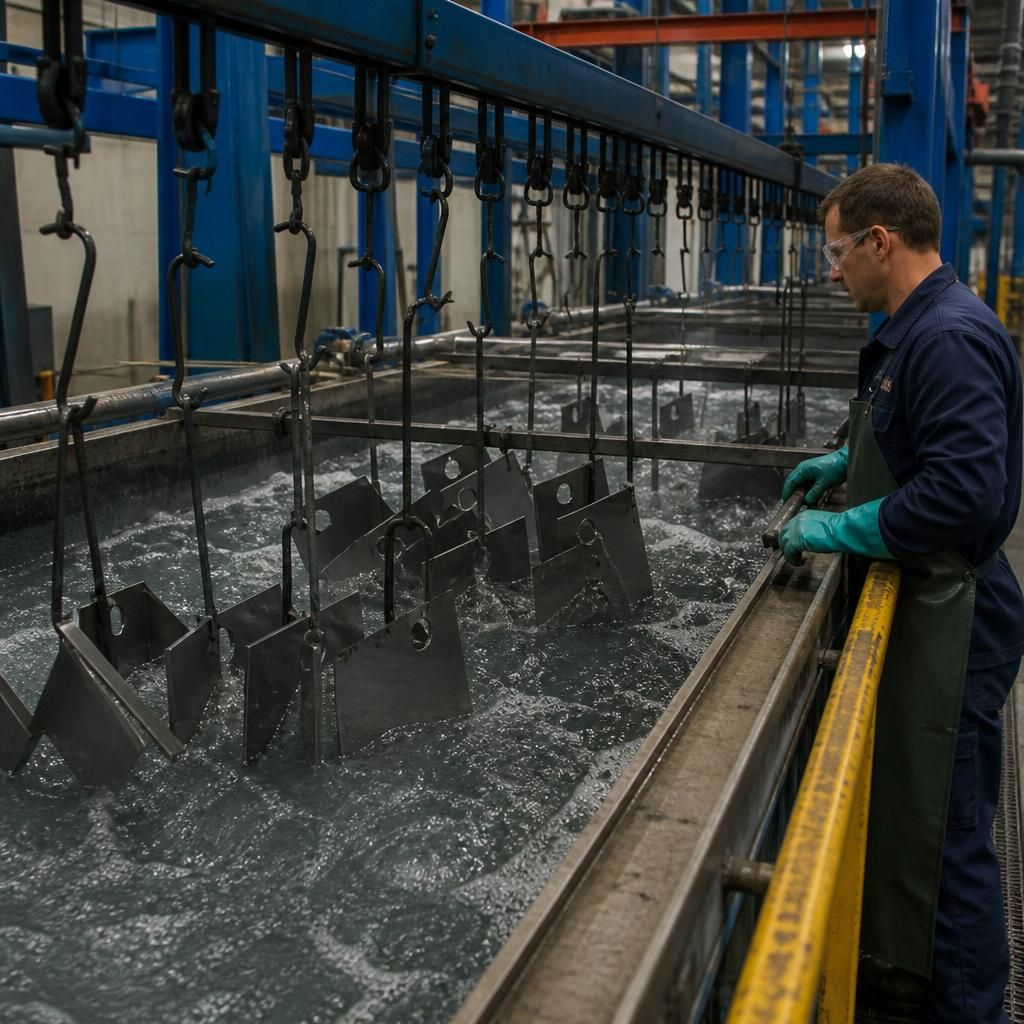
The conversion treatment must be selected for the specific metal substrate, because steel, galvanised steel and aluminium develop different surfaces during preparation. A process that performs well on mild steel may attack zinc or leave aluminium insufficiently conditioned, reducing the powder coating’s resistance to corrosion.
- Steel: the treatment should form a consistent conversion layer after contaminants and corrosion products have been removed.
- Galvanised steel: the chemistry must condition the zinc surface without unnecessarily stripping or damaging it.
- Aluminium: the process should control the naturally forming oxide layer and create a stable surface for coating adhesion.
Where components contain more than one metal, the pretreatment specification should account for the least tolerant substrate. This substrate-led approach helps produce compatible surface chemistry across the whole component rather than optimising one metal at the expense of another.
Discuss Your Metal Pretreatment Requirements
Discuss your component materials, service conditions and corrosion-resistance requirements with our powder coating specialists to identify a suitable pretreatment approach. This helps clarify the preparation, inspection and coating requirements before production begins.