

How does the quality of surface preparation impact the overall performance and durability of powder coating on metal components?
The quality of surface preparation directly affects how well powder coating adheres, cures and resists corrosion, wear and premature failure on metal components. Removing contaminants and creating a consistent, suitable surface helps produce a more uniform finish with dependable long-term performance.
The quality of surface preparation determines whether a powder-coated component develops a stable, defect-free surface or experiences localised failures. Its effect extends beyond initial coating adhesion: preparation influences the appearance, continuity, edge coverage, resistance to moisture ingress and the consistency of the finished part from one production batch to the next.
It controls the condition of the substrate. Metal components can carry oils, fabrication residues, oxides, weld spatter, abrasive particles or traces of previous coatings. If these remain, they may react during oven curing or become trapped beneath the powder film. Typical results include pinholes, craters, blistering, bubbling, inclusions and areas where the finish appears dull or uneven. On castings, porous materials and some galvanised components, preparation may also need to address absorbed moisture or gases that could be released during heating.
It affects film continuity and coverage. Powder coating cannot correct every feature created during fabrication. Sharp burrs, rough welds, deep scratches and abrupt changes in surface profile can produce thin areas, visible texture or uneven powder deposition. Edges are particularly important because the coating can pull back from a sharp corner during curing, leaving reduced protection at a location that is already vulnerable to handling and environmental exposure. Removing spatter, smoothing unsuitable edges and correcting avoidable surface defects gives the coating a more uniform foundation.
It influences the visual result. A powder finish reproduces the underlying surface to a significant degree. Differences in substrate texture, polishing marks or preparation intensity can therefore remain visible after coating, especially with gloss, metallic or fine-textured finishes. Inconsistent preparation between components can lead to variation in sheen, texture and colour perception, even where the same powder has been applied. For batch work, using controlled preparation methods helps keep the appearance consistent across the complete order.
The preparation method must suit the metal and its condition. Steel, aluminium, galvanised steel and previously coated components do not respond identically to cleaning, abrasion or chemical treatment. Excessive abrasion can alter dimensions, soften edges or leave an unsuitable profile, while insufficient treatment may leave oxidation or residues behind. Selecting the appropriate combination of degreasing, mechanical preparation and conversion or other pre-treatment reduces the risk of damaging the substrate while creating a surface suitable for the specified coating system.
Preparation also affects dimensional accuracy and functional areas. Masking may be required for threads, bearing seats, earth points, mating faces and other areas that must remain free of powder. Poor masking or loose preparation debris can interfere with assembly, electrical continuity or fit. On close-tolerance parts, the preparation and coating process should be considered together so that edges, holes and contact surfaces remain within the required specification.
Quality control is needed before coating is applied. A practical inspection should check for visible contamination, remaining corrosion, weld residues, sharp defects, inconsistent surface texture and damage to masked areas. Depending on the component and specification, checks may also include surface cleanliness, profile, treatment coverage and the condition of the substrate after preparation. Keeping preparation methods, inspection criteria and handling procedures consistent makes it easier to identify the source of defects and maintain repeatable results.
In summary, high-quality preparation gives the powder coating a clean, correctly conditioned and physically suitable base. That improves more than the bond between powder and metal: it supports an even appearance, complete coverage, reliable edge protection, dimensional function and resistance to defects that can shorten the useful life of the finished component.
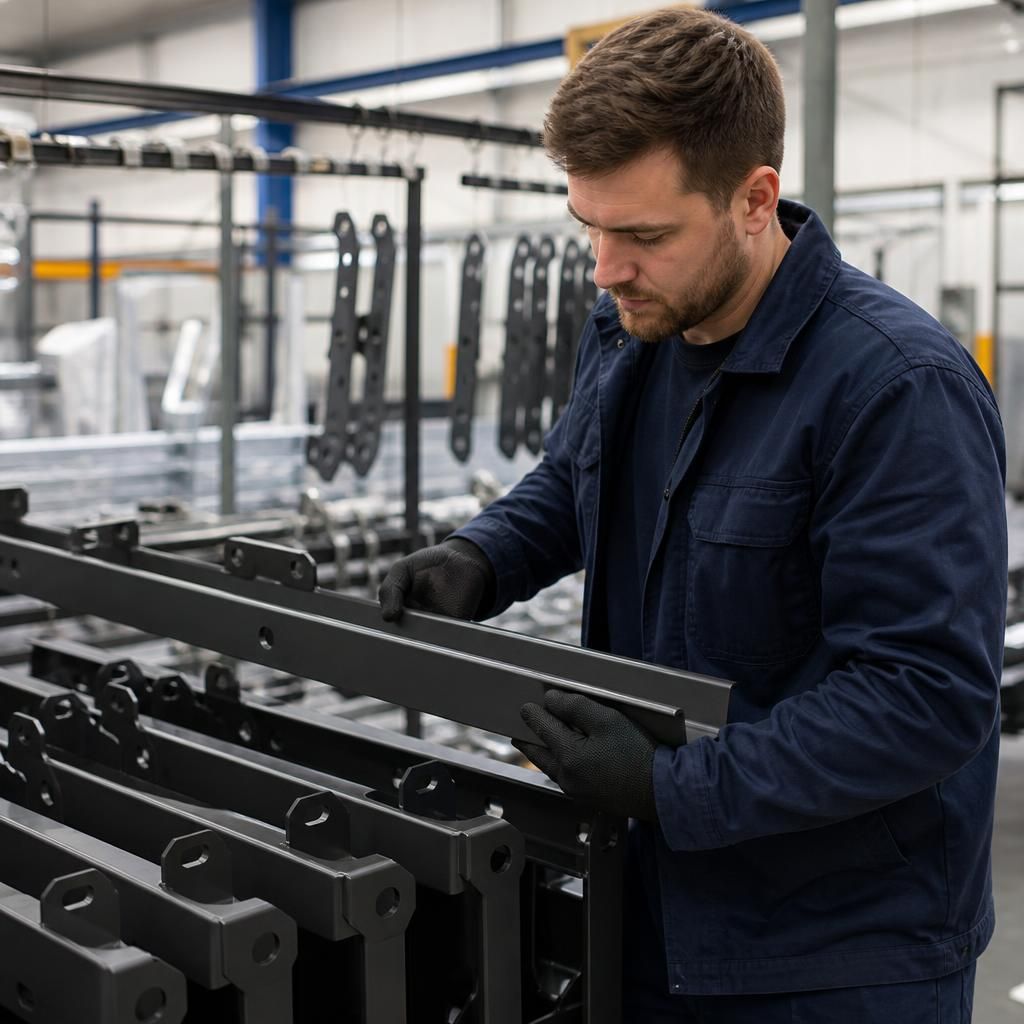
Surface preparation only benefits powder coating if the prepared metal remains clean and stable until powder is applied. Exposure to moisture, dust, workshop oils or bare-hand contact can reintroduce contaminants, while untreated steel may develop flash rust. These issues can weaken the coating system even when cleaning and abrasion were completed correctly.
Controlled handling is therefore part of preparation quality. Components should be moved using clean methods, protected from contamination and inspected again before coating. Keeping the interval between final preparation and application under control helps preserve the intended surface condition and reduces the risk of defects caused by recontamination or early corrosion.
Discuss Surface Preparation for Your Powder Coating Requirements
Discuss your component material, required finish and performance conditions with Powder-coatings.co.uk to establish a suitable surface preparation approach. Share your coating requirements for specialist guidance on preparing the parts for powder coating.