

What factors should I consider when selecting a powder colour paint for specific environmental conditions?
Select a powder colour paint by matching its formulation and performance rating to the conditions the metal component will face, including heat, moisture, chemicals, abrasion and UV exposure. Also consider the substrate, required film thickness, colour stability and whether a specialist protective coating is needed for the application.
Select a powder colour paint by defining the component’s complete exposure profile and then checking that the proposed coating system has been tested for those conditions. The colour itself is only one part of the specification: resin chemistry, pigment selection, pretreatment, application control and the expected service environment all affect long-term performance.
Start with the exposure category. Establish whether the finished part will be used indoors, outdoors, in a sheltered location, near the coast, in a high-humidity area or where it may be exposed to standing water. Consider the full operating cycle rather than the average conditions. Repeated wetting and drying, condensation, frost, thermal cycling and trapped moisture can place different demands on a coating from a consistently dry environment.
- For exterior components, assess rainfall, condensation, atmospheric pollutants and the degree of shelter provided by the installation.
- For coastal or salt-laden locations, request evidence that the complete coating system is suitable for the relevant corrosive environment.
- For enclosed or poorly ventilated spaces, consider humidity and whether moisture can collect around joints, fixings or concealed faces.
- For components exposed to heat, establish both the normal operating temperature and any short-term peaks, as well as how quickly the temperature changes.
Define the type and severity of chemical contact. A general statement that a component is exposed to chemicals is not enough. Identify the substances involved, their concentration, temperature and contact time. Occasional splashes, repeated wash-down, continuous immersion and exposure to vapour can produce very different results. Cleaning agents, oils, fuels, solvents, acids and alkaline materials should each be considered when selecting the coating system.
Where chemical contact is important, ask for test data that reflects the actual substance and exposure method. A coating that performs well against brief contact may not be appropriate for prolonged immersion or frequent cleaning. Also assess whether chemicals can collect in recesses, around seams or beneath fittings, because localised exposure may be more severe than the surrounding environment.
Consider how the part is handled and used. Environmental resistance is only one part of service performance. Components that are frequently handled, stacked, transported or exposed to rubbing need a finish suited to repeated mechanical contact. Identify likely impacts, sliding contact, vibration and contact with abrasive materials. Sharp edges, drilled holes and cut-outs should also be reviewed because damage at these points can expose the underlying metal.
Separate appearance requirements from protection requirements. Gloss level, texture and colour can affect how quickly marks, dirt and surface changes become visible, but a visually acceptable finish is not necessarily a suitable protective system. Dark or strongly coloured finishes may show chalking, fading or surface contamination more readily in exposed locations, while textured finishes can alter the apparent colour and make local repairs more noticeable. Specify the acceptable appearance change over the intended service life alongside the required protective performance.
Check the whole coating specification, not just the colour reference. The specification should identify the coating type, finish, pretreatment, application method and any relevant performance classification or test requirement. Pretreatment is particularly important where corrosion resistance is required, because contamination, inadequate cleaning or poor conversion treatment can undermine an otherwise suitable powder.
Part design should be included in the assessment. Drainage, ventilation and access for cleaning can reduce moisture retention, while crevices, overlapping surfaces and unsealed joints may create difficult exposure zones. If the design cannot be changed, the coating specification should account for those areas and the applicator should be told how the component will be installed and used.
Ask how performance has been verified. Useful evidence may include technical data, chemical-resistance information, corrosion testing, weathering results or records from a recognised coating classification system. Test results should be interpreted carefully: laboratory exposure is a controlled indication of performance, not a direct guarantee of service life in every installation. Confirm that the test method and substrate preparation are relevant to the proposed application.
For a new or particularly demanding application, a sample panel or trial batch can help assess colour, texture, coverage and compatibility with the intended pretreatment. It also provides a reference for later inspection. For repeat production, retain an agreed colour and finish standard and define how variation will be assessed under consistent lighting conditions.
Finally, consider maintenance and replacement requirements. Identify how the finished component will be cleaned, which products are permitted, how damage will be treated and whether future recoating is practical. Providing the coating specialist with drawings, substrate details, exposure information, cleaning chemicals and expected service conditions will produce a more reliable specification than selecting a colour from a chart alone. A Midlands powder-coating specialist can use those details when advising on suitable finishes for industrial components and batch work, with collection and delivery options available across the region and surrounding areas.
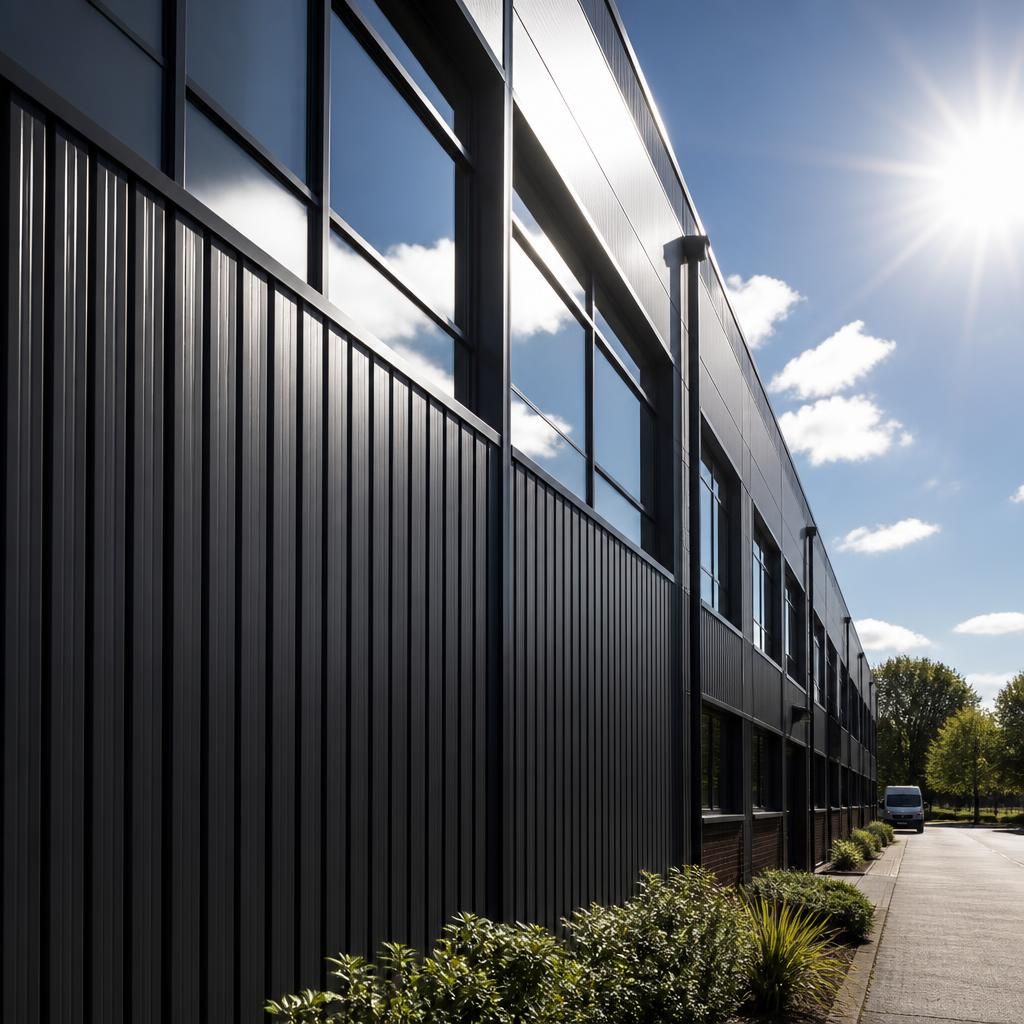
Colour selection can affect the temperature a coated component reaches in direct sunlight. Dark shades generally absorb more solar energy than lighter shades, which can increase the surface temperature of outdoor metalwork and place additional demands on the coating and substrate. For exposed components, assess the likely solar heating as well as the surrounding air temperature.
Where temperature is critical, ask for the coating’s service-temperature information and confirm that it relates to the proposed colour, substrate and installation. This is particularly relevant for enclosures, cladding components and metalwork positioned behind glazing or in other locations where heat can build up. A suitable colour specification therefore considers both appearance and the temperature conditions created by the finished shade.
Discuss Your Environmental Coating Requirements
Discuss your environmental coating requirements with a powder-coating specialist to review the component’s service conditions and identify a suitable powder colour paint specification. Share your part details and exposure profile to begin a focused assessment.