

How do you ensure the powder coating finish maintains its integrity in various environmental conditions?
Powder coating maintains its integrity in changing environmental conditions through suitable surface preparation, controlled application and curing, and the selection of a coating system appropriate to the component’s intended use. Careful coverage and finish inspection help reduce the risk of corrosion, adhesion failure, moisture ingress and premature wear on steel panels.
Powder coating maintains its integrity in different environmental conditions by matching the coating system to the panel’s intended exposure, then controlling the factors that can cause deterioration during service. The main considerations are moisture, corrosion, ultraviolet light, temperature changes, chemicals, abrasion and impact. No single powder coating is ideal for every environment, so the specification should reflect how and where the steel panels will be used.
Moisture and corrosion
In outdoor, humid or wash-down environments, water can undermine a coating if it remains trapped against the steel or reaches an exposed defect. The panel design, joints, edges and fixing points therefore need consideration alongside the coating specification. Good drainage reduces prolonged water contact, while suitable pre-treatment and an appropriate protective system help limit corrosion developing beneath the finish. Areas exposed to de-icing salts, coastal air or industrial pollutants may require greater corrosion resistance than panels used in a dry internal location.
Ultraviolet exposure
Sunlight can gradually cause some finishes to fade, chalk or lose gloss. Where panels are installed externally or in areas with strong artificial UV exposure, the powder type, colour and gloss level should be selected with colour retention in mind. A finish intended for interior use may not provide the same appearance retention when exposed continuously to sunlight. This distinction is particularly relevant to architectural panels, external enclosures and fabricated items where consistent appearance matters as well as protection.
Temperature and thermal movement
Steel panels can experience repeated expansion and contraction when exposed to changing temperatures. The coating must remain sufficiently bonded and flexible for the expected service conditions, rather than becoming brittle or losing adhesion during thermal cycling. The operating temperature of the finished component is also important: conditions close to heat sources, industrial equipment or heated wash-down systems may require a coating selected for higher temperature resistance.
Chemical contact and contamination
Cleaning agents, oils, fuels, solvents, acids, alkalis and process chemicals can affect a powder-coated surface differently. Before specifying a finish, the likely contaminants, their concentration, contact time and cleaning method should be identified. A coating that performs well in a normal factory environment may not be suitable for continuous chemical exposure. Regular removal of deposits with a compatible cleaning method also helps prevent contamination from becoming a longer-term attack on the finish.
Abrasion and impact
Handling, vibration, moving equipment and repeated contact can wear or chip a coating even when the surrounding environment is not corrosive. Panels subject to mechanical action may need a finish chosen for improved hardness, flexibility or resistance to abrasion. Packaging, transport and installation practices remain important because damage caused before the panel enters service can expose the steel and create a local route for corrosion.
Inspection and maintenance in service
Environmental protection is not a substitute for periodic checks. Inspectors should look for blistering, cracking, flaking, discolouration, rust staining and impact damage, paying particular attention to edges, joints, fixings and areas where dirt or moisture collects. Minor damage should be assessed and repaired using a compatible method before corrosion spreads beneath the surrounding coating. Cleaning should remove deposits without using abrasive materials or chemicals that attack the finish.
For steel panels, the most reliable specification combines the exposure conditions, expected mechanical demands and appearance requirements rather than choosing a powder solely by colour. Specialist options, including protective and nylon coatings, may be considered where the application calls for particular resistance characteristics. The selected system should always be checked against the component’s actual service environment and the coating manufacturer’s technical guidance.
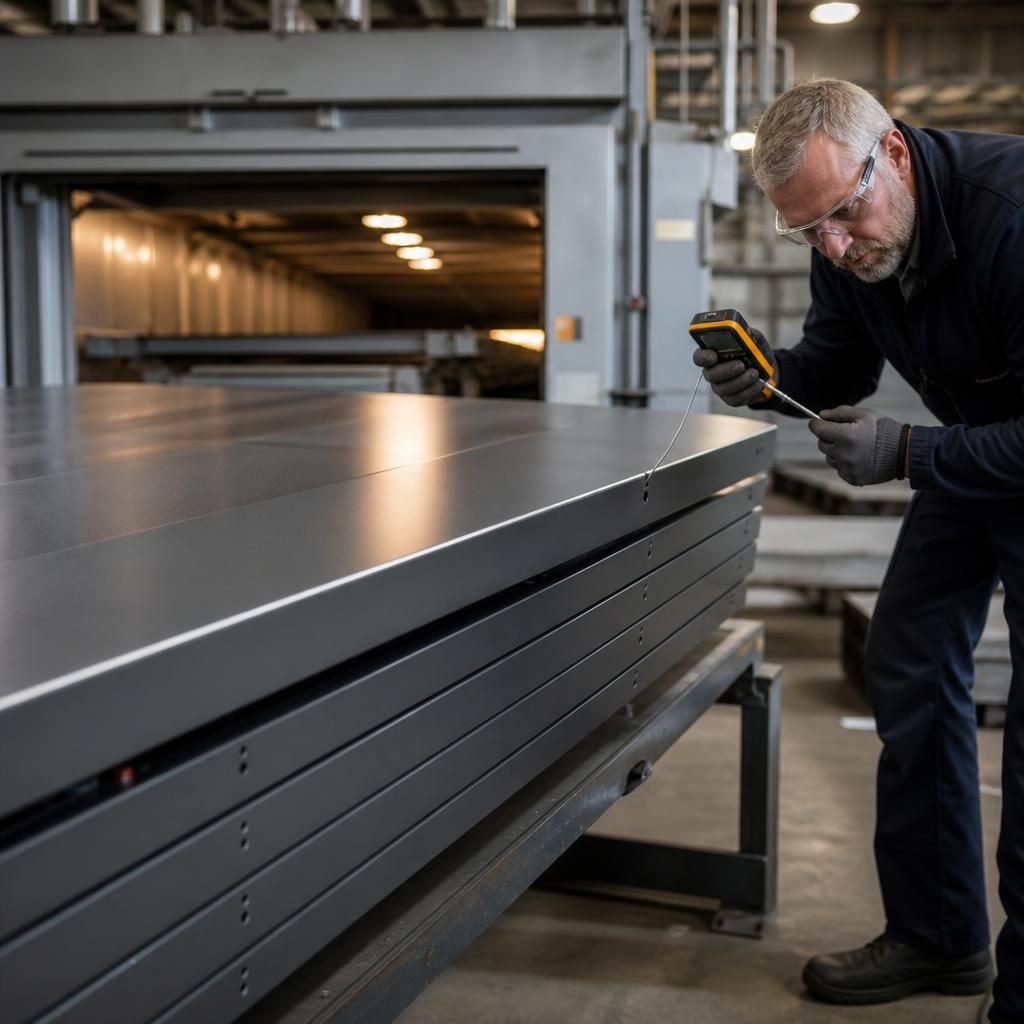
Curing consistency is essential because the powder must reach its specified cure across the entire steel panel, not just at its surface. Panel thickness, shape, loading and contact with other components can affect how heat reaches different areas. Monitoring the metal temperature during curing helps identify under-cured zones that may have reduced resistance to chemicals, moisture or handling damage. It also helps avoid excessive heat exposure, which can affect colour and gloss. Large or complex panels therefore require particular attention to cure conditions before they are released for installation or service.
Discuss the right powder coating for your steel panels’ environment
Discuss your steel panels’ intended environment with the powder-coating team to identify a suitable coating specification. Provide details of exposure, cleaning methods and mechanical demands so the finish can be assessed against its planned use.