

How does the filter system in a conveyor powder coating setup impact efficiency and quality?
The filter system in a conveyor powder coating setup controls how effectively overspray and airborne powder are captured, helping maintain consistent airflow through the booth. Effective filtration supports cleaner working conditions, reduces contamination and colour carry-over, and helps produce more uniform, repeatable finishes while keeping powder recovery and disposal under control.
A filter system affects conveyor powder coating efficiency and quality by controlling extraction resistance, booth airflow and the condition of the air returning through or leaving the coating area. When it is correctly sized, maintained and matched to the powder and production load, the system helps the booth operate predictably. When filters become overloaded, damaged or poorly selected, airflow can change, powder handling becomes less efficient and finished parts may show avoidable defects.
Filter loading and pressure drop
As powder accumulates on a filter, resistance to airflow increases. The extraction fan must work harder to maintain the required air movement, which can increase energy demand and eventually reduce the effectiveness of extraction. In a conveyor booth, that change can affect how overspray moves away from the parts and towards the collection equipment. Airflow that is too weak may allow powder to settle in unwanted areas, while unstable airflow can make coating behaviour less predictable from one production run to the next.
Pressure monitoring is therefore an important efficiency control. A pressure differential gauge or electronic sensor can show when a filter is approaching its service limit. The correct threshold depends on the equipment design and filter specification; it should be set by reference to the system manufacturer’s instructions rather than a general rule. Replacing a filter too early can create unnecessary material cost, while allowing excessive loading can restrict extraction and place additional strain on the fan.
Filter type and system design
Conveyor powder coating installations may use cartridge filters, bag filters, secondary filters or a combination of stages. The choice depends on factors including powder characteristics, booth dimensions, line speed, component geometry, extraction volume and whether powder is being reclaimed or treated as waste. A primary stage usually handles the larger powder load, while a final or secondary stage provides additional protection for the exhaust path and surrounding equipment.
Filter media must be compatible with the powder and the cleaning method. Pulse-cleaned cartridges, for example, use short bursts of compressed air to dislodge accumulated powder. This can help maintain usable filter capacity without stopping the conveyor, but the compressed-air pressure, pulse frequency and sequence need to suit the installation. Excessive cleaning can disturb powder unnecessarily, whereas insufficient cleaning allows the filter cake to build up and raises pressure drop.
Good sealing is as important as the filter medium itself. Gaskets, clamps, access doors and filter housings must prevent unfiltered air from bypassing the media. A bypass leak can reduce collection performance while remaining difficult to identify from the outside. Inspection should include the filter seating surfaces and housing condition, not just the visible face of the filter.
Effect on coating quality
Stable extraction helps make the coating environment more consistent. If airflow varies during a run, the amount and direction of airborne powder around the workpiece can also change. This may contribute to uneven deposition, powder settling on areas that should remain clear, or differences between parts positioned at different points on the conveyor. These effects are particularly relevant for complex fabrications, recessed sections and components with changing surface areas.
Filter condition can also influence the cleanliness of the coating environment. A damaged filter, poor seal or disturbed powder deposit may allow unwanted material to travel into areas where it can affect the finish. This is a risk when switching colours, using different powder types or processing parts with demanding cosmetic requirements. Cleaning procedures and filter arrangements should be considered together so that the filter system supports, rather than undermines, colour-change and booth-cleaning controls.
Filters do not determine finish quality on their own. Pretreatment, powder application settings, earthing, film thickness, conveyor loading and oven curing remain separate process controls. A well-maintained filter system provides a stable extraction environment, but it cannot compensate for incorrect spray parameters or an unsuitable cure schedule.
Efficiency, servicing and powder handling
A filter system should be assessed across the whole operating cycle rather than only by its initial extraction performance. Relevant considerations include:
- the airflow required for the booth and the fan capacity available;
- the filter’s usable dust-holding capacity and expected loading pattern;
- the pressure drop at clean and loaded conditions;
- the method and frequency of automatic or manual cleaning;
- the time needed to inspect, remove and replace filter elements;
- the containment of powder during servicing; and
- the effect of filter changes on production controls and colour management.
Routine checks should record pressure readings, investigate sudden changes and look for visible damage, unusual deposits or air leaks. Pulse-cleaning equipment should be checked for adequate compressed air quality and pressure, while sensors and gauges should be kept functional and calibrated where required. Filters should not be shaken, blown down or handled in a way that releases collected powder into the work area.
For a new conveyor line or a significant change in production, filter capacity should be reviewed against the actual powder throughput rather than the nominal conveyor length alone. Larger components, heavier application rates, frequent colour changes and higher line speeds can all alter the filtration duty. The design should also allow access for inspection and safe replacement; a filter that is technically suitable but difficult to service may encourage overdue maintenance and create inconsistent operation.
In practical terms, the best indication of a properly functioning filter system is a stable pressure trend, reliable extraction and repeatable booth conditions over the production cycle. These controls help the coating line use its available capacity efficiently and reduce filter-related variation, while other process stages continue to determine the final performance of the finished coating.
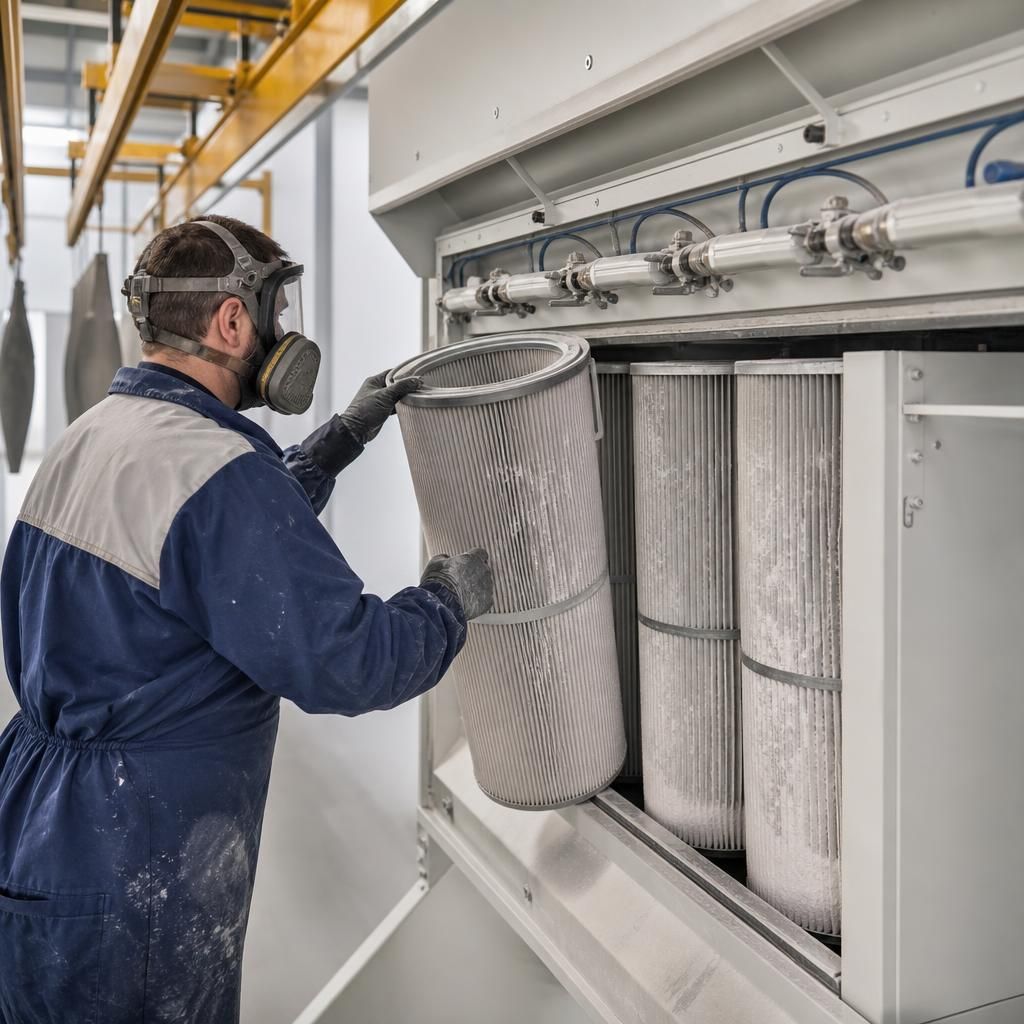
The filter system also affects whether overspray can be recovered for controlled reuse. Captured powder should be kept separate from dirt, fibres and residue from previous colours; otherwise reclaimed material may alter the application behaviour or appearance of a subsequent batch. For this reason, recovery arrangements need to account for the powder type, colour-change frequency and the finish requirements of the components being coated.
Where reclaim is suitable, the filtration and collection stages should support consistent transfer of recovered powder into the approved handling process. Where contamination risk is higher, treating overspray as waste may provide more reliable quality control. This decision influences material utilisation, cleaning procedures and colour management, so it should be made as part of the complete conveyor line design rather than by selecting a filter solely on airflow capacity.
Discuss your conveyor powder coating filter requirements
If you are reviewing a conveyor powder coating setup, discuss your filter requirements with Powder-coatings.co.uk to assess the filtration, extraction and powder-handling considerations for your application. Provide details of your components, powder types and production process so the system can be considered against the demands of your coating line.