

How does powder coating compare to traditional paint in terms of durability and environmental impact for steel components?
For steel components, powder coating generally provides a tougher, more uniform and abrasion-resistant finish than traditional liquid paint, helping it withstand chipping, impact and everyday wear. It also has a lower environmental impact because the process uses little or no solvent and overspray can often be recovered, whereas liquid paint typically produces more solvent emissions and waste.
For most steel components manufactured in controlled conditions, powder coating offers the more durable finish and can have a lower overall environmental impact than conventional solvent-based paint. The comparison is not absolute, however. Performance depends on steel preparation, coating specification, film thickness, curing, the service environment and the way the component is repaired or replaced over its working life.
Durability depends on the coating system, not just the application method. Powder coating forms a continuous cured film that is closely bonded to the prepared steel. This can provide good resistance to handling, surface wear, moisture and many commonly encountered chemicals. Suitable formulations can also be selected for exterior exposure, higher UV exposure or more demanding industrial conditions. A standard decorative powder should not automatically be treated as suitable for immersion, severe chemical exposure or highly corrosive atmospheres.
Traditional liquid paint can also provide long-term protection when the primer, topcoat and preparation method are correctly specified. Multi-coat liquid systems may be preferable where different layers are needed for specialised corrosion control, or where a coating must be applied to a large fixed structure that cannot be placed in a curing oven. The relevant comparison is therefore between complete, correctly specified systems rather than between powder and paint in isolation.
Steel preparation is a critical factor in both cases. Oil, grease, mill scale, rust and other contaminants can prevent proper adhesion and create points where corrosion begins beneath the coating. Degreasing, suitable mechanical or chemical preparation and an appropriate pretreatment help establish a sound surface. Edges, welds, recesses and joints deserve particular attention because they can be more vulnerable than broad, accessible faces.
Powder coating is applied as a dry material and then heated so that the particles flow and cure into a coherent film. This requires the component to tolerate the curing temperature and to fit the application and oven arrangements. Hollow sections also need suitable venting, while assembled components may need to be separated if trapped air, uncured areas or inaccessible surfaces could affect the result. Liquid paint is more adaptable for on-site work, complex assemblies or components that cannot be heated, although its drying and recoating requirements need to be allowed for.
Environmental impact should be assessed across the whole process. Powder coating avoids the routine use of the organic solvents found in many solvent-borne liquid paints, reducing solvent-related emissions during application. Uncured powder that does not reach the component may also be collected and reused where the equipment and colour-management system permit. These advantages are strongest in a controlled factory process with effective recovery and careful housekeeping.
Powder coating is not impact-free. The oven requires energy, and the environmental result will depend on the curing temperature, oven efficiency, production volumes and energy source. Powder manufacture, packaging, pretreatment chemicals and cleaning operations also contribute to the footprint. Powder that has been mixed, contaminated or otherwise made unsuitable for recovery becomes waste and must be managed appropriately.
Liquid paint has a wider environmental range than the term “traditional paint” suggests. Solvent-borne products can create volatile organic compound emissions and require solvent-based cleaning, while water-borne products may reduce solvent content but still contain resins, additives and other substances that require controlled handling. Overspray, used wipes, masking materials, containers and contaminated cleaning fluids can all add to waste. A lower-solvent liquid system may therefore compare differently from a high-solvent formulation.
A practical comparison should consider the expected service life of the steel component. A finish that lasts longer before major refurbishment may reduce the need for stripping, recoating, transport and replacement. The initial application method is only one part of that calculation. Designers and procurement teams should consider:
- Whether the component is used indoors, outdoors, near roads, in a humid area or in an industrial atmosphere.
- The likely exposure to water, salts, cleaning chemicals, oils, solvents, abrasion and sunlight.
- Whether the steel can be fully prepared and cured under controlled conditions.
- Whether the chosen powder or liquid system includes a compatible primer or corrosion-protection layer where required.
- How damaged areas will be identified, cleaned and repaired during service.
- How coating residues, packaging and removed material will be handled at refurbishment or end of life.
Repairs also differ. A powder-coated component normally needs local cleaning and a compatible repair coating if the original film is damaged; achieving an identical appearance across a small repaired area may be difficult. Liquid paint is often more convenient for local touch-up because it can be applied without returning the whole item to an oven. This does not necessarily make it more durable, but it can simplify maintenance in the field.
For steel parts produced in batches, powder coating is often a strong choice where the geometry, pretreatment and curing requirements can be controlled. For large installed structures, heat-sensitive assemblies or work requiring on-site application, a properly specified liquid system may be more practical. The most reliable decision comes from matching the coating technology to the exposure classification, component design and maintenance plan, then confirming the preparation and application requirements with the coating provider before production.
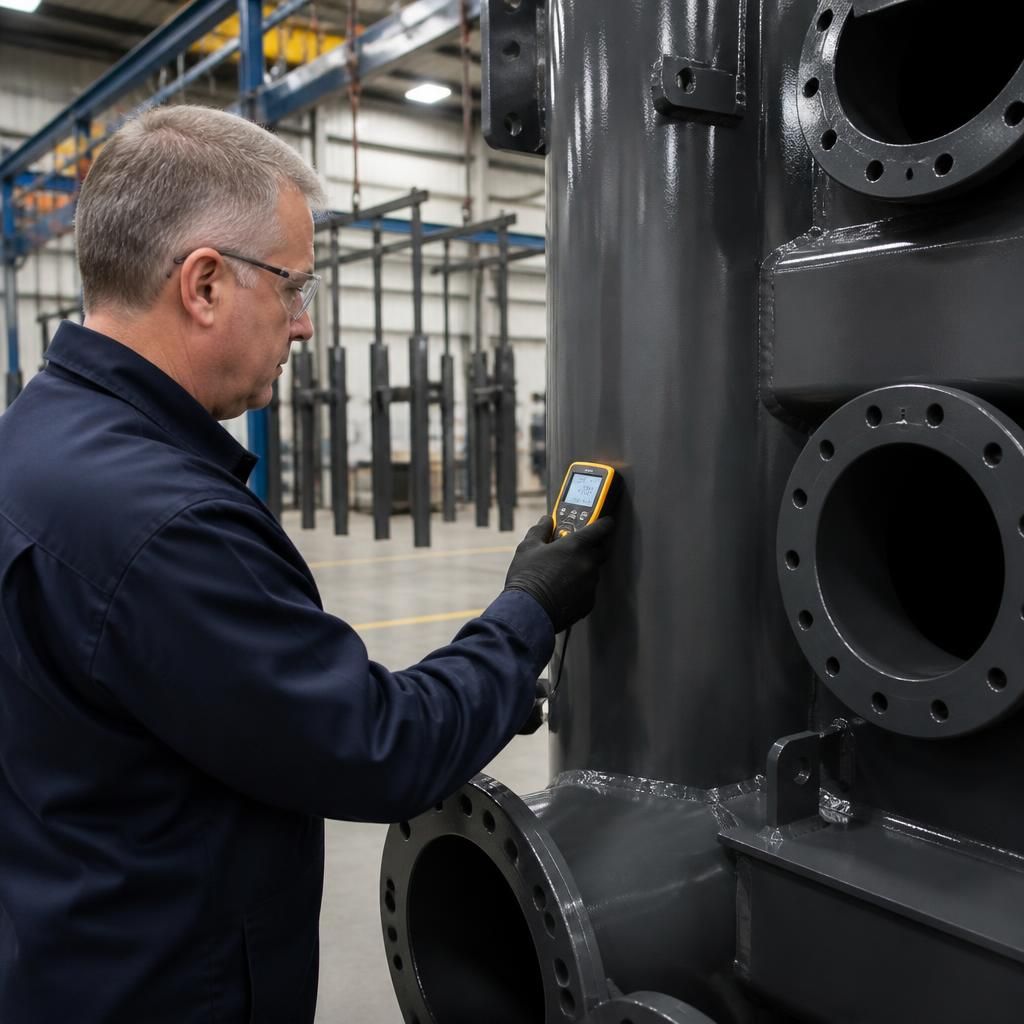
For steel components, powder coating durability depends heavily on achieving the specified film thickness and cure, not simply on using powder rather than liquid paint. If the coating is under-cured, it may have reduced adhesion and resistance to impact or chemicals. Excessive heat or curing time can affect colour, gloss and coating performance. Correct control of the steel temperature, oven conditions and dwell time is therefore essential.
This also affects environmental performance. A coating that fails prematurely can require stripping, rework or replacement, adding material use, energy consumption and waste. Checking the coating specification, confirming that the steel reaches the required cure conditions and inspecting the finished film can help prevent avoidable reprocessing. For batch-produced components, these controls make the comparison with traditional paint more meaningful because they assess the performance of a properly applied system rather than the coating material alone.