

How does surface preparation influence the longevity and performance of powder-coated components?
Effective surface preparation removes contaminants and creates a suitable surface profile, allowing powder coating to bond securely to the metal. This improves adhesion, reduces coating defects and helps the finished component maintain its protective performance against corrosion, wear and service conditions.
Surface preparation influences powder-coated component longevity by determining whether the coating system is compatible with the metal, free from process residues and ready for consistent curing. A well-prepared component is less likely to develop premature corrosion, blistering, flaking or visible defects during service, while poor preparation can shorten the useful life of an otherwise suitable powder coating.
The condition of the substrate sets the starting point. Steel, galvanised steel, aluminium and previously coated components each require different preparation decisions. Mill scale, rust, weld discolouration, oxidation and remnants of an old coating can behave differently during heating and service. If these conditions are not identified before processing, the coating may conceal defects temporarily rather than provide a stable protective finish. The required preparation should therefore be selected according to the metal type, its condition and the environment in which the component will be used.
Preparation also affects corrosion resistance. Corrosion often begins at a damaged edge, weld, crevice or area where moisture remains against the metal. Removing corrosion products and residues, treating the surface appropriately and ensuring that prepared areas are not recontaminated helps the finished system protect the substrate more consistently. Welds and fabricated joints deserve particular attention because spatter, sharp transitions, trapped oils and weld residues can create local weaknesses even when the wider surface appears clean.
Geometry must be considered as part of the preparation process. Hollow sections, folded returns, drainage points, recesses and overlapping joints can retain cleaning chemicals or moisture. If these areas are not suitably designed, drained and dried, residues may emerge during curing or service. That can lead to pinholes, staining, blistering or corrosion from the inside of the component. Components should have suitable drainage and access where possible, and preparation should account for areas that are difficult to reach or inspect.
Drying is as important as cleaning. Water or chemical residue left on the metal can interfere with the coating process and may produce surface defects when the part enters the oven. Thorough drying is particularly important around seams, cavities, threaded holes and other locations where liquid can collect. Components should be allowed to reach a suitable condition before powder application, with handling carried out in a way that avoids transferring fingerprints, oil or workshop debris back onto the prepared surface.
Good preparation supports a more uniform finish. Uneven residues, embedded debris or inconsistent preparation can alter how powder is deposited and cured across the component. This may be visible as changes in gloss, texture, colour or coverage. Sharp edges can also receive less effective powder coverage than broad, accessible faces. Where the design permits, edge treatment, suitable radii and removal of burrs can help the coating form a more consistent protective layer.
Masking and preparation of functional areas protect performance. Threads, bearing seats, earth points, mating faces and close-tolerance interfaces may need to remain free of powder. Correct masking prevents later removal of excess coating, which can damage surrounding areas or expose unprotected metal. It also ensures that the finished component can be assembled correctly without forcing parts together or creating stress at coated interfaces.
Cure-related performance depends on preparation and process control working together. The powder must be applied to a prepared component and cured according to the coating specification and the component’s actual metal temperature. Preparation cannot compensate for under-curing, over-curing or unsuitable application conditions. Conversely, an accurately controlled cure can still produce a poor result if oil, moisture, corrosion or residues remain beneath the coating. The coating specification, substrate thickness, component geometry and intended service conditions should therefore be considered as one system.
Preparation requirements should be agreed before production, especially for batch work or components supplied by several fabrication processes. Useful information includes the base metal, previous treatments, weld processes, areas that must remain uncoated, expected exposure to moisture or chemicals and any appearance requirements. This allows the preparation method and inspection points to be matched to the component rather than applied as a generic sequence.
Checks before coating may include visual examination, confirmation that the surface is dry and free from visible residue, inspection of welds and edges, and verification that masked areas are correctly positioned. After coating, the finish can be assessed for coverage, visible defects and compliance with the agreed specification. Where a component has a demanding duty, the required testing and acceptance criteria should be defined in advance rather than relying solely on appearance.
In practical terms, surface preparation does not make an unsuitable coating suitable for every environment, nor does it remove the need to select the correct powder and film thickness. It provides the controlled foundation on which those decisions depend. For manufacturers and fabricators, treating preparation as a specified production stage rather than a preliminary clean-up task is central to achieving durable, consistent performance from powder-coated metal components.
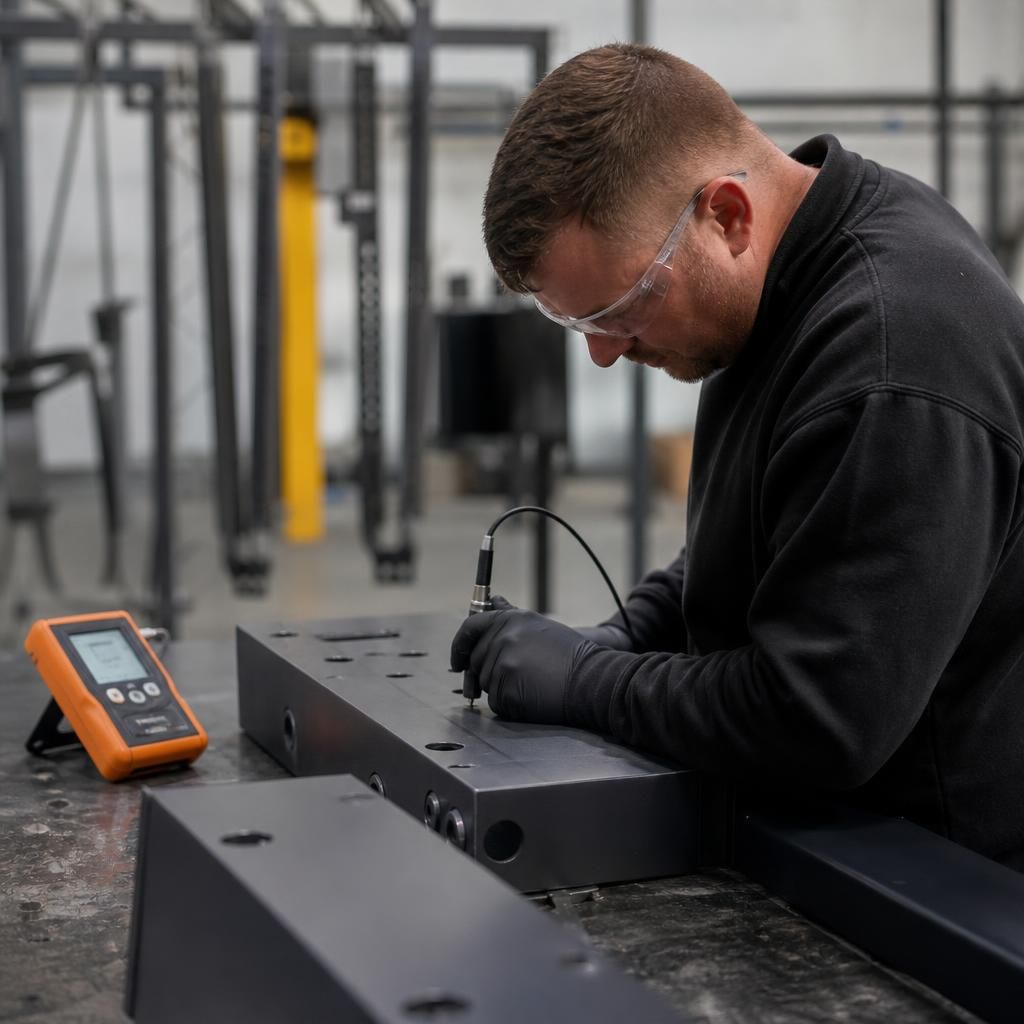
Surface preparation also influences performance at the coating-to-metal interface, which may not be obvious from visual inspection alone. A coating can appear smooth and complete while having a weak bond beneath it, allowing local lifting when the component is exposed to impact, vibration, moisture or temperature changes. Suitable adhesion assessment, where required by the component specification, helps identify whether the preparation method has produced a sound interface rather than relying only on appearance.
For repeat production, these checks can be used to compare preparation results between batches and highlight changes in incoming material, fabrication or handling. This supports a more consistent coating process and helps distinguish a preparation-related failure from problems caused by powder selection, application or curing.
Discuss your component preparation requirements
Discuss your component preparation requirements with powder-coatings.co.uk, providing details of the substrate, component design, intended service conditions and any areas that must remain uncoated. This allows the preparation approach to be considered against the component’s specification before coating begins.