

How does the powder coating process improve the longevity of rusted steel components?
Powder coating improves the longevity of rusted steel components by removing corrosion during surface preparation and applying a tightly bonded, durable protective film. This barrier helps limit moisture and oxygen reaching the steel, slowing further corrosion and reducing wear when the coating is correctly specified and applied.
For a rusted steel component, powder coating improves longevity when the steel is restored to a sound surface and the coating system is matched to its working environment. Its value is not simply the presence of a coloured finish: correct preparation, pretreatment, powder selection and curing work together to reduce corrosion progression, coating failure and mechanical damage.
Surface preparation has a direct effect on service life. Loose rust, mill scale, grease and other contaminants can prevent the coating from bonding properly. Abrasive blasting or another suitable preparation method exposes a stable steel surface and creates a profile that gives the powder film a firm mechanical key. Any remaining corrosion beneath a poorly bonded film can continue to spread, causing blistering, flaking and corrosion around the affected area.
A suitable pretreatment stage provides an additional level of protection. It helps condition the steel before coating and can improve resistance to corrosion at scratches, edges and other areas where the film is more vulnerable. The exact pretreatment should reflect the steel grade, component design and intended environment rather than being treated as a universal step.
Once cured, the powder forms a continuous polymer film with useful resistance to abrasion, impact and routine handling. This matters for fabricated parts that are fitted, transported or exposed to contact during use. A coating that resists scuffing is less likely to expose the steel prematurely, so the protective system retains its function for longer than a finish that is easily damaged.
Curing is also important to durability. Powder must be heated according to the coating manufacturer’s requirements so that the film develops its intended hardness, adhesion and chemical resistance. Insufficient or excessive curing can affect performance, even where the component appears visually acceptable. Coating thickness should likewise be controlled: an uneven or excessively heavy film may produce defects, while insufficient coverage can leave weak points.
Component design influences how well powder coating protects rusted steel. Sharp edges, recesses, joints and areas that retain water are more difficult to cover consistently and may become early points of failure. Rounded edges, effective drainage and the avoidance of dirt traps help the coating perform as intended. Weld spatter, residues and porous contamination should be addressed before coating because they can create local defects or release gases during curing.
The coating specification should reflect exposure conditions. Indoor components may have different requirements from steel exposed to rain, condensation, road contaminants, industrial chemicals, ultraviolet light or repeated washing. Selecting a system for the actual environment helps preserve both the protective properties and the appearance of the finish. Where corrosion risk is high, the complete system should be assessed rather than selecting powder colour alone.
Powder coating can extend the useful life of a component, but it cannot reverse structural metal loss. Deep pitting, perforation, distorted sections or weakened welds may require repair or replacement before coating. The finished part should also be inspected for pinholes, missed areas, poor edge coverage, inclusions and damage from handling. Small defects are easier to address before the component returns to service.
Long-term performance is supported by sensible maintenance. Cleaning away deposits and checking for chips, scratches, blistering or rust staining can identify local damage before it spreads. Repairs should use a compatible method and should not be assumed to provide exactly the same durability as the original factory-applied finish. In this way, powder coating contributes to longevity through a controlled protective system, not through coating over active corrosion alone.
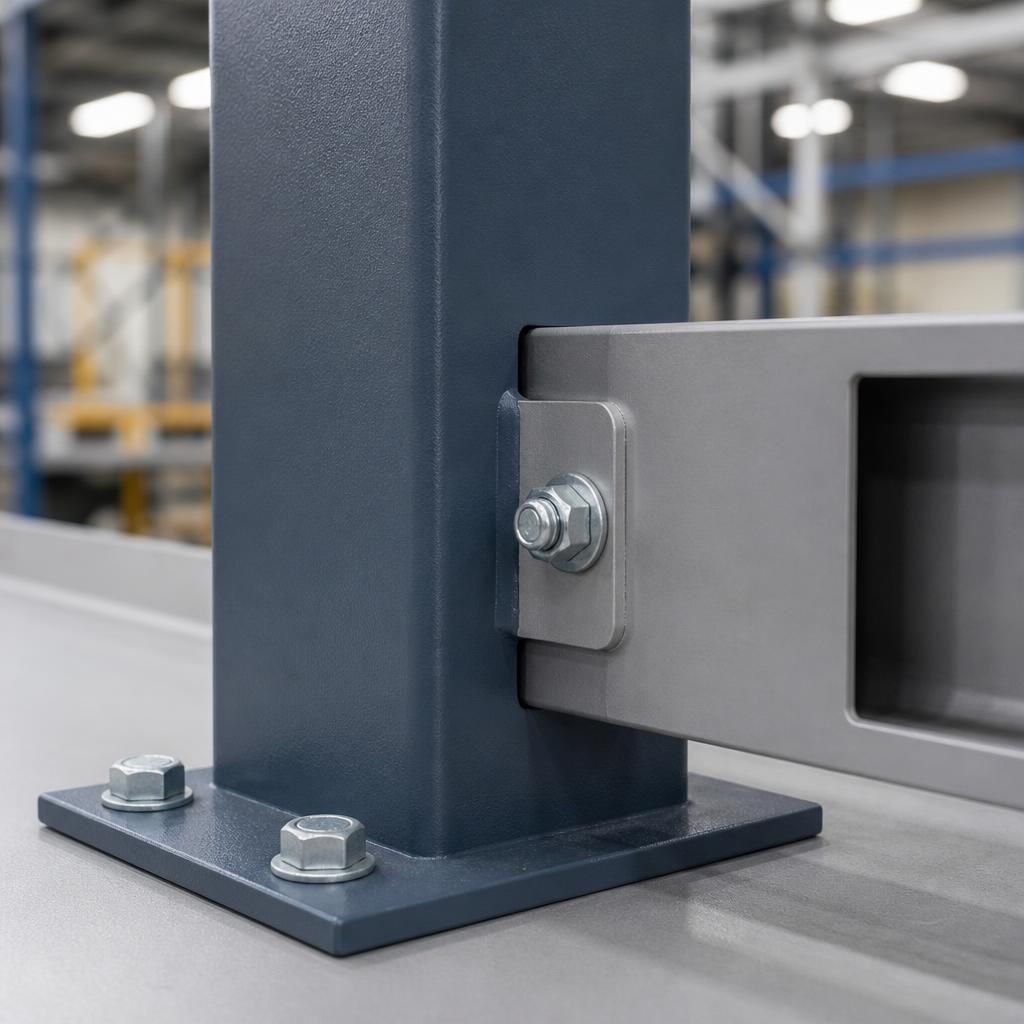
Powder coating can extend the service life of steel components by electrically separating the steel from dissimilar metals that might otherwise create a galvanic corrosion risk. Where coated steel is assembled with materials such as aluminium, the continuous polymer film can reduce direct contact and limit the moisture-driven electrical reaction that accelerates local corrosion.
This protection depends on the coating remaining intact at fixing points, cut-outs and contact interfaces. Assembly details should therefore be considered alongside the coating specification. Uncoated areas may need suitable protection, and any damage caused during fitting should be repaired with a compatible system. Addressing these interfaces helps prevent localised corrosion from undermining an otherwise durable finish.