

How do different anti-corrosion coatings impact the overall cost-effectiveness and maintenance requirements for steel structures?
Different anti-corrosion coatings affect a steel structure’s whole-life cost through their preparation and application requirements, expected durability, inspection needs and ease of repair. A coating with a higher initial cost may be more cost-effective if it provides longer protection and requires less frequent maintenance, while the most suitable option depends on the steel, exposure conditions, component design and required finish.
Anti-corrosion coatings influence the cost-effectiveness of a steel structure by changing the balance between installation cost, protection achieved, repairability and the practical effort required throughout its service life. The cheapest coating to apply is not necessarily the least expensive option overall: access requirements, surface preparation, environmental exposure, damage risk and the consequences of taking the structure out of service can have a greater effect than the coating price alone.
Liquid paint systems are widely used because they can be applied on site and built up in layers, typically with a primer, intermediate coat and finishing coat. This makes them adaptable to complex structures and useful where local repairs or colour changes may be needed. Their cost-effectiveness depends heavily on preparation quality and application conditions. Poorly prepared steel, excessive moisture, contamination or inadequate film thickness can lead to early breakdown. Maintenance commonly involves checking for rust staining, blistering, cracking, chalking and loss of adhesion, followed by cleaning and spot repair before affected areas spread.
Zinc-rich primers provide cathodic protection as well as a physical barrier. This can be valuable where scratches or small areas of coating damage expose the steel, although the surrounding system still needs to remain intact. Zinc-rich products may require careful application control and are not automatically suitable for every topcoat or operating environment. Repairs must use compatible materials and restore the specified protection rather than simply covering visible rust with a decorative layer.
Hot-dip galvanising gives steel a bonded zinc coating that can offer consistent protection to suitably designed components. It can be cost-effective for repeatable steelwork because much of the coating process is completed away from the installation site and routine maintenance may be limited. However, the design must account for drainage, venting, component dimensions and contact between dissimilar materials. Galvanised surfaces can also require treatment before painting or powder coating. Any cutting, welding or substantial mechanical damage after galvanising creates areas that need an appropriate zinc-based repair system.
Powder coating uses an electrostatically applied powder that is cured to form a continuous finish. Factory application can provide consistent coverage, clean edges and a broad choice of functional and decorative finishes. It is often cost-effective for batches of steel components that can be handled and processed efficiently. The economics are less favourable where parts require extensive masking, have difficult geometries or cannot tolerate the curing process. Powder coating is also more dependent on proper pretreatment than its smooth finish may suggest; contamination, sharp edges and untreated corrosion can become failure points beneath the coating.
Powder-coated steel should be inspected for impact damage, abrasion, corrosion at edges and joints, fading, chalking or loss of adhesion. Small defects can sometimes be repaired with a compatible liquid product, but a local repair may not match the original texture or colour exactly. Where damage is widespread, removing and recoating the component may provide a more reliable result than repeatedly patching isolated areas. This makes handling, packaging and component design relevant to the maintenance cost from the outset.
Duplex systems, such as galvanising combined with a paint or powder finish, involve a greater initial process cost but add a second protective layer and provide a specified finish. They can be appropriate where steelwork is exposed to aggressive conditions, frequent handling or a high visual standard. Their value depends on applying the topcoat correctly over the galvanised surface. If the interface is poorly prepared, the additional layer does not deliver its intended benefit and may make future repair more complicated.
Thermal-sprayed zinc or aluminium systems can provide durable protection for larger steelwork and structures where long-term exposure is a major concern. They may involve specialist equipment, controlled application and more demanding site logistics, so the initial cost can be higher than a conventional paint system. They become more economically attractive when access is difficult, recoating would disrupt operations or the steelwork is expected to remain in a demanding environment for an extended period.
A realistic cost comparison should include more than the coating material. Assess the following before selecting a system:
- Steel grade, surface condition and the level of preparation required.
- Component size, weight, geometry and the accessibility of concealed faces.
- Exposure to rain, condensation, salt, chemicals, abrasion, impact and temperature changes.
- Whether the work can be completed in a controlled factory environment or must be carried out on site.
- Masking, handling, transport, access equipment and protection of adjacent areas.
- Compatibility between primers, intermediate coats, topcoats and any existing finish.
- The consequences of coating failure, including production interruption, restricted access and replacement of damaged steel.
- How easily the selected system can be inspected, cleaned and repaired with compatible materials.
Maintenance is usually most economical when it is planned around condition rather than postponed until severe corrosion is visible. Inspections should pay particular attention to welds, bolted joints, crevices, drainage points, sharp edges, contact surfaces and locations where water or debris can remain trapped. Cleaning may remove corrosive deposits before they damage the coating, while prompt treatment of scratches and impact marks prevents a small defect from becoming a larger repair.
The most cost-effective choice is therefore the coating system that suits the exposure and the component throughout its intended use, not simply the system with the lowest application price. A coating specification should set out the preparation standard, coating build, curing or drying requirements, inspection criteria, repair method and expected maintenance approach. For fabricated or batch-produced components, discussing these details with a powder coating specialist before manufacture can also identify design features that reduce masking, improve coverage and make future handling less likely to damage the finish.
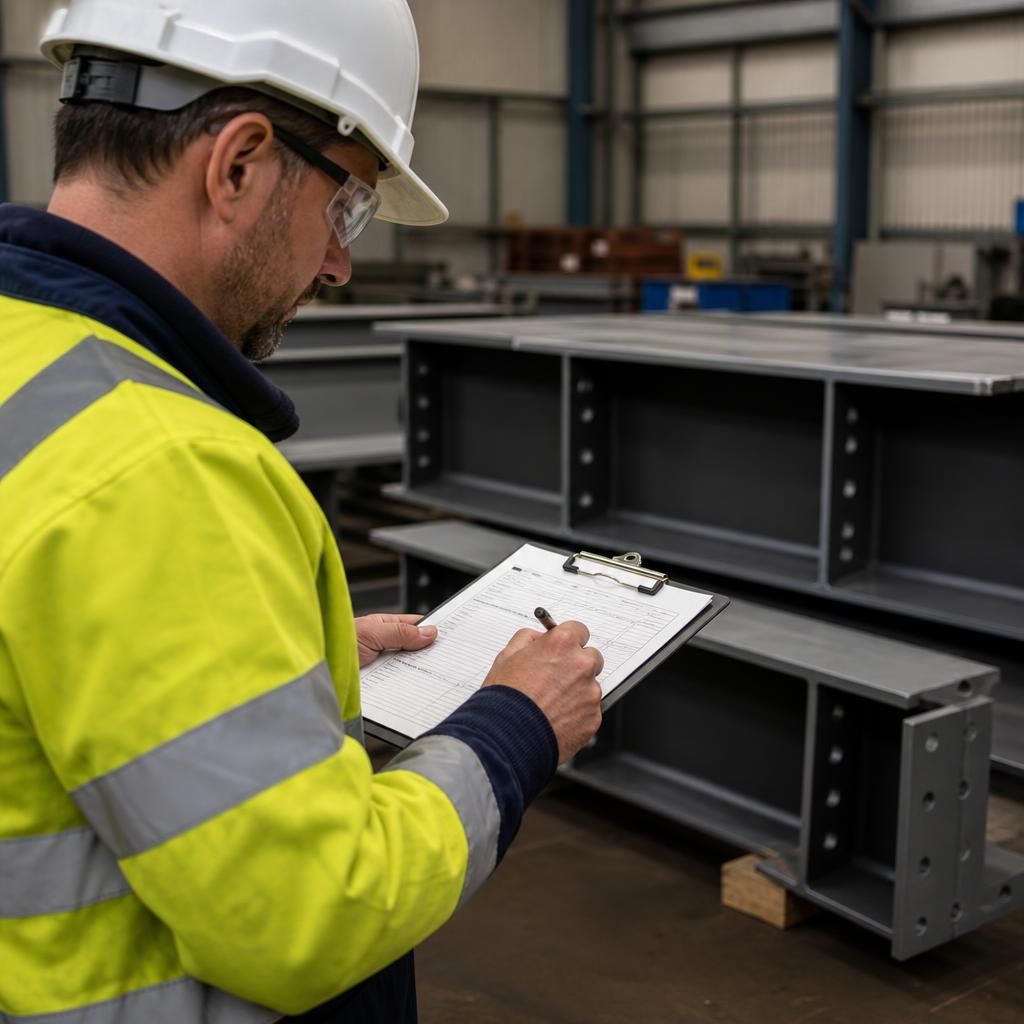
Coating records can materially affect the long-term cost of maintaining a steel structure. The maintenance file should identify the preparation standard, coating system, finish, application requirements and approved repair materials for each component or area. This information helps future inspections distinguish normal surface ageing from coating failure or corrosion beneath the film.
Accurate records also reduce the risk of applying an incompatible repair product or removing sound coating unnecessarily. When repairs are needed, the maintenance team can target the affected area, follow the specified preparation method and reinstate a finish that works with the original system. This is particularly important where a structure has multiple coating layers or has been repaired at different stages of its service life.