

How does the protective performance of Interpon D1036 Matt compare to other aluminium coating options?
Interpon D1036 Matt provides durable protection for aluminium, combining resistance to weathering, UV exposure and surface wear with a consistent matt finish. Compared with basic or less specialised aluminium coatings, its performance depends on correct substrate preparation, application and curing, while the most suitable alternative will vary according to the component’s environment and required service life.
Interpon D1036 Matt is best understood as a durable architectural powder-coating option for aluminium, rather than a universal replacement for every coating system. Its protective performance can be stronger and more consistent than that of basic powder coatings when the specification, pretreatment, application and curing process are properly controlled. However, the most suitable option still depends on the aluminium’s exposure, expected service life, appearance requirements and maintenance conditions.
Compared with standard polyester powder coatings, Interpon D1036 Matt is generally selected where aluminium components need a more demanding combination of appearance retention and environmental protection. A basic polyester system may be suitable for sheltered or less exposed components, but it may not provide the same level of resistance to prolonged weathering, ultraviolet exposure and colour or gloss change. Interpon D1036 Matt is intended to provide a stable matt appearance while helping protect the underlying aluminium from surface deterioration.
This does not mean that the coating is immune to damage. Impact, abrasion, sharp edges, poor drainage, trapped moisture and contact with aggressive substances can affect any organic coating. The coating’s practical performance therefore depends on the complete system, including edge coverage, film uniformity and the condition of the finished component after handling and installation.
Compared with anodising, powder coating offers a wider choice of colour and surface appearance, including a controlled matt finish. Anodising creates an electrochemically formed aluminium oxide layer and can provide strong resistance to weathering and wear, but it does not offer the same type of pigmented finish. The two systems also respond differently to scratching and repair. A local scratch in a powder-coated surface may be more visually apparent, while anodised aluminium cannot simply be matched by applying a conventional paint film to the damaged area.
Anodising may be preferred where the metallic character of aluminium, a hard oxide surface or a particular architectural specification is required. Interpon D1036 Matt may be more appropriate where a uniform coloured finish and consistent appearance across multiple fabricated parts are more important. The decision should account for the design, exposure and the required visual standard rather than relying on the coating name alone.
Compared with liquid-applied coatings, powder coating produces a dry film without the solvent evaporation associated with many liquid systems. When correctly applied and cured, it can provide a uniform protective layer with a consistent matt appearance. Liquid coatings can nevertheless be useful for on-site work, very large fixed structures, repairs or situations where a particular multi-layer system is specified. Their protective performance depends on the resin, primer, application method, dry-film thickness and curing conditions, so a direct comparison requires the full specification for both systems.
Compared with specialist protective systems, Interpon D1036 Matt should not automatically be treated as the best option for severe chemical, marine or highly abrasive exposure. In such environments, the specification may require enhanced pretreatment, a primer and topcoat arrangement, or a coating system designed specifically for the relevant hazard. Factors to assess include:
- the level and type of atmospheric pollution or salt exposure;
- contact with chemicals, cleaning agents or industrial residues;
- the likelihood of impact, friction or repeated handling;
- water retention around joints, fixings and horizontal surfaces;
- the required resistance to ultraviolet exposure and weathering;
- the expected appearance and service life of the finished aluminium.
One of the most important differences between a well-performing coating system and a disappointing one is preparation. Aluminium should be clean, suitably pretreated and free from oils, contamination and unsuitable existing finishes before powder is applied. Pretreatment supports adhesion and helps protect the interface between the metal and the coating. Incorrect preparation can lead to poor adhesion, blistering, filiform corrosion or premature breakdown, even when the selected powder coating is suitable for the environment.
Application control is equally important. The coater needs to achieve an even film, avoid thin areas on edges and recesses, and cure the powder in accordance with the product specification. Under-curing can leave the film with reduced mechanical or chemical resistance, while excessive heat or an unsuitable cycle may affect the finish. Excessive film build can also alter appearance and performance. These controls make the comparison meaningful: a correctly applied Interpon D1036 Matt system should be compared with other coatings that have also been correctly prepared, applied and cured.
For B2B aluminium work, the practical conclusion is that Interpon D1036 Matt offers a balanced combination of protective performance and appearance consistency for appropriately specified applications. It is likely to be a stronger choice than an economy coating where weathering and finish retention matter, while anodising or a specialist multi-coat system may be preferable for particular technical or exposure requirements. Reviewing the operating environment, substrate condition, fabrication details and maintenance expectations before coating provides a more reliable basis for selection than comparing finish names alone.
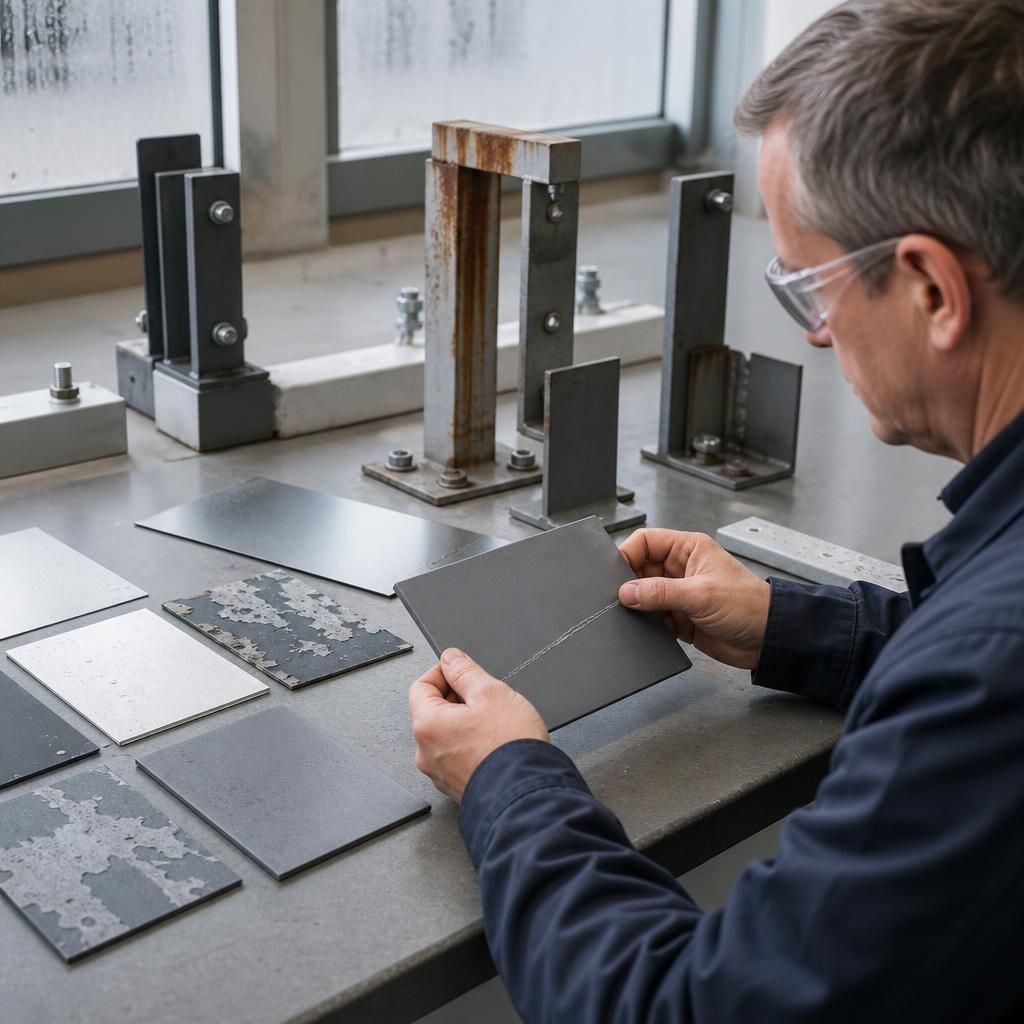
Protective performance is best compared by the way each coating remains intact in service and by the type of deterioration that appears first. For Interpon D1036 Matt and alternative aluminium finishes, inspection should look beyond colour and sheen to the condition of the film, including adhesion, cracking, flaking, corrosion staining and exposed areas at edges, joints and fixings.
- Surface integrity: a continuous film provides a more reliable barrier than one affected by chips, cracks or exposed metal.
- Appearance change: noticeable fading, chalking or uneven weathering can indicate that the finish is losing its intended surface characteristics.
- Localised damage: impact marks and abrasion should be assessed separately from general atmospheric ageing, as they may require different remedial action.
- Interface condition: bubbling, lifting or corrosion emerging from beneath the coating may indicate a problem at the aluminium and coating interface rather than simple surface wear.
This approach gives specifiers a more useful comparison between Interpon D1036 Matt, anodised aluminium, liquid-applied finishes and other powder-coating systems. The strongest option is the one whose likely deterioration pattern can be identified, monitored and managed within the component’s intended use.
Discuss your Interpon D1036 Matt aluminium coating requirements
Discuss your aluminium components, exposure conditions and required finish with the powder-coating team to identify whether Interpon D1036 Matt is suitable for the specification. Provide drawings, dimensions and batch details so the coating requirements can be assessed accurately.