

How does the high gloss silver aluminium powder coating process enhance long-term durability compared to other finishes?
High gloss silver aluminium powder coating improves long-term durability by combining thorough surface preparation with an electrostatically applied, oven-cured film that bonds evenly to the aluminium. Compared with conventional liquid paint, the cured powder finish generally provides stronger resistance to chipping, abrasion, corrosion and weathering, while maintaining a consistent protective surface.
High gloss silver aluminium powder coating enhances long-term durability by creating a continuous, tightly bonded barrier between the aluminium and its service environment. Its performance depends not only on the powder itself, but also on the coating specification, the condition and design of the component, and how accurately the finish is applied and cured.
The main durability advantage is the way the finished coating protects the substrate as a complete film. Unlike a finish that may leave thin areas around edges, corners or recessed features, a correctly specified powder coating can provide consistent coverage across the accessible surfaces of a component. This reduces the number of exposed points through which moisture, salts or industrial contaminants could reach the aluminium.
High gloss silver finishes are also suitable where the surface must withstand regular handling, contact or light mechanical wear. The cured film resists scuffing and abrasion more effectively than many conventional decorative paints, helping the component retain its protective layer during installation, transport and service. It is not immune to sharp impacts or heavy mechanical damage, so parts subject to repeated contact should be assessed for an appropriate coating grade and film specification.
Compared with liquid paint, powder coating normally offers a more robust protective film because it forms a chemically cured finish rather than relying solely on the drying of a liquid coating. Liquid paint can perform well when correctly selected and applied, but its long-term result may be more vulnerable to variations in application, solvent evaporation, runs or localised thin coverage. Powder coating reduces these risks when the aluminium is prepared correctly and the curing conditions are controlled.
Against anodising, the comparison is more application-specific. Anodising forms a hard, integral oxide layer in the aluminium, so it can be advantageous where surface hardness, dimensional control or a very thin finish is important. Powder coating generally provides a thicker, more visibly protective layer and a wider choice of colours and gloss levels, including a reflective silver appearance. The best option depends on whether the priority is abrasion resistance, visual uniformity, corrosion protection, dimensional tolerances or the intended environment.
Metal plating and other specialist finishes may offer particular benefits for electrical, chemical or wear-related requirements, but they are not automatically a better choice for architectural or fabricated aluminium components. A powder-coated finish can be specified as a practical balance between surface protection, appearance and resistance to everyday handling. The coating system should nevertheless be matched to the exposure level rather than selected on colour alone.
Several factors determine whether the expected durability is achieved:
- Aluminium preparation: grease, oxide contamination and manufacturing residues can reduce adhesion. Suitable cleaning and pre-treatment are essential to establish a stable base for the coating.
- Coating selection: the powder should be suitable for the component’s location and exposure, particularly where there is prolonged sunlight, coastal salt, high humidity, chemical contamination or frequent cleaning.
- Cure control: the coating must reach the manufacturer’s specified curing conditions throughout the part. Under-cured material may have reduced adhesion and chemical resistance, while excessive heat can affect the finish.
- Component design: sharp edges, deep recesses, trapped moisture and dissimilar-metal contact can create weaknesses that are unrelated to the decorative colour. Drainage, edge treatment and suitable assembly details support the coating system.
- Handling and installation: damage caused after coating can expose the aluminium locally. Protective packaging, careful lifting and prompt repair of significant chips help preserve the barrier.
High gloss silver also has a particular visual consideration: its reflective surface can make scratches, dents and uneven preparation more noticeable than on a low-sheen or textured finish. This does not make the coating less protective, but it means that appearance and durability should be considered separately. A component may remain structurally protected while showing visible cosmetic damage.
Routine cleaning helps maintain the coating by removing deposits that could gradually discolour the surface or retain moisture. Mild, non-abrasive cleaning methods are preferable; aggressive solvents, harsh scouring materials and unsuitable chemicals can damage the gloss and shorten the useful life of the finish. Where a component operates in a demanding environment, planned inspection should check for edge damage, chips, blistering, lifting or corrosion around fixings.
In summary, high gloss silver aluminium powder coating can provide longer-lasting protection than many general-purpose paint finishes because it combines a continuous cured film with strong resistance to handling wear, weathering and corrosion-related exposure. It is not a universal substitute for anodising or specialist plating. Long-term performance is achieved when the coating grade, preparation, curing, component design and service environment are considered together.
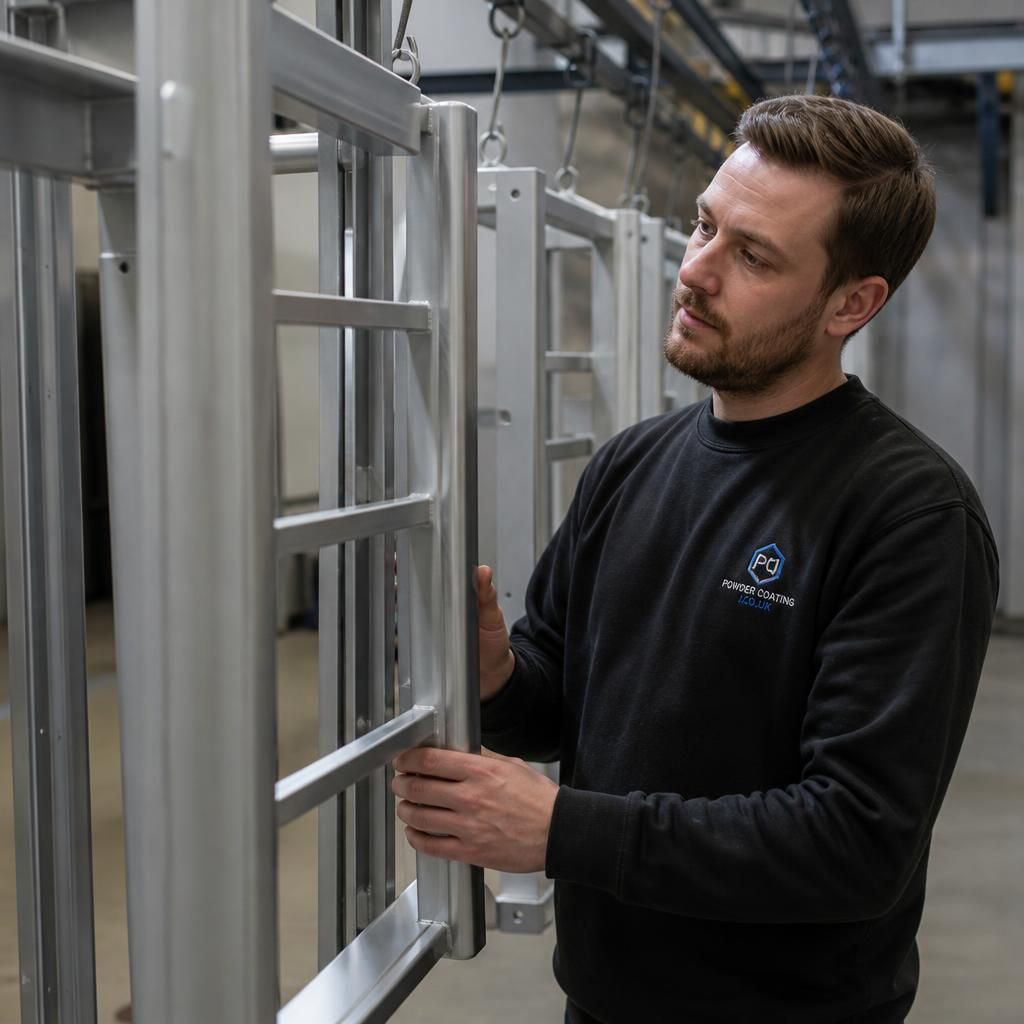
High gloss silver is an appearance specification rather than a durability rating. Long-term performance depends more on the powder’s resin system, intended exposure classification and specified film build than on the silver colour itself. A finish selected for exterior aluminium should therefore be assessed against the component’s exposure to sunlight, moisture, pollutants and cleaning agents, rather than chosen solely for its reflective appearance.
This distinction is important when comparing finishes. Two silver coatings may look similar when newly applied but offer different resistance to chalking, loss of gloss and chemical contact because their formulations are intended for different service conditions. The coating specification should identify the required performance and confirm that the product is suitable for aluminium and the component’s environment. This helps ensure that the visual finish is supported by an appropriate protective coating system.
Discuss Your High Gloss Silver Aluminium Coating Requirements
Discuss your aluminium components, required exposure resistance and preferred high gloss silver finish with our powder coating team to identify a suitable coating specification. Request a quote for your project, with collection and delivery options available across the Midlands and surrounding areas.