

What critical factors should be considered when selecting a filler primer to ensure optimal compatibility with subsequent powder coating layers?
Select a filler primer by checking its compatibility with the metal substrate, powder-coating chemistry and curing schedule, as well as its adhesion, corrosion resistance and recommended film thickness. Confirm that it can be applied and fully cured without impairing the powder coat’s bond, appearance or performance.
Choosing a filler primer for powder coating is a system-level decision rather than a comparison of primer products in isolation. The primer, prepared metal, powder layer and production process must function together, so selection should be based on documented technical data, the intended service conditions and a representative application trial.
Review the primer’s technical data sheet and application instructions in detail. Confirm the recommended substrate types, preparation standard, application equipment, wet and dry film requirements, drying conditions, overcoating guidance and storage limitations. A product described generally as suitable for metal may still be unsuitable for a particular fabrication, especially where the component contains mixed metals, welds, cast sections, sharp edges or previously treated areas.
Check intercoat adhesion, not just adhesion to the metal. The critical interface is between the cured filler primer and the subsequent powder coating. The primer should provide a stable, suitably receptive surface after curing and any required denibbing or abrasion. Ask for evidence of compatibility with the intended powder system, including adhesion testing after the complete coating build has been processed. A primer that bonds well to steel but forms a weak boundary beneath the powder layer is not suitable for the application.
Assess the primer’s surface condition before powder application. It should not remain greasy, powdery, soft, excessively porous or prone to lifting during handling. Check whether sanding is required, whether sanding residue can be removed reliably and whether the primer absorbs moisture or contaminants between stages. Surface texture also matters: a coarse or uneven primer layer may remain visible through a smooth powder finish, while excessive smoothing can reduce the mechanical key needed by the next layer.
Consider residual solvents, moisture and volatile materials. Entrapped volatiles can cause pinholes, bubbling, cratering or blistering when the assembly enters the powder-coating oven. This risk is greater with heavy primer films, recessed sections, porous repairs and components with enclosed areas. The selected product should have a drying and conditioning process that allows volatile material to escape before powder application. Where the result is important, use a trial component or test panel to expose defects that may not be apparent during visual inspection.
Match the complete process window. The primer’s stated drying or curing conditions must fit the powder-coating line without creating a weak, over-cured or degraded intermediate layer. Consider the actual metal temperature rather than relying only on oven air temperature, particularly for parts with different thicknesses. Also establish the acceptable interval between primer application and powder coating, since contamination, surface oxidation or excessive ageing can change the intercoat bond.
Confirm that the primer does not interfere with appearance. Colour, gloss, texture and opacity of the powder coat can be affected by the primer’s shade, surface profile and film uniformity. This is relevant for light colours, low-gloss finishes, metallic effects and thin or translucent powder layers. Check for shade show-through, gloss variation, edge read-through and visible sanding marks on a representative sample rather than assessing compatibility from a small flat coupon alone.
Evaluate movement and mechanical demands. The primer and powder coating should tolerate the forming, lifting, assembly and service conditions applied to the component. Excessive brittleness can lead to cracking at edges, welds or fastener points, while an overly soft layer may mark during handling or permit movement beneath the powder film. Consider impact, vibration, flexing, thermal cycling and any post-coating machining or assembly when reviewing the product.
Look at the geometry of the components. Deep corners, folded returns, perforations, weld beads and inaccessible faces can produce differences in application thickness and drying. A primer that performs well on a flat panel may not behave similarly on a complex fabrication. Confirm that the application method can reach the areas requiring filling without creating runs, excessive build-up or concealed uncured material.
Check compatibility with the preparation and repair materials already in use. Degreasers, conversion treatments, weld-through products, sealants and previous coatings can affect the primer’s bond or cause surface defects. Establish whether the primer requires a particular preparation sequence and whether it can be applied over the specified repair compounds. Avoid assuming that products from different coating stages are compatible because each is individually intended for metal.
Set acceptance criteria before production. These may include visual uniformity, absence of pinholes and bubbling, dry film consistency, adhesion at both coating interfaces, resistance to handling damage and performance after relevant exposure testing. Record the substrate condition, preparation method, primer batch, application settings, film build and powder-coating cycle used for the approval sample. This creates a reference for investigating defects and repeating the process consistently.
Use a controlled compatibility trial where the consequence of failure is significant. Apply the proposed primer and powder system to representative parts or test panels containing the same metal, welds, edges and surface preparation as the production work. Inspect the finished coating after curing and carry out suitable adhesion or durability checks. If defects occur, change one variable at a time—such as preparation, primer thickness, drying or powder cure—so that the cause can be identified rather than concealed by adjustments to the whole process.
In practice, the strongest choice is the filler primer with a documented overcoat route, a stable surface after preparation, predictable behaviour through the curing process and evidence of reliable performance with the selected powder coating. Technical confirmation from the primer and powder suppliers, supported by a representative trial, is more dependable than selecting solely by advertised substrate coverage or the primer’s appearance before overcoating.
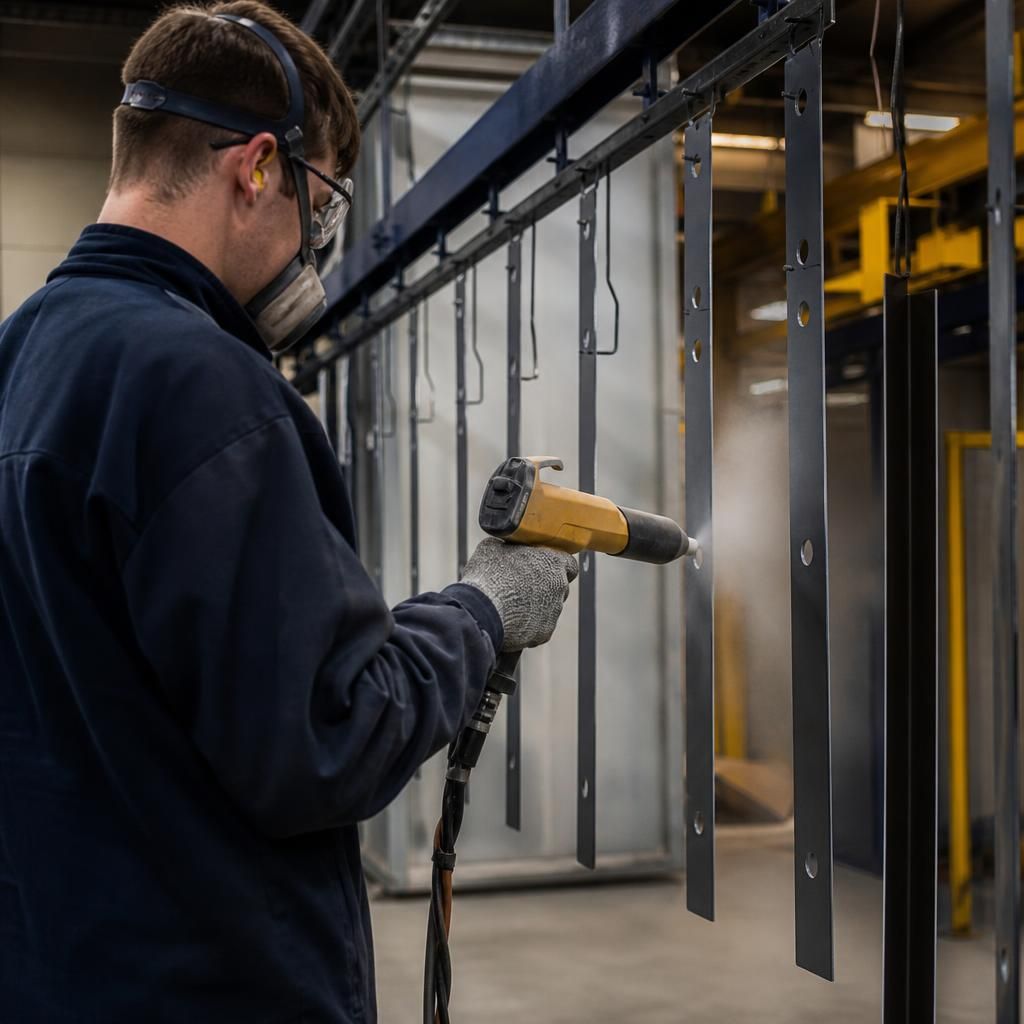
Electrical behaviour is an important but often overlooked compatibility factor. A filler primer can partially insulate the metal substrate, reducing the effectiveness of electrostatic powder application if it covers the intended earthing or racking contact points. This may lead to uneven powder deposition, poor coverage in recesses or greater difficulty achieving a consistent finish.
Confirm that the approved process preserves reliable electrical contact between the component and the coating equipment. Mask or clear designated rack points where appropriate, and include representative contact areas in the trial assessment. The finished component should be checked for consistent powder coverage across flat surfaces, edges and recessed sections rather than judging compatibility from the primer’s appearance alone.