

What environmental factors should be considered when choosing a zinc primer powder coat for metal components in industrial settings?
When choosing a zinc primer powder coat for industrial metal components, assess moisture, salt or chemical exposure, operating temperature, UV exposure and the risk of abrasion or impact at the installation site. The primer should be compatible with the metal, the intended topcoat and the environmental demands the finished component will face.
Choosing a zinc primer powder coat requires assessment of the component’s full service environment, including how it is designed, handled, installed and maintained. The correct product is not determined by zinc content alone: the specification should account for the exposure classification, substrate condition, coating system, application conditions and environmental requirements of the finished part.
Consider the following factors before selecting the primer:
- Atmospheric classification: Establish whether the component will be used indoors, outdoors, in a sheltered position, or in an area affected by industrial pollutants. A component beneath cover may face different conditions from one directly exposed to the atmosphere, even within the same site. Standards such as BS EN ISO 12944 can help classify corrosivity and establish a suitable coating system.
- Site contaminants: Identify airborne deposits such as dust, fumes, process residues and particulate matter. These contaminants can collect on horizontal surfaces, retain corrosive deposits and make inspection or cleaning more demanding. The primer and topcoat should be specified as a complete system for the actual site rather than selected from a general-purpose description.
- Component geometry: Crevices, overlapping joints, sharp edges, recesses and weld areas can be more vulnerable than broad, accessible faces. Drainage, ventilation and the avoidance of dirt traps should be considered during design. Where these features cannot be avoided, the coating specification should address edge coverage, film build and access for preparation.
- Substrate and fabrication condition: Mill scale, weld spatter, cutting residues, embedded contaminants and pre-existing corrosion can affect the result independently of the surrounding environment. The zinc primer should be matched to the specified preparation method and to the condition of the steel or other approved substrate. Fabrication processes that introduce porosity or surface irregularities may also require attention before coating.
- Application environment: The coating manufacturer’s requirements for pre-treatment, curing and film thickness must be achievable at the coating facility. Powder application depends on clean, suitably prepared components and controlled oven conditions. Large or complex parts may heat unevenly, so the specification should consider the metal’s mass, shape and thermal behaviour rather than relying only on the oven air setting.
- Exposure before the complete system is finished: A zinc primer is often part of a multi-coat system. Consider how primed components will be stored, transported and assembled before the topcoat is applied. Handling damage, contamination between coats and prolonged exposure of an incomplete system can affect the final performance, so the required interval and protection arrangements should be defined in the process specification.
- Mechanical design and maintenance: If the component will be inspected, cleaned, fastened, dismantled or repaired, the coating system should allow for those activities. Areas subject to repeated contact or damage may need a repair procedure compatible with the original primer and topcoat. Access for future inspection is also an environmental consideration because hidden corrosion is harder to identify and control.
- End-of-life and process impacts: Powder coating avoids the solvent emissions associated with many liquid systems, but the selection should still consider overspray management, reclaim practices, packaging, cleaning residues and disposal of contaminated material. Zinc-containing waste must be handled in accordance with the applicable site procedures and UK environmental requirements.
For projects with several exposure zones, one coating specification may not be suitable for every component. Parts located indoors, outdoors, near process emissions or in partially sheltered positions may require different preparation or topcoat arrangements. Where conditions vary, divide the components into exposure groups and specify each group separately.
The most reliable selection process is to document the intended location, service life, component geometry, preparation standard, primer and topcoat compatibility, curing requirements, handling sequence and maintenance plan. This information allows the zinc primer powder coat to be assessed as part of a complete corrosion-control system, rather than as an isolated finish.
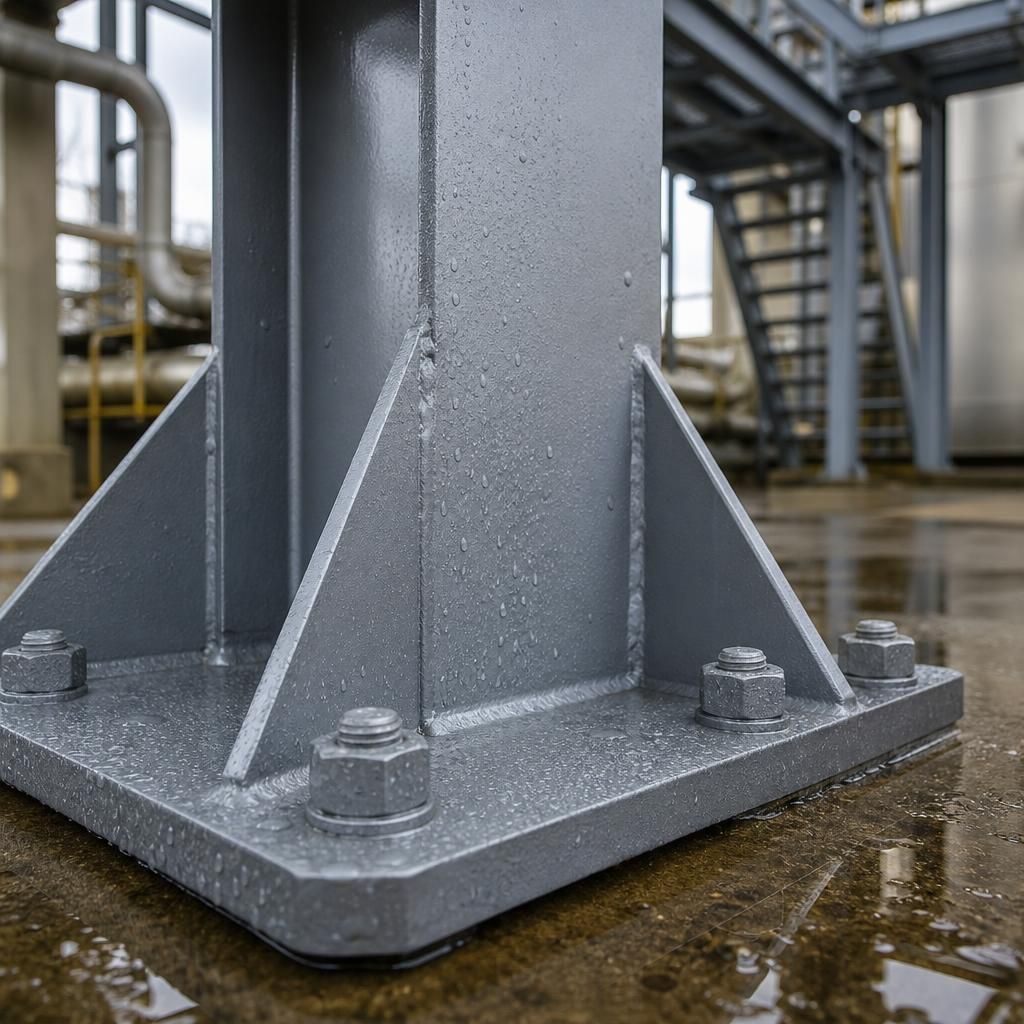
Thermal cycling and condensation should be assessed where metal components move between warm and cold conditions. Repeated temperature changes can cause condensation on the surface, while differences in expansion between the metal, zinc primer and topcoat may place stress on the coating system. This is particularly relevant for outdoor equipment, unheated structures and components positioned near process areas with fluctuating temperatures.
Specify a zinc primer powder coat and compatible topcoat that suit the expected temperature range and repeated cycling. The design should also minimise areas where condensed water can remain trapped, as persistent wetting can accelerate corrosion at edges, joints and damaged areas.