

What are the most common challenges faced during the electrostatic coating process, and how can they be mitigated?
Common electrostatic coating challenges include inadequate surface preparation, poor grounding, uneven powder coverage and incorrect curing conditions, which can cause defects such as adhesion failure, thin areas, runs or inconsistent gloss. They are mitigated by thoroughly cleaning and profiling the metal, checking electrical continuity, adjusting spray parameters and maintaining controlled, verified curing temperatures and times.
Electrostatic coating challenges arise when the powder, charged particles, component geometry, booth conditions and curing cycle are not kept within a controlled process. The most effective mitigation is to identify the likely failure mode, apply a consistent method for each component type and verify the result through inspection rather than relying on appearance alone.
Faraday cage effects
Recesses, internal corners, narrow channels and enclosed sections can be difficult to coat because the electrostatic field directs charged powder towards the more exposed surfaces. Powder may accumulate around the entrance to a recess while leaving the deeper area with insufficient coverage. This is known as the Faraday cage effect.
It can be reduced by using a lower electrostatic setting where appropriate, increasing the spray distance and approaching the difficult area before coating the surrounding faces. The spray gun angle also matters: directing powder into a recess rather than straight at its lip can improve access. Components should be designed, positioned and rotated to expose concealed surfaces without creating unnecessary overspray.
Back ionisation
Back ionisation occurs when excessive powder builds up on a surface and the electrical charge becomes concentrated within the coating. The result can be a rough, cratered or pinholed appearance rather than a smooth film. It is more likely when the charge level, powder flow or spray distance is unsuitable for the component.
Operators can mitigate this by using the lowest effective charging level, avoiding excessive powder deposition and checking the first coated parts before continuing a batch. If the powder begins to repel from the surface or develops a disturbed texture, the application settings and film build should be reviewed rather than adding more material.
Moisture, contamination and environmental variation
Moisture in compressed air, airborne oil, dust or residue from handling can introduce defects that are not immediately visible during spraying. These contaminants may lead to craters, fisheyes, pinholes or localised loss of adhesion. Temperature and humidity changes can also affect powder flow and the behaviour of the metal during coating.
Suitable air filtration and moisture separation should be maintained, while the booth, spray equipment and work area should be kept clean. Parts should be handled with clean gloves after final preparation, and powder should be stored in conditions that prevent it absorbing moisture. Where a defect appears intermittently, checking the air supply, powder storage and booth cleanliness can be more productive than changing the spray pattern alone.
Outgassing from cast, porous or previously treated parts
Castings, galvanised steel and porous components can release trapped air, moisture or process residues when heated. This may create bubbles, pinholes or blisters in the cured coating. The problem can be mistaken for a spraying fault because it may only become visible during or after curing.
Risk is reduced by using an appropriate pre-treatment route, allowing parts to dry fully and, where suitable, applying a controlled preheating or outgassing stage before the final powder application. The correct approach depends on the substrate and the source of the trapped material. Trial pieces are useful for identifying whether a component needs a modified preparation or heating cycle.
Film thickness and powder build-up
A coating can look acceptable while still being outside the required film thickness. Excessive build may soften edges, obscure detail, affect fit and produce an inconsistent texture. Insufficient build can reduce the intended protective performance and make the substrate more visible, particularly on edges and exposed faces.
Film thickness should be checked at representative locations, including edges, corners, recesses and flat areas. Spray settings, gun movement, component spacing and the number of passes should be standardised for repeat work. Particular attention is needed where a second coat, a different colour or a textured powder is being applied, as each can alter the visual indication of build.
Colour and gloss variation
Differences in colour, gloss or texture can result from inconsistent film build, variations in curing, contamination from a previous powder or mixing material from incompatible batches. The effect is especially noticeable when components are assembled together or when a replacement part is coated separately.
Powder should be identified and controlled by product type, colour and finish. Equipment and the booth should be cleaned adequately when changing material, and reference panels can be retained to compare production parts. Parts intended to appear as one assembly should be processed under comparable conditions and inspected together where practical.
Masking and unwanted coating
Threads, bearing seats, earth points, mating faces and tight tolerances may need to remain free from powder. Poorly selected masking materials can leave gaps, distort at curing temperature or transfer residue to the metal. Removing excess coating after curing may damage the finish or alter a critical dimension.
Masking requirements should therefore be defined from the component drawing or assembly function before coating begins. Heat-resistant plugs, caps or purpose-made masking methods should be selected for the relevant temperature and geometry. Masking should be checked before spraying and removed carefully after curing, with critical areas inspected for overspray.
Equipment and process consistency
Worn nozzles, unstable powder feed, blocked hoses or inconsistent gun movement can produce variation between operators or across a batch. Repeated defects in the same location may indicate an equipment or handling issue rather than a problem with the powder itself.
Preventive checks should cover the gun, hoses, feed system, filters and booth extraction. Operators should use documented settings for established component types, while still allowing adjustments for geometry and powder characteristics. Recording the powder identification, application settings and curing conditions makes it easier to trace a defect and prevent recurrence.
Inspection and corrective action
Visual inspection should be supported by appropriate checks for film thickness, coverage, adhesion and finish uniformity. Inspection points should include areas that are difficult to see during spraying, not only the most accessible faces. If a defect is found, affected parts should be separated and the likely stage of origin identified before rework is attempted.
In practice, reliable mitigation comes from treating electrostatic coating as a connected process. Component design and loading influence powder access; equipment settings influence deposition; environmental control affects cleanliness and consistency; and the curing stage determines the final coating properties. A repeatable work instruction, sample approval for unusual parts and recorded inspection findings provide a sound basis for controlling these variables across production batches.
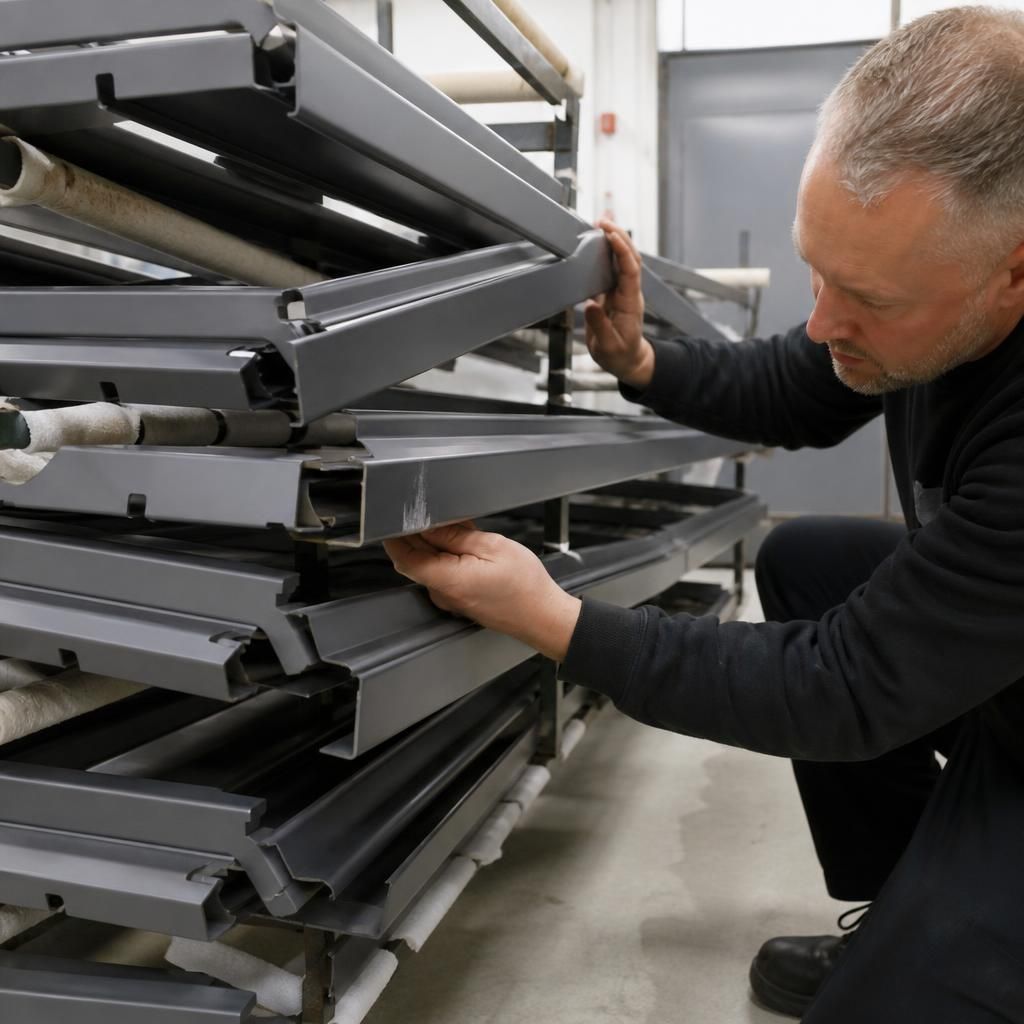
Handling damage is a coating-process challenge that occurs after spraying and curing, particularly where components are unloaded, stacked or moved before the finish has cooled and stabilised. Contact with metal supports, abrasive packaging or adjacent parts can mark the surface, expose edges or create pressure points that are mistaken for application defects.
It can be mitigated by planning support and contact points before coating begins. Racks should hold components securely without rubbing finished faces, while separators and packaging should be clean, dry and non-abrasive. Components should be allowed to cool sufficiently before stacking, and coated surfaces should not be used as load-bearing contact areas during movement. If a part is damaged, the repair should be assessed for colour, texture, film build and compatibility with the original powder rather than simply sprayed over the affected area.